A gorgeous blonde crosses the threshold of a softly furnished Parisian hotel room, hand in hand with a man. It is, we are told, the same room in which she was conceived 30 years earlier. The scene opened ‘Do It For Denmark’, a 2014 ad campaign by a Danish travel company, attempting to turn Paris into a sales pitch for parenthood after the country’s birth rate had plummeted to a 27-year low. Tongue in cheek, the advert claimed that 10 per cent of children are conceived on holiday.
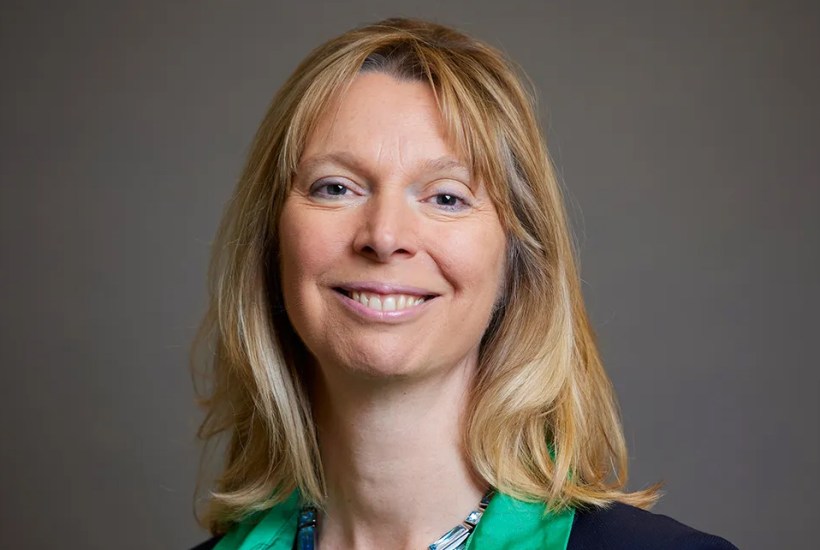
More than a decade on, the same story is unfolding worldwide. In Generation Maybe, Camilla Cavendish, the former head of the Downing Street Policy Unit under David Cameron, charts an ‘extraordinary wave’ of childlessness sweeping the world. From the UAE to Chile and India’s Tamil Nadu, the birth crunch is global. Last year, Germany hit a postwar low of 1.32 children per woman. Catholic Spain is no exception, nor is Britain, where the rate has dropped to 1.39. South Korea and Japan, once bastions of family life, are sliding into what the Pope has warned is a ‘demographic winter’. Fertility rises and falls over time; but, Cavendish argues, a comparable collapse only occurred at the time of the Black Death. Russia’s population holds up, largely because of the annexation of Crimea and parts of Ukraine.
The questions this raises are personal and practical – who will care for me? Who will pay the taxes? – captured by what China calls the ‘4-2-1 problem’, in which one child must support two parents and four grand-parents. But they are also existential – a threat to the human race.
Analysis of the birth crunch tends to fall into two camps: data-heavy studies, or thin, thesis-driven polemic built on anecdote. Cavendish goes beyond both, delving into data while bringing the problem to life by speaking to people with different experiences, expertise and political persuasions. The result is a well-researched, humane and constructive book.
A familiar explanation is women’s empowerment. Historically, that was true, but no longer. Births are now rising among ambitious, well-qualified women while rates are falling among the less educated, who feel they lack the necessary stability. It is low- income men who are most likely to end up involuntarily childless. Ali, a London security guard, feels that ‘no one cares about men’, as women walk past him to the upper floors of the office.
Economic pressures are stark. Interviewees cite the prohibitive expense of childcare. Housing remains one of the greatest barriers: supply is restricted and costs are astronomical. ‘Home is deeply entwined with family,’ Cavendish notes, to which her solution is: ‘Build, Baby, Build’. Material problems are compounded by a lack of support networks and career demands. Coupled with delayed adulthood and the wait for the ‘right’ partner, this means couples often try for parenthood in their thirties, just as fertility declines.
Material factors aside, previous generations raised families in wartime, in cramped, shared housing and amid disease. Cavendish’s sharpest insights concern how parenthood has ‘intensified’. In the 1980s, parenting became a verb and went from being ‘good enough’ to ‘never enough’. Time spent parenting across the developed world has risen substantially (except in France, where the art of benign neglect seems to have been perfected), and that time now must be ‘quality’ and ‘active’, burdening parents with extra pressure.
This is all compounded by politicisation. On one side are the state pronatalists, such as Hungary, and commentators like Elon Musk and J.D. Vance, who mocked ‘childless cat ladies’. On the other are those who wear childlessness as a political statement, and a reticence to support women who choose to be full-time mothers. Anne, who lives in Scotland, expected to be judged for being a lesbian mother. ‘I was wrong,’ she says. ‘I’m judged all the time for being a stay-at-home mum.’ No tradwife, she thought her child needed stability and put her career on hold while her partner went out to work.
Cavendish’s 11 recommendations are mostly sensible, ranging from ‘Get to First Base Earlier’ and ‘Create the Village’, to ‘Help Low-Income Men Become More Marriageable’. One, ‘Give Children the Vote’, is an overreach. As is often the case, the policy prescriptions are less persuasive than the analysis that precedes them.
At the heart of Cavendish’s argument is that parenting gets a bad rap. Her most radical point is that raising a family, joyous and messy as it is, has come to feel like a daunting, anxiety-laden chore rather than a life-affirming experience. Rallying to her conclusion she insists: ‘It shouldn’t be controversial, or considered right-wing, to say that it’s a good thing for us all if people can have the families they want.’
Got something to add? Join the discussion and comment below.
You might disagree with half of it, but you’ll enjoy reading all of it. Try your first month for free, then just $2 a week for the remainder of your first year.