I have dengue, a vile and potentially life-threatening virus given to me by an Aedes mosquito. For good reason, it used to be called breakbone fever.
It’s not the first time. I last felt my eyes swell and my joints being crushed five years ago, almost to the day. Dengue is common in Cuba, increasingly so since the government ran out of the money to fumigate for mosquitos. The first time was worse – so far. It arrived like a cloud of poison gas; I barely got up the stairs before collapsing. I was more naive then and what followed, in the fug of fever, taught me a lot about my Cuban family and the Cuban state.
People are selling water door to door. We’re hearing of dysentery. How far away is cholera?
Back in 2021, my wife, who was pregnant at the time, was swiftly removed from my presence and Maria, our brilliant local doctor, sent in. Cuba was famed for having more than nine doctors per 1,000 patients, three times that of the US or UK, so the care was personal. Maria explained the problem with dengue. It causes the platelets to disappear from your blood, meaning that, in extreme cases, you can hemorrhage. She suggested I go to hospital to check my numbers. At the hospital, they didn’t like the results and told me to go to another hospital where I would be admitted.
It didn’t occur to them I’d make a run for it. For Cubans, doctors speak with the authority of Solomon; for me they’re the only profession that gets to bury their mistakes. But I’ll come back to that story.
Five years on and seven months into the oil blockade Washington is imposing to fell Cuba’s already bankrupt communist government, disease is what scares me most. There’s a lot of it about now. There are the old classics such as dengue, zika and oropouche, which are enjoying a resurgence. All are transmitted by bites, from mosquitos or sand flies, and all cause variations of fever, aching bones and joints, vomiting and so on.
But last year a wave of chikungunya – a Tanzanian word for “contorted” – swept through the country, infecting a third of the population and killing 33, according to the government. Its effects can last for months, even years, and many Cubans are still living with severe, and sometimes debilitating, joint pain. La bola en la calle – gossip – suggests many more elderly died because they couldn’t leave the house.
Now friends are contracting hepatitis A, the thought of which makes my skin crawl (it comes from fecal matter in the water). Both the Canadian and US embassies have warned travelers of cases increasing.
As the pressure on the island’s people keeps building, I wonder whether the end game will be an outbreak of something that really does start killing in serious numbers. As Cuba’s water system fails in tandem with its electricity system, people are selling water door to door. We’re hearing of dysentery already. How far away is cholera?
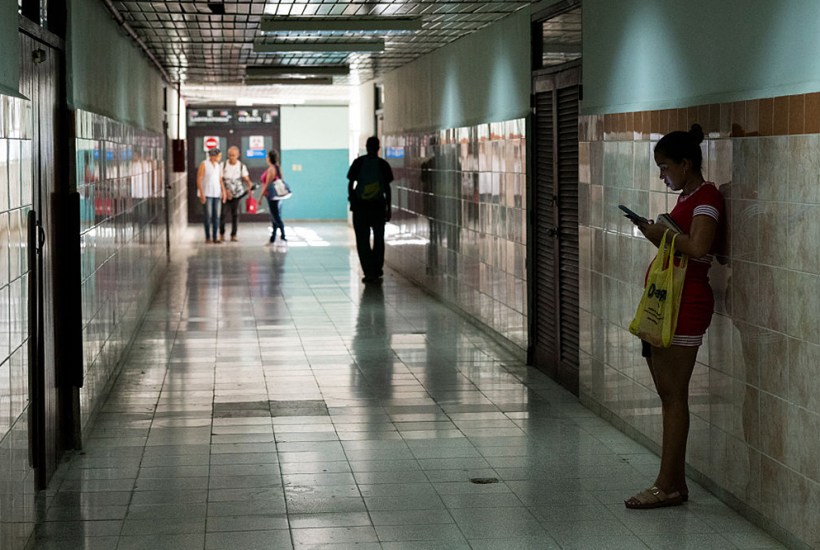
After I dodged hospital in 2021, Dr. Maria came to see me. She softly suggested I go back there. I went, and was swiftly frogmarched to a ward. I ended up in a room with a bed and a child’s mosquito net. (I shouldn’t really grumble because my foreign passport meant I was far better off than any of my Cuban family would have been.)
But I was stuck there for a week. I kept waiting for some treatment but there is none, beyond resting up, staying hydrated and writing moany columns for The Spectator. A nurse occasionally peered around the door to order me under the net, which was preposterous given the respective sizes of it and me. I lay there fuming like a turtle stuck in a fishing net.
So I’m not going back unless and until I start perspiring blood. And there is no one to talk me round. Along with nearly two million other Cubans since the pandemic, the sainted Dr. Maria has moved abroad. We no longer know our local doctor. And tellingly my wife, who is also ill this time, seems fine with not seeing a doctor and instead sweating it out with me at home.