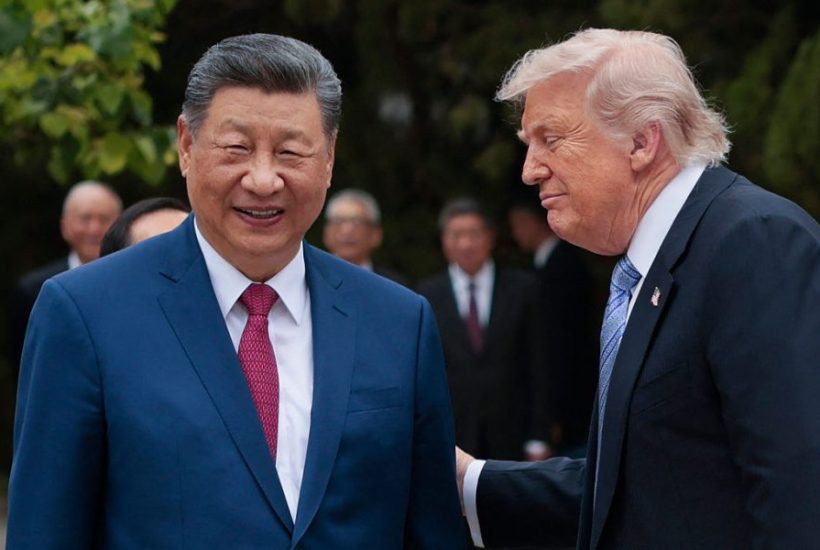
When Xi Jinping arrives in Washington today for a much-anticipated summit with President Donald Trump, the Chinese leader will want to show the world that this is more than just an act of reciprocity for hosting the US president four months ago. At a time of ongoing global disputes ranging from trade to the Iran war to the ever-elusive North Korea problem, Beijing will want to give the impression of stabilised relations with the global hegemon. Beneath the surface, however, China shows few signs of altering its worldview. This not only remains fundamentally in opposition to what it calls the ‘anti-China’ West but crucially involves its support for Western adversaries, including North Korea.
The last time Trump and Xi shared a tête-à-tête was in May. Although the Chinese leader did not welcome his US counterpart as Air Force One touched down at Beijing Capital Airport – in contrast to what Trump plans to do – the visit prioritised Beijing-style pomp and circumstance over tangible outcomes. Most revealing was the readout from the White House after the summit, which highlighted how the two sides agreed that Iran must never possess nuclear weapons and that North Korea’s denuclearisation was a shared goal.
The West must not be deceived by today’s pleasantries
In Beijing’s eyes, however, Iran and North Korea seemed little more than peripheral. Its narrative predictably prioritised Taiwan, which China has long-deemed to be a domestic and not international issue. Here, Xi had stern words: Sino-US relations can ‘remain generally stable’ if ‘the most important issue in China-US relations’ is ‘handled well’. But if it is ‘mishandled’, then ‘the two countries will collide or even come into conflict’.
Although Taiwan is the most important foreign policy issue on Beijing’s agenda, North Korea (with which China is a treaty ally) might also pop up today. Both President Trump and the South Korean president, Lee Jae-myung – who has shown a desire to strengthen ties with Xi Jinping – have emphasised their enthusiasm for reviving US-North Korea talks. The question, however, is whether China will want to be a mediator.
For over three decades, the problem of a nuclear North Korea – first a possibility and now a full-fledged reality – has plagued relations between Pyongyang and its largest economic benefactor. China may have mediated the Six-Party Talks from 2003 to 2009, which saw China, Russia, South Korea, Japan, and the United States aim to induce North Korea’s denuclearisation. But Pyongyang’s unwillingness to play by the rules, eventually withdrawing from the talks, hampered these efforts.
Over time, however, a nuclear North Korea has become less of a thorn in Beijing’s side. China’s irritation at having a nuclear neighbour has evolved into tacit acceptance. When, this June, Xi Jinping met Kim Jong-un in Pyongyang (in what was his first overseas sojourn of the year), the word ‘nuclear’ – let alone ‘denuclearisation’ – did not pass either leader’s lips.
North Korea’s spate of short-range missile launches on Sunday, which landed just outside of Japan’s exclusive economic zone, failed to trigger any response from China. So long as there is stability along its border with North Korea, Beijing will not want to say or do anything. We must also remember – not least as UN General Assembly high-level meetings take place this week – that China willingly helps North Korea in evading UN sanctions. In this vein, over 50,000 North Korean labourers illegally work in China.
If talks between Trump and Kim do materialise, Xi will be watching them closely. A scenario in which Washington agrees to suspend some of its longstanding military drills with Seoul to avoid provoking Pyongyang will no doubt please Beijing. Indeed, China will relish any opportunity to frame actions that signal a weakening US commitment to its East Asian allies as evidence of Washington’s decline. Kim may wait until after November’s US midterm elections to answer any proposal from Trump for talks (especially if the election outcomes are not in the President’s favour). If, in their meeting, Trump affirms the provocativeness of US-South Korean military exercises (which intend to deter North Korea) and, with Kim, makes vague pledges towards ‘peace’, Pyongyang and Beijing will have few qualms.
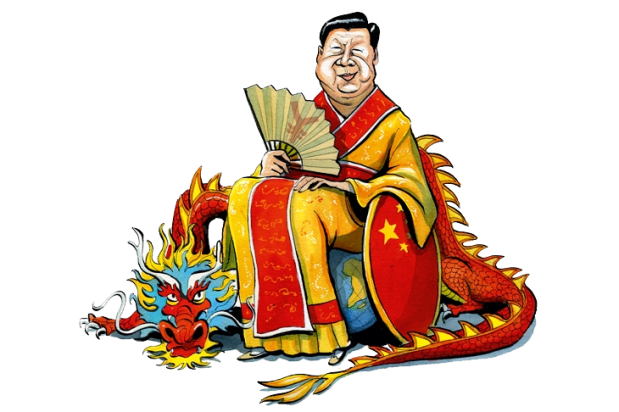
As Beijing continues to engage in political and economic coercion, especially towards the US, its allies and partners – whether Tokyo, Seoul, or London, the West must not be deceived by today’s pleasantries. These do not obscure the reality of China’s vision of global politics, in which the West and its allies ultimately lose out. Yes, Beijing has benefitted immensely from the post-Second World War world created by Washington and its allies. But these rewards will not stop it from undermining this world all the same, now and in the future.
The next time you buy something that is ‘Made in China’, it might be so in name only: your purchase may have actually been made either in North Korea or by North Korean workers slaving away in Chinese factories. China’s collusion with North Korea makes clear how for all the claims that today’s Trump-Xi summit represents a fork in the road, Beijing shows little intention of reversing course. As Trump himself accurately wrote in his book, The Art of the Deal, the key to any negotiations is leverage. And as the cameras get ready to capture handshakes and toasts, it would be well-worth asking just who actually has it.