Many, if not most, Australians would have been embarrassed, even angered, by the fatuous welcome to ‘Naarm’ provided to the attendees at the recent NFL game in Melbourne.
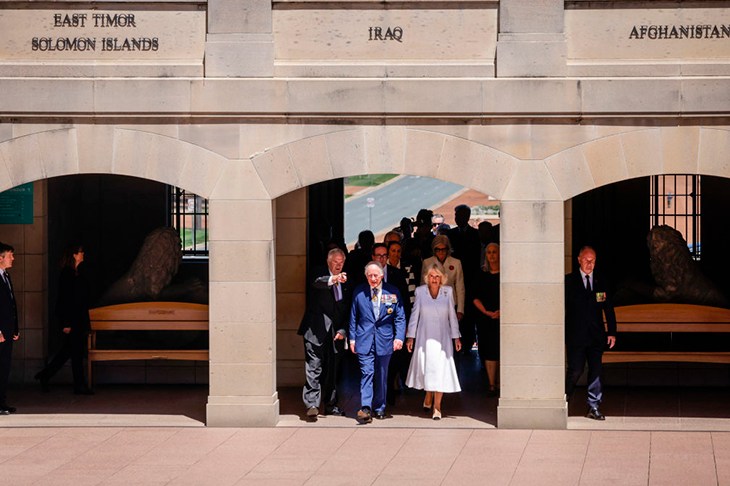
Well, that pales into insignificance compared to the proposal of the Australian War Memorial Council to include coverage of the so-called frontier wars – a proposal which is in contravention of the Memorial’s governing Act. In a previous article, I have argued that, regardless of the Act, the Memorial is not the place for this type of activism.
Here I will address a number of related issues, including the provenance of these Frontier Wars as espoused by film-maker Rachel Perkins and historian Dr Henry Reynolds, the main proponents of the ill-judged initiative.
But first, let me address a claim made by Chairman Kim Beazley that conservative historian Professor Geoffrey Blainey ‘much supported by the conservative element of Australian life’ had called for such recognition back in 1979.
When I read that I was surprised. My initial reaction was that, if Professor Blainey did support that back in 1979, I would be stunned if he still did. So, I approached the Professor. Here is his response:
‘No, I have never advocated that frontier conflict be included in the Australian War Memorial. My belief is that if frontier conflict is mistakenly included, the wars between indigenous groups must be also included.
‘In my 1975 book, Triumph of the Nomads, I provided evidence that pre-1788 wars between Aboriginal groups were frequent and were brief but very deadly. I was on the Council of the Australian War Memorial from 1996 to 2003 and set out my views.’
No doubt Chairman Kim was just repeating what he had been told but he does have form in misrepresenting people. He also claims that his proposal conforms to Charles Bean’s vision for the Memorial. He is quoted as saying it is consistent with a ‘broad interpretation’ of Bean’s original vision for the shrine. He also said it was his ‘sacred duty to stay true to Bean’s vision, which was underpinned by law’.
What a load of codswallop. Bean’s vision was for ‘a national memorial that would commemorate what the nation had done during the war’. The war, in this case, being the first world war. Bean would have been aware of the history of frontier conflict.
And he was aware of the colonial contributions to the Sudan, the Boxer Rebellion and the Boer War, but he did not include even them in his vision. They were later included – not on the basis of a ‘broad interpretation’ – but on a legislated amendment to the Act, a concept that Chairman Kim, with his background, should be familiar with.
Now to the ‘frontier wars’. Why I was sceptical that Professor Blainey would support inclusion of the frontier wars is because he is one of that rare breed nowadays – a rigorous humanities academic. He would have been well aware that the numbers now being cited for Aboriginal casualties in these so-called frontier wars have been grossly – I would say grotesquely – exaggerated.
This an extract from the blurb of Perkins and Reynolds’ latest book The Australian Wars:
‘It is estimated up to 100,000 people died in the frontier wars that raged across Australia for more than 150 years. This is equivalent to the combined total of all Australians killed in foreign battles to date.’
It is that absurd figure of 100,000 – and the suspiciously convenient similarity to the number killed in two world wars – that tells me – and you – that this proposal to include frontier conflict at the War Memorial is not a benign acknowledgement of our history.
And keep in mind this is an estimated figure. It is not backed up by rigorous research. That is, it is not history. It’s what we now euphemistically call ‘truth-telling’.
What we know about Aboriginal deaths is contained in the University of Newcastle Massacre Map. This was constructed based on thousands of hours of work by numerous researchers. It identifies approximately 11,000 deaths across roughly 400 incidents.
So how do we get to 100,000? Simple. By applying Chairman Kim’s broad interpretation principle. My co-convenor of the Defend Sacred Ground campaign, Roger Karge, has produced a forensic examination of the 100,000 claim on his Dark Emu Exposed website: https://www.dark-emu-exposed.org/home/defend-sacred-ground-background-notes
But let me deal with just one example of these frontier wars – the Eumeralla wars. These supposedly took place in south western Victoria, an area centred around Portland, the home of the Gunditjmara people. The wars have been commemorated by composer Deborah Cheetham Freyon in her Eumeralla Requiem.
Wikipedia reports an estimated 6,500 Aboriginal deaths, based on an estimated pre-contact population of 7,000 declining to just 442. It describes the wars as lasting from the mid-1830s up until the 1860s, with the most intense period being between 1834 and 1844. In this article, Wikipedia describes the killing of settlers as guerilla tactics and the killing of their stock as economic warfare.
So, we are to believe, the best part of 6,500 let’s say maybe 4,000 deaths occurred in a 10-year period. But the researchers on the Massacre Map project somehow overlooked them. The best they could come up with was a total of 60 deaths over six incidents. Admittedly the Massacre Map only records incidents involving six or more Aboriginal deaths. Still it’s hard to imagine another 5,440 individual deaths, that went unnoticed or unreported.
Estimates of the pre-contact Aboriginal population of Australia range from 300,000 to 750,000. There is no definitive figure so let’s assume 500,000 across the entire continent.
Are we to believe that there were 7,000 of them in the Portland area? The first settlers in the area were the Henty brothers in the early-1830s. Just them and a couple of whalers. One wonders how they survived the attentions of 7,000 Aborigines determined to rid themselves of the invader.
In fact, Thomas Mitchell travelled through the area in 1836 and his diaries record encounters with only a few small groups of Aborigines. Surely, he would have noticed a population of 7,000. So, to paraphrase Eric Clapton, the foundation of the claim for 6,500 ‘Eumeralla war’ deaths is made of clay.
If these frontier wars make it into the new pre-1914 gallery, however modestly to begin with, they will quickly metastisise. The fake history of 100,000 Aboriginal deaths – which diminishes and demeans the sacrifice of 103,140 including Aboriginal soldiers already honoured at the Memorial – will become entrenched. the demands for a tomb of the unknown aboriginal warrior will become deafening and, ultimately, probably irresistible.
Got something to add? Join the discussion and comment below.
Let’s put a stop to it now. Please sign and promote our petition at https://www.defendsacredground.com.
You might disagree with half of it, but you’ll enjoy reading all of it. Try your first month for free, then just $2 a week for the remainder of your first year.