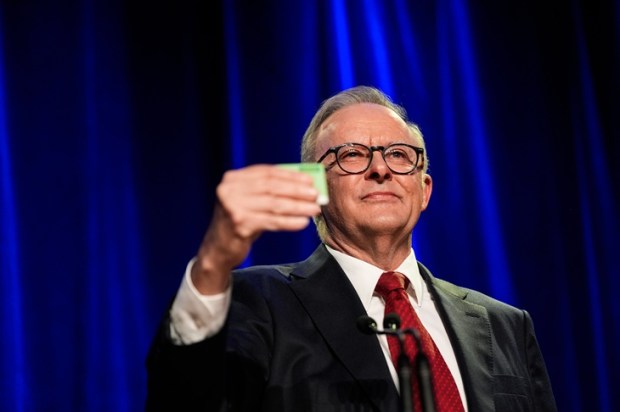
One of our leaders gathered the Best and the Brightest together in Parliament House for the Australia 2020 Summit where they wrote about our future on reams of butcher’s paper and yellow stickies. He was filmed sitting informally on the floor, clad in casual jeans, pretending to be casual and human.
The resulting ‘national disability insurance scheme’ forced major bipartisan reforms in 2026 to rein in a costs blow-out which threatened the country’s future. Proposed Constitutional change is indefinitely shelved.
This ‘forum for engaged citizenship … exhilarated many who participated, but frustrated others …’ It was a ‘national conversation’ and ‘a democratic innovation that may provide a tiny glimpse of a very different future’. It had two ‘co-conveners’. It was an attempt to ‘deepen and broaden democracy’. (Davis)
Not much there about addressing hard, unpleasant realities.
Picasso had a ‘blue period’ of blue paintings. Australia has regular naïve periods, followed by sudden attempts to clean it all up. Perhaps they are passionate, foolish periods. The problem now may be that the electoral cycle is not consistent with the economic, which requires immediate major reforms, not a government which believes it is there to at last ‘bring in what we want to do’ and is uncertain about its economic direction.
The summit’s moral language would not produce, for example, the successful policies which ‘stopped the boats’ in 2001. But ‘stop the boats’ policies are what is needed now. Carefully targeted immigration must be a defensible economic decision not a moral one. Hatred should live in the world’s hotspots, not in our cultural institutions, workplaces, and on our streets.
It is almost impossible to underestimate the influence of the moral view throughout government.
The first problem we face is that despite recent attempts by leaders to promote an ordinary Australian patriotism, and to lessen the endless criticism of the Australian project that passes for intellectual life, that side of politics is in government but not in control.
Only a return to the traditional fanatical razor gang can fix things. Which no one liked. And was career-ending not a platform for aspirants to higher office. But now the main aim is to be liked.
Who in government is prepared to tell its supporters thoroughly bad news? And possibly lose their career. The result is comfortable armchair government. This is a major structural problem.
We have chronic economic problems and an increasingly feral society. Our children are taught about fringe slogans at mass meetings but not how we gradually developed our country, semi-literate and grindingly poor.
And every odd idea, from feral leftism to brutal theocracy, may have as many or more passionate followers than our own remarkable Constitution. Few seem willing to say that Australian settlement and development is and was a moral project for ordinary people. But has anybody looked at our neighbours near and far, and foreign and tribal alternatives?
Second, we live in a time when our trading routes and way of life are under geopolitical threat of the most serious kind. Yet half our young people and some migrants daily demonstrate how deeply they misunderstand nationhood and civil debate.
Helped by experts who universally see the world through the spectacles of ‘liberation’ theology, known to kill economies and prosperity stone dead. It is an Australian triumph that we completely escape the overseas decay into appointing experts mainly because they are not Anglo-Celtic or not male. Quotas, targets, and easy thinking are unknown.
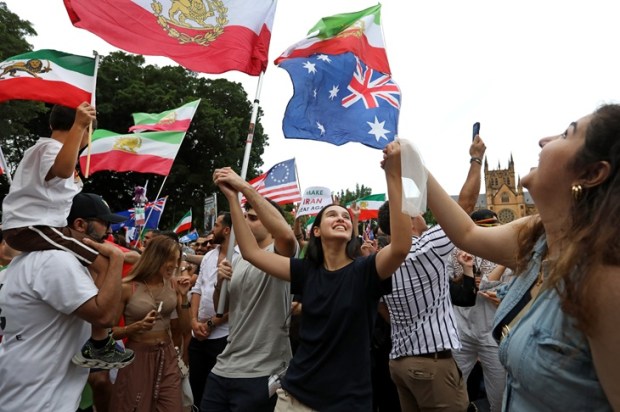
With expert help we celebrate our nation only through Festivus, an opportunity to express deep disappointment in front of an aluminium pole (Seinfeld). Some now are loyal only to other flags. While demanding taxpayer-funded ‘wrap-around services’.
Our civil society is markedly less civil. We could I suppose bring back the laws of the ancient Anglo-Saxon Kings (‘Dooms’) of 600 A.D., which stopped the King’s subjects hacking each other to death. And priced the payments for losing body parts. Although we are not there yet.
Third, we should remember Earl Grey wearily telling UK Parliament in 1845 that ‘experience was decidedly in favour of allowing a colony to govern itself’ rather than ‘attempting to govern from Downing-street a settlement at the antipodes’.
The colonists themselves then wrote their own Constitutions. The most influential Australian leader in the 1850s, William Wentworth, demanded: ‘A Constitution that will be a lasting one – a conservative one – a British, not a Yankee Constitution!’ (Silvester, 1853)
Australian Constitutions are lasting ones and are not Yankee. They are successful. Despite rivers of ink. We are consequently one of the freest most beneficial nations on Earth and have been for a long time.
Finally, some think it is better to change the country through quietly downgrading our modest national symbols and changing the names of places and electorates. Unpopular rituals can be added to official occasions.
Public feeling can be managed with weasel words, like the political party that launched its election campaign in front of the flag they had said they would like to change.
Although smaller objectionable changes are now gathered together in one great national complaint, rolled up ‘into one ball’ as the poet Andrew Marvell wrote, which crushes governing parties.
The Best of Us have priorities (the usual suspects). The gradual evolution of British liberties into modern Australian liberties is something different. It is little used. Like a motorbike left in the garage. We need to take it out for a spin.
Australians will continue to casually watch the world, floating on our surfboards, as others engage in all manner of violence and explosions. Which makes Festivus look kind of silly.
We may well remain, as a wonderful Hollywood actress allegedly said, a good place to watch the end of the world. It may take a lot longer than most for any coming nuclear winter to roll across the vast Pacific Ocean, as we watch it with the wide-eyed gaze of a child.
The Hon. Reg Hamilton, Adjunct Professor, School of Business and Law, Central Queensland University