There was a very big hole in the Chancellor John Healey’s claim yesterday that he is going to generate a new age of industry. Why would anyone want to open a factory, or any other kind of industrial plant, in Britain when they would be paying far more for their energy than in other countries?
Neither GB Grid nor shifting subsidies onto general taxation does anything to deal with the fundamental problem
UK non-domestic customers paid an average of 26.63 pence per kilowatt-hour for their electricity in 2024, more than any other member state of the International Energy Agency (IEA) and 60 per cent more than the IEA average. It is little wonder that our chemical plants, oil refineries and many other industries are rapidly leaving our shores in the search for cheaper power.
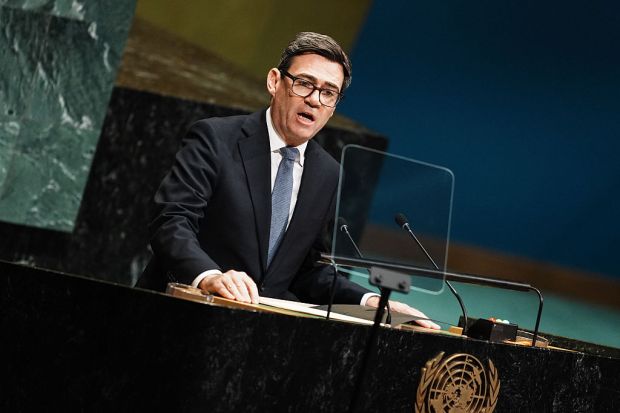
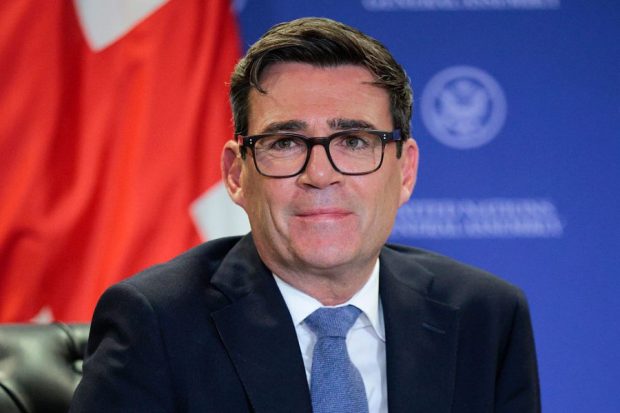
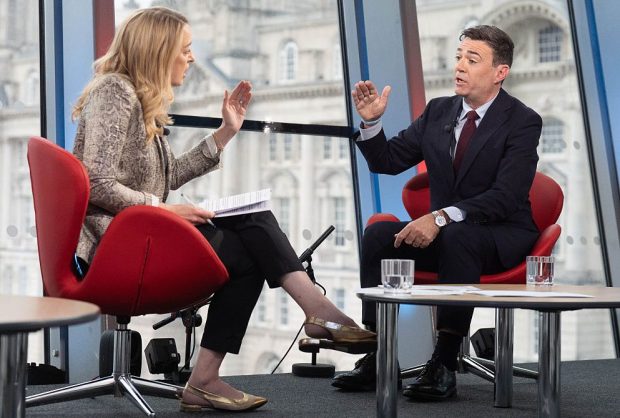
But worry not, the government has a plan, or two plans. Energy security secretary Miatta Fahnbulleh wants to shift many of the costs of what the government likes to call the ‘green transition’ away from energy bills and onto general taxation, while Andy Burnham is expected to announce a new state-owned entity called GB Grid which will invest public money in the electricity grid. Will any of that work?
What Fahnbulleh is proposing is an extension of what Rachel Reeves did last year, when she removed £150 a year worth of environmental and social levies off our energy bills and onto general taxation. That was supposed to get the government halfway to achieving Ed Miliband’s infamous promise during the 2024 election campaign to reduce our energy bills by £300 a year through a shift to ‘home grown renewables’. Sadly, however, the Reeves bonus was more than cancelled out by the rise in energy prices since the beginning of the Iran war. We are paying more for our energy than we were a year ago – and facing higher general taxation to boot.
As GB Grid, it appears that this will merely be pilfering part of a £4 billion pot of money which was previously allocated to Great British Energy, Ed Miliband’s public-owned company which was supposed to be powering our great green future by building wind farms, solar farms etc.
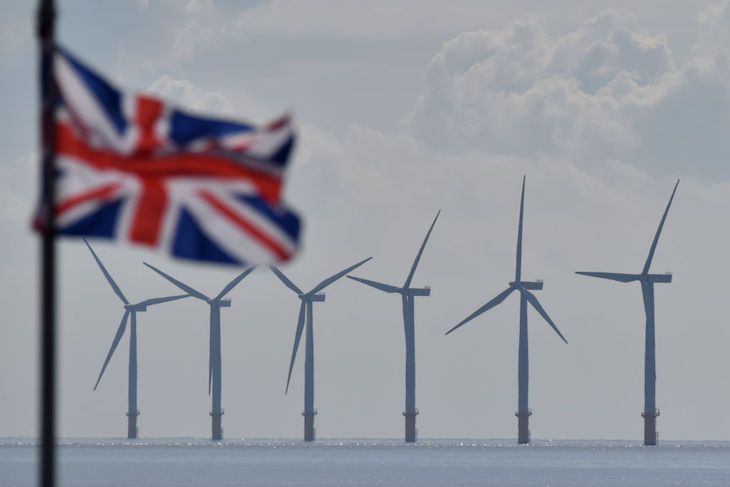
Switching investment from wind farms to cables and pylons is not in itself a bad idea. The rushed decarbonisation policies followed by Miliband and by the Conservatives before him have left a very big problem: we have large numbers of wind turbines in places remote from where energy is consumed and without the grid infrastructure to easily move the power to where it is needed. Energy consumers are paying through the nose for ‘constraint payments’ to compensate wind farm owners when they are unable to generate electricity for want of grid capacity. The National Audit Office reported earlier this month that total constraint costs – compensation payments plus the cost of buying electricity to replace that which cannot be generated by the wind farms – cost us £1.9 billion in 2025/26, and that this could well grow to £7.8 billion by 2030 without a major effort to speed up the construction of new cables and pylons to bring wind energy southwards from northern Scotland.
GB Grid, though, seems unlikely to be a big part of the solution. Under Miliband’s plans, £70 billion is supposed to be invested in the grid to achieve the government’s target of decarbonising the grid by 2030. If GB Grid is going to get a share of £4 billion allocated to Great British Energy that is not going to go very far. Andy Burnham will apparently tell us that GB Grid is part of his plan to reverse “40 years of neoliberalism”, but it seems he is still going to rely on large amounts of private investment by nasty capitalists to beef up taxpayers’ money.
But will GB Grid achieve anything at all? Possibly not if Great British Energy is anything to go by.
What is Great British Energy doing? According to its website, the King opened its spanking new headquarters in Aberdeen in a kilt last week. It claims to have done a little work on getting local people more involved in renewable energy projects (spoiler alert: if my East Anglian neighbourhood is anything to go by the pesky public will use every morsel of power they are granted to try to block solar farms). It has looked into the issue of slave labour in the supply chain of renewable energy kit we are buying in large quantities from China. It is trying to set up a UK ‘component hub’ for floating offshore wind farms so that we might at least have a few home-grown components to generate our ‘home-grown’ renewable energy (but don’t bet on them being able to compete with Chinese-made stuff).
Otherwise, erm, Great British Energy doesn’t yet appear to be generating much power itself. It is in danger of evolving into an object lesson in how little ever gets done in the public sector. Its inaction is possibly why Burnham wants to take away part of its punch bowl.
What the government is not addressing is why UK electricity is so much more expensive than in other comparable countries, when we have invested as much in supposedly cheap renewables as enthusiastically as anyone.
The answer lies in the system costs. Renewables might look to be reasonably cheap if you just look at the marginal costs of generation (although higher interest rate since 2021 have made them a lot more expensive). But when you add on the cost of the storage and back-up required to cope with large quantities of intermittent renewables in the grid, it is a very different picture. Neither GB Grid nor shifting subsidies onto general taxation does anything to deal with this fundamental problem.