The older and more plutocratic among you may remember the unlamented business-class airline seat of the 1980s and 1990s. Every few years, major airlines would proudly announce the wondrous extra legroom available in their long-haul business class and the increase in the recline angle of the seat. And each time the experience got worse.
You see, the person sitting in front of you now invaded ever more of your airspace when they reclined their own seat. You then had no choice but to follow suit to regain the lost territory. The resulting Nash equilibrium meant everyone on board was forced to spend the entire journey leaning backwards at 45°. Getting to the lavatory required playing an involuntary game of Twister with the person sitting by the aisle.
It’s far easier to be polite speaking at 150 words a minute than when typing at 40
The flat bed was an epiphany. Not only was it a proper bed, but it restored territorial integrity to the passenger. And you could finally get to the loo without ending up on the Sex Offenders’ Register.
Looking back, this was the perfect example of what happens when everybody pursues the wrong benchmark, and where a behaviour that is individually rational becomes collectively catastrophic.
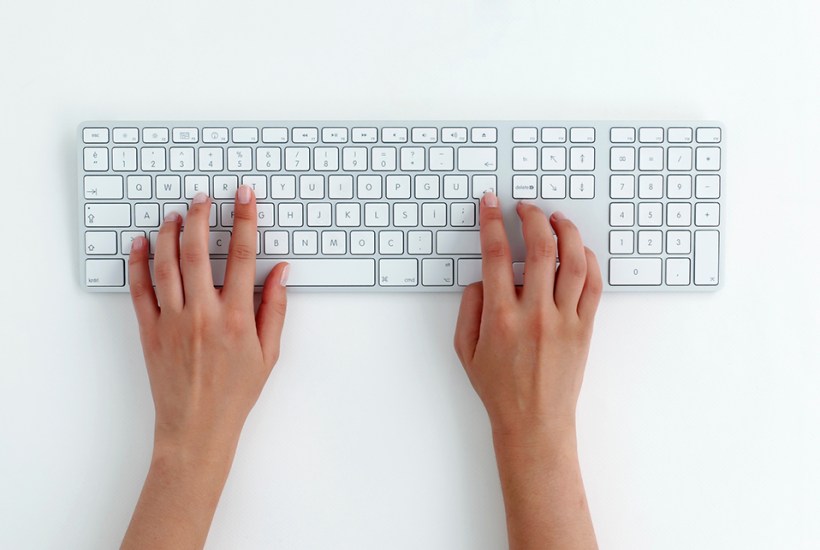
All the while, from 1983 onwards, a similarly infectious stupidity was infiltrating business life at ground level. This was the cancerous spread of the keyboard.
Youngsters see the keyboard as traditional office furniture. It isn’t. Yes, Qwerty is 150 years old, but the practice of everyone typing their own words in a professional setting dates only to about 1983, when spreadsheets began putting computers on managers’ desks, along with a keyboard and a screen. Before that, typing was strictly secretarial.
The spreadsheet required people to see immediately on screen the effects of every input. This low latency, the ability to see changes immediately and to edit on the go, led people to spurn the typing pool. Professional typists achieving 90 words per minute were replaced by highly paid executives typing at 20 – the division of labour in reverse.
And because we didn’t have a frame of reference, we never noticed how bad keyboards were, and how they got progressively worse. Those clicky IBM keyboards were delightful compared with the touch screen keyboard on a modern mobile phone. But the same Nash equilibrium applies – that reclining seat problem all over again: when combined with email, the curt, ill-considered, asynchronous approach to communication was imposed on everyone. Decisions once made around a table in minutes are now eked out over weeks by two-finger typists. The loss in productivity is disastrous but invisible.
Salvation may be at hand. Basic voice dictation never delivered, but put a language model behind the microphone and you have something that’s better than a dictation machine: like St Paul, Cicero, John Milton and Barbara Cartland, you now have an amanuensis. One that knows how to spell Slavoj Zizek’s name better than I do, that knows that Llanelli is a market town in Wales and that gets rid of all the ‘ers’ and ‘ums’, the vocal fillers and interjections – I dictated all of this as a test.
I use something called Wispr Flow, and it has changed my life. In the interests of transparency, I am now a tiny investor in the business – but I became one because, like that chap in the Remington adverts, I liked the product.
The implications of the displacement of the keyboard will be immense, and I shall write, or rather pronounce about this more in the future. But one of my first discoveries is that it’s far easier to be polite speaking at 150 words a minute than when typing at 40. Some part of the nastiness of the internet comes from the fact that rudeness and brevity go together.
As the old joke goes: why are there more Rangers supporters than Celtic supporters in Glasgow? Because it’s a lot easier to chant ‘Fuck the Pope!’ than ‘Fuck the Chief Moderator of the Free Presbyterian Church!’.
Got something to add? Join the discussion and comment below.
You might disagree with half of it, but you’ll enjoy reading all of it. Try your first month for free, then just $2 a week for the remainder of your first year.