It wasn’t long ago that giving medications during pregnancy – particularly new treatments – was approached with considerable caution.
The thalidomide tragedy remained within living memory, a devastating reminder that interventions considered safe could have unforeseen consequences for a developing child. Medicine advances when we remain willing to question accepted wisdom in light of emerging evidence – particularly when the stakes are high.
When the ABC published an article on July 18, 2026 declaring claims made by Senator Malcolm Roberts in early 2022 of a link between Covid-19 vaccination and miscarriage to be false, it seemed an opportune time to return to the evidence and ask some questions.
This article does not attempt to prove that Covid-19 vaccination causes miscarriage. It asks whether the evidence is sufficiently complete to justify declaring the scientific question about safety in pregnancy closed – and, if not, what questions remain.
So, what did we actually know in 2022?
First, let’s consider the timeline. In December 2020, the FDA granted emergency authorisation to Pfizer’s vaccine despite pregnant women being excluded from the clinical trial. Some participants became pregnant during the trial, but the original study was not designed to establish safety in pregnancy. The TGA granted provisional approval the following month.
In January 2021, the CDC stated that mRNA vaccines were ‘unlikely to pose a specific risk for people who are pregnant,’ despite the absence of direct clinical trial evidence in pregnant women.
Recent disclosures add important context. Newly released messages show Fauci privately raising concerns in January 2021 that post-vaccination fever and inflammation ‘theoretically could be associated with miscarriage in the 1st trimester.’ Weeks later, Nobel laureate and mRNA technology co-creator Drew Weissman alerted Fauci to animal data showing mRNA-LNPs crossing the placenta and reaching the foetus. These findings did not establish harm, but they show important uncertainties were being discussed privately while pregnant women were being publicly reassured. The following month, Pfizer announced that it was commencing a clinical trial specifically in pregnant women.
In April 2021, the New England Journal of Medicine published a study led by the CDC’s Tom Shimabukuro using data from the v-safe registry and reporting ‘no obvious safety signals’.
However, its initial calculation of miscarriage risk was problematic. The study reported a 12.6 per cent miscarriage rate – 104 miscarriages among 827 completed pregnancies – but most of those 827 women had been vaccinated in the third trimester, after the period in which miscarriage occurs. Women vaccinated around conception or during the first trimester had largely not yet been followed to completion.
The NEJM subsequently corrected the paper in September 2021, acknowledging that ‘no denominator was available to calculate a risk estimate for spontaneous abortions’ due to lack of data.
Yet, despite the lack of data, recommendations were already moving ahead. On 9 June 2021 – before an official statement from the US bodies ACOG and SMFM on 30 July – RANZCOG and ATAGI issued a joint statement recommending that pregnant women be routinely offered the Pfizer mRNA vaccine ‘at any stage of pregnancy.’
Australian state health authorities soon followed. On 24 August 2021, NSW Chief Health Officer Dr Kerry Chant wrote to GPs stating, ‘Pregnant women are a priority group and should be routinely offered Pfizer vaccine at any stage of pregnancy.’
Meanwhile, Pfizer’s pregnancy trial stopped recruiting in late 2021, with only 349 participants, despite planning to recruit 4,000.
So how reassuring was the evidence at that point? Not very. By the time vaccines were being widely recommended to pregnant women, including during the first trimester, there remained a distinct lack of direct clinical trial evidence upon which to base claims of safety throughout pregnancy.
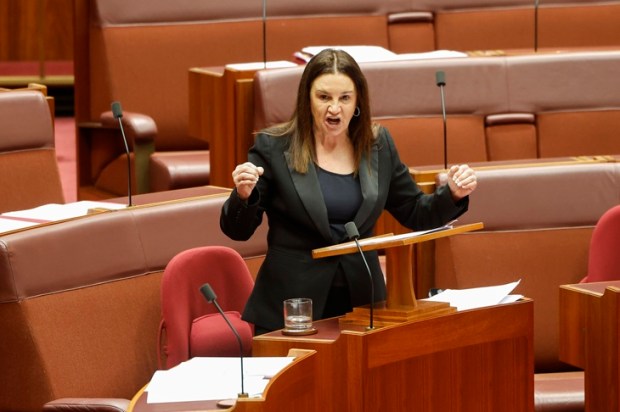
It was in this setting, on March 23, 2022, that Senator Malcolm Roberts hosted Covid Under Question, a cross-party inquiry featuring presentations from scientists, medical practitioners and vaccine-injured people.
Shortly afterwards, on May 3, 2022, during a streamed interview, Roberts, in referring to the inquiry, made the comments about miscarriage that the ABC would report four years later.
‘The ABC can reveal previously unreported remarks made by Senator Roberts about the impact of Covid-19 vaccinations on pregnant women – claims that are contradicted by extensive medical evidence – during a live stream with anti-vax mandate activists four years ago.’
In the interview, Roberts describes evidence he says was provided confidentially by a doctor during the inquiry:
‘We had a doctor who presented there. He had to do it in confidence… This particular doctor is a well-regarded obstetrician and gynecologist [with] a fertility clinic. Now he pointed out that people come to him because they have trouble conceiving [and] fertility clinics around the world around [have] about 13 per cent miscarriage rate. [But] for women who’ve been injected, it’s 50 per cent. For women who’ve been injected in the first trimester, it’s a 75 per cent miscarriage rate.’
Whatever one makes of those figures, the important question is what evidence was actually available at the time Roberts made the comments. The ABC adds:
‘At the time Senator Roberts made the comments, multiple studies had already reached the conclusion there was no link between the vaccines and miscarriage rates, including an analysis of 2,456 pregnancies published in The New England Journal of Medicine in 2021.’
But the cited study had recognised limitations, with authors acknowledging the ‘lack of a control group of unvaccinated pregnant (women)’ – a significant shortcoming when attempting to assess the safety of an intervention.
So, in 2022, when Roberts made his comments, the evidence base remained limited. Randomised trial evidence was unlikely to arrive soon: Pfizer had stopped recruiting for its pregnancy trial, the results of which have still not been formally published in a peer-reviewed journal.
In the meantime, practitioners were observing what was happening in their own patients. Some specialists in obstetrics and gynaecology began reporting increases in miscarriage rates within their patient populations. These observations were potential safety signals worthy of investigation.
In August 2022, Australian obstetrician and gynaecologist Luke McLindon presented findings from his own fertility clinic. Among his high-risk miscarriage patients, he reported a rate of 19.6 per cent in the 11 months before implementation of the vaccine guideline, rising to 48.4 per cent afterwards. The probability of observing a result this extreme due to chance alone is approximately 1 in 1,000.
This was a small cohort from a single clinic and could not establish causation. But that is precisely what safety signals are for: to prompt further investigation.
By 2023, more data were beginning to emerge, but important questions remained.
The ABC also cites a February 2023 systematic review – published nine months after Roberts’ interview – stating:
‘There is “no evidence that COVID-19 vaccines are associated with an increased risk of miscarriage,” according to a systematic review that pooled 21 studies involving 149,685 women published in the journal Human Reproduction in 2023.’
Yet the authors of this review themselves acknowledged important limitations, describing the evidence as ‘limited to observational evidence with varied reporting, high heterogeneity and risk of bias across included studies, which may limit the generalisability and confidence in our findings.’
A subsequent letter published by the same journal in October 2023 criticised the review for excluding a manuscript ‘that reported significant harms to pregnant women and infants’.
An Australian Senate hearing in August 2023 also illustrated the nature of the evidence being relied upon. Representatives from Pfizer and Moderna cited support from the Royal Australian and New Zealand College of Obstetricians and Gynaecologists as evidence of safety, stating ‘they have said there is no evidence of increased risk of miscarriage or teratogenic risk with mRNA or viral vaccines.’
By then, you might reasonably expect the manufacturers to have more robust evidence of their own.
More studies have emerged in the years since, but the uncertainty has not disappeared. A 2024 review concluding in favour of the safety and effectiveness of Covid vaccines during pregnancy acknowledged notable limitations in the certainty of the evidence.
Other research continues to raise questions, including findings concerning reduced spontaneous conception after Covid vaccination and fetal losses among women vaccinated early in pregnancy.
Questions also remain around Pfizer’s pregnancy trial, menstrual effects, fertility, IVF outcomes, and reported fetal anomalies.
The questions aren’t over and the jury is by no means ‘in’ on Covid vaccine safety in pregnancy, particularly during the first trimester. That authorities continue to recommend Covid vaccination for unvaccinated women ‘at any time during pregnancy’ deserves ongoing scrutiny.
Simply pointing to multiple studies concluding there is no association between vaccination and miscarriage does not resolve remaining uncertainties in this critically important area.
Even a small increase in miscarriage risk, could matter enormously at a population level. That is precisely why the evidence should continue to be tested rather than treated as beyond question.
I have questions. Lots of them.
Why do authorities continue to recommend Covid vaccination during the first trimester? Does the risk-benefit calculation change now that Omicron is well established in the community? What, if any, impact could vaccination be having on Australia’s falling birth rate? And is there any relationship between Covid vaccination and Australia’s recently reported highest stillbirth rate in 20 years?
Good science welcomes scrutiny because it has nothing to fear from better questions.
These questions deserve answers. And so do Australians.
Dr Julie Sladden has passion for transparency in healthcare. If you’d like to support her caffeine-inspired writing, you can shout her a coffee here.