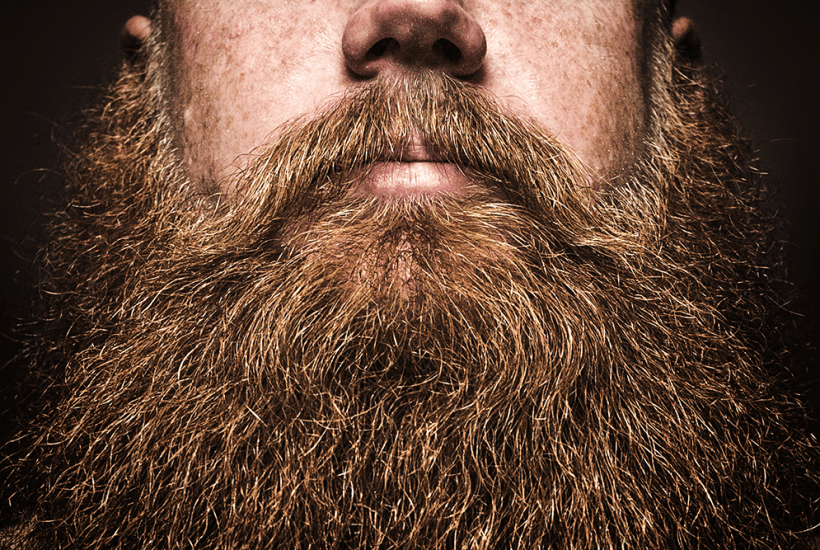
I was looking at a photo of my great-grandfather the other day and admiring his beard. A magnificent spade-shaped affair, it reached halfway down his chest. He was a Victorian, of course, and his era was, above all, the century of the beard. All the eminent Victorian males, such as Darwin, Dickens, the Earl of Salisbury and Prince Albert, wore them. Gladstone and Disraeli may have been political rivals, but they were united in both being devoted pogonophiles.
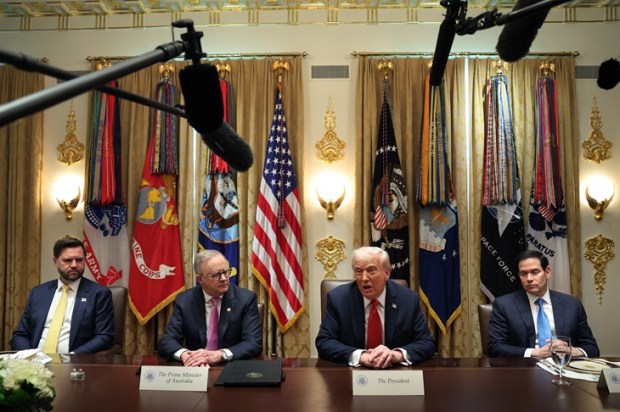
When President Trump and Pete Hegseth decreed recently that all US military men should be clean shaven, it struck me that, had that rule been around in the 1860s, the American Civil War would never have been fought, since all the leading generals on both sides were endowed with substantial forests of facial hair. One Union commander, Ambrose Burnside, was so notably hirsute in this respect that he lent his name to sideburns. However, the British Army, unlike the Royal Navy, has usually taken a dim view of beards. In the second world war, only the eccentric General Orde Wingate was given exceptional permission to grow one.
Why did the beardies do it? After all, beards are itchy to the wearer, and scratchy to anyone who encounters them intimately. Scraps of food get stuck in them, and some men like me are left feeling inadequate because they can’t ever manage to grow more than a scrubby approximation of one. Much better, surely, to have it all off with a clean and invigorating daily shave?
The ancient world was as divided on the question of beards: while the Romans were proudly clean shaven, the Assyrians and Egyptians made something of a fetish of their beards, shaping and curling them into painfully elaborate statements of status.
The early modern western world bounced between centuries in attitudes to beards: in the early 15th century King Henry IV sported a forked beard, possibly to compensate for his scabied scalp, which was largely bald. Baldness also afflicted the Bard a couple of hundred years later, but he grew a neat little pointed number on his chin just to show he could. By the 17th century facial hair was worn to signify the religious and political differences that were tearing the kingdom apart: the Civil Wars were as much a conflict between clean chinned Puritans and pointy bearded Cavaliers as they were about the divine rights of kings and parliamentary governance. Razors held sway throughout the 18th century and only with the Victorian age did beards carry all before them once again.
Shaving was carried out by ‘cut throat’ razors until the delightfully named King Camp Gillette, a US businessman, popularised the safety razor at the end of the 19th century and cleaned out his competitors.
Shaving technology took another great leap forward in the 20th century with the invention of the electric razor. Shaving was once carried out by barbers, but is now generally a matter of private personal grooming. This is possibly because barbers became unfairly associated with the fictional activities of Sweeney Todd, the demon barber of Fleet Street, or the execution of mobster Albert Anastasia, gunned down during a shave in a New York barber’s shop in 1957.
These days, the mysterious epidemic of premature baldness or shaven heads among modern men is often compensated for by hipsters growing luxuriant beards instead. There’s nowt so sheer as folk.
Got something to add? Join the discussion and comment below.
You might disagree with half of it, but you’ll enjoy reading all of it. Try your first month for free, then just $2 a week for the remainder of your first year.