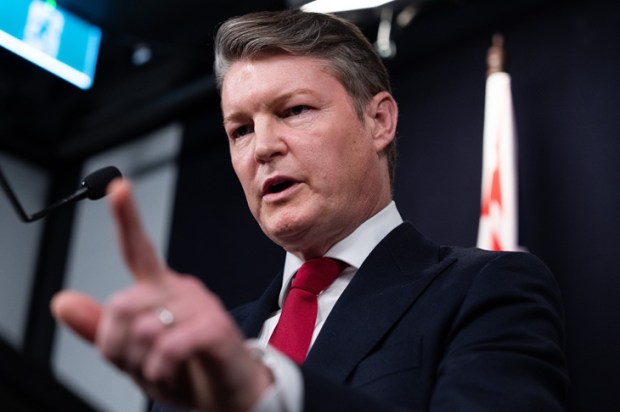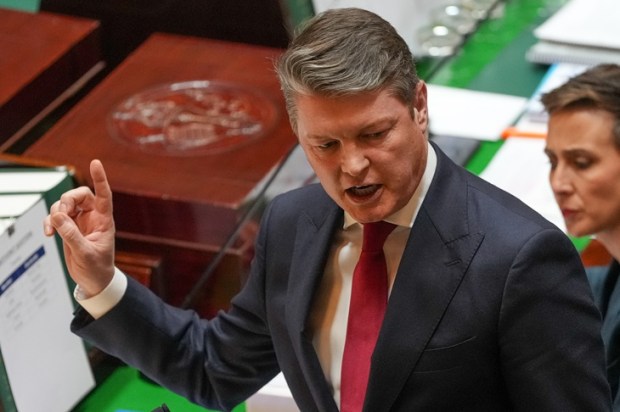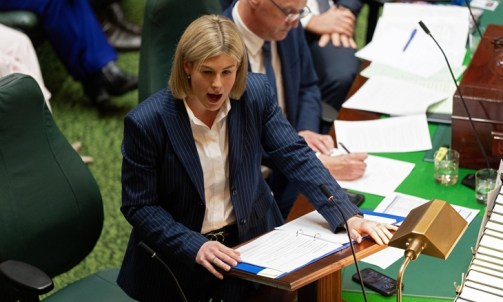
Given the dramatic slump in support and the rising popularity of One Nation, the Liberal Party federal Member of Parliament, Melissa McIntosh, argues, ‘I think it’s time for the Liberal Party to rebrand itself, some people think we’re stuck in the past and our policies need to resonate with the Australia of today and the future.’
Tony Abbott is correct to disagree with McIntosh about the need to rebrand the Liberal Party. Australia’s most successful party in terms of winning government is not a commercial commodity to be toyed with by marketing experts and media gurus.
The argument the party is obsolete and must modernise and change with the times ignores the importance of offering citizens arguments and policies best able to ensure the nation’s peace, prosperity, and social cohesion and stability.
Such political, social, and economic policies, instead of being products of the present and based on political expediency, must acknowledge the underlying beliefs and values that led to the party’s establishment all those years ago and that differentiate it from the Australian Labor Party and Woke Teals.
The Liberal Party, unlike the collectivist, authoritarian Labor Party and the Woke Teals, is inherently a conservative party committed to free speech, popular sovereignty, an open market, economic and financial prudence, less government, and protecting the individual’s liberties and rights.
Such a political philosophy did not arise spontaneously or by accident. It is the product of a process beginning with the New Testament and Christianity and evolving over hundreds of years including signing the Magna Carta, the Glorious Revolution, and the rise of liberalism during the Enlightenment.
Liberalism, from which the Liberal Party draws its unique nature, is opposed to totalitarian governments, statism, and the collective mind control and group think enforced by totalitarian governments exemplified by fascism, communism, socialism, and Woke ideology.
The rights and freedoms associated with liberalism are described by the American Declaration of Independence (signed 250 years ago after the fledgling American colonies won freedom from the Great Britain) as the unalienable, God given rights including ‘Life, Liberty, and the pursuit of Happiness’.
Over countless years millions have fought, suffered and died in the defence of liberalism and rights and freedoms we now mistakenly take for granted. It’s no accident that the freest nations globally are Western, liberal democracies based on what President Lincoln describes as a ‘government of the people, by the people, for the people’.
The argument the Liberal Party is backward-looking and according to critics must look to the future, ignores the reality that conservatism involves what the English poet T S Eliot describes as continuity and change.
Conservatism is not fossilised as it builds on what is best about the past while evolving over time and looking to the future. The dynamic nature of conservatism is best illustrated by Edmund Burke’s argument society involves a contract between the dead, the living, and the yet to be born.
The English cultural critic Roger Scruton makes the same point what arguing healthy and prosperous societies involve a shared inheritance, instead of random and destructive change, allowing citizens to see their place in things as ‘part of a continuous chain of giving and receiving’.
As well as evolving over time and drawing on what is best about the past, instead of being doctrinaire like cultural-left ideology, conservatism involves what Michael Oakeshott describes as a certain disposition.
A disposition that is cautious about radical change, that prefers the familiar to the unfamiliar, the tried to the untried, the actual to the possible and that is wary of government-inspired grand plans offering utopian bliss.
Scruton argues people, unlike ego-driven politicians and ideologues striving for unlimited control and power, are conservative in nature. People’s lives, on the whole, are centred on family, kinship, community, and a sense of national cohesion and pride.
Since the liberal bed wetters replaced Tony Abbott with Malcolm Turnbull in September 2015, the Liberal Party has sought to be Labor-Lite and whether Net Zero and climate change, celebrating diversity and difference (aka multiculturalism), or unrestricted immigration, it has failed to remain committed to its foundation beliefs.
One Nation and Pauline Hanson, on the other hand, have staked the centre-right territory arguing the case for family, community, kinship, and patriotism. The ONP also wants to restrict immigration and opposes climate alarmism, gender fluidity, and Woke ideology. As a result, One Nation is now more popular than the Liberal/National Coalition.
The challenge for Liberal Party, instead of navel gazing and believing all will improve by modernising its image and better marketing itself, is to rediscover its conservative roots and to present to the people a viable, credible and persuasive alternative to the Albanese government’s record of deceit, lying and financial profligacy.
Dr Kevin Donnelly is the author of Wake Up To Woke Why Pauline Hanson’s One Nation Party Is So Popular.