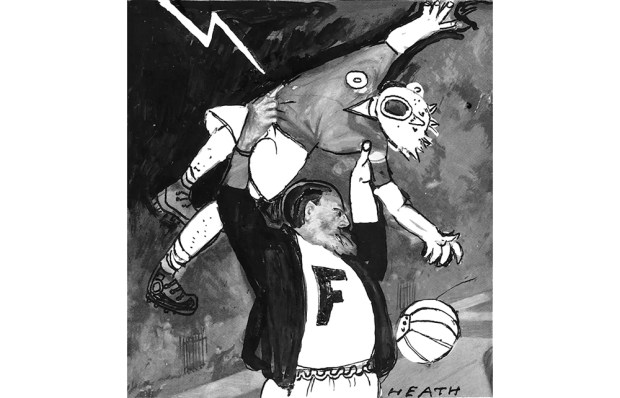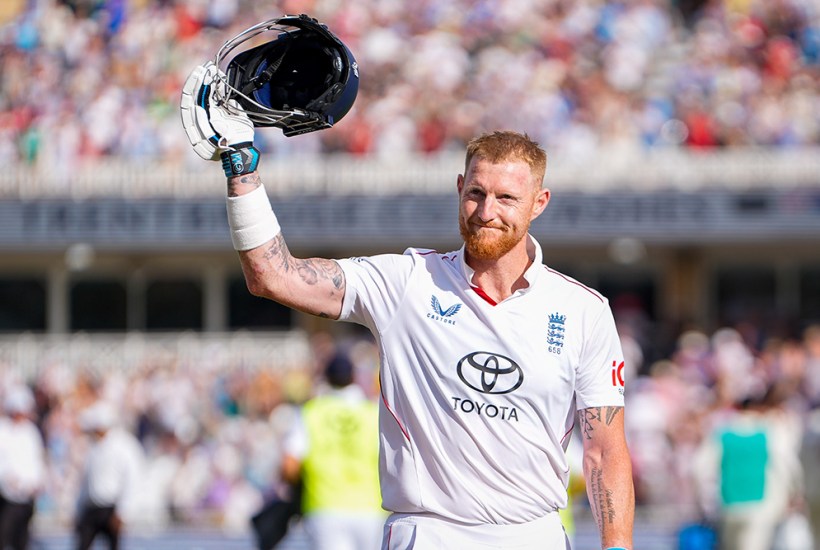
There was always something of John Cleese’s Sir Lancelot about Ben Stokes, ever eager for a flamboyant rescue mission in his own particular, as Lancelot puts it, idiom. Leave no chandelier unswung, no buckle unswashed. He would charge in, gung-holier than thou, and work out the damage later. ‘When I’m in this idiom, I sort of get carried away,’ Lancelot apologises after massacring all the guests at a wedding.
At times, it was glorious. But often, increasingly so in the second half of his England captaincy, ghastly. ‘Incredible highs and pretty low lows’ was Stokes’s own assessment – and we will always be grateful for the highs. But as England rebuild, they need to consider the manner of those lows and how many were self-inflicted.
Their 2-1 defeat by New Zealand was the first time England had been beaten at home in a series of three Tests or more for 14 years. They have lost seven of their past nine Tests, including an Ashes walloping that began with a two-day defeat in Perth. They have forgotten how to bat long in order to control a match. Eight times in the past year they have been all out within 60 overs.
Stokes’s last knock epitomised the brainlessness. Set 373 to win match and series, Sir Lancelot’s idiom took over and he promoted himself to open in a mission to ‘cause chaos’. He charged his first ball, missed a reverse-sweep off his next, hit two sixes and was out for 30 off 20 deliveries. This approach infected the others. Jacob Bethell was LBW, misjudging the fourth ball he faced; Harry Brook tonked his first for six and was out eight balls later for 21; Emilio Gay, in the last over of the day, tried to reverse-sweep his first ball. Chaos it certainly was. Compare that with New Zealand’s Daryl Mitchell, who came in when they were wobbling and took six and a half hours to make a century. ‘This is riveting, Daryl,’ Stokes said, sarcastically. Maybe, but who won?
The Stokes era began and ended with New Zealand, apt since the captain was born in Christchurch and Brendon McCullum, the head coach who encouraged the adventurous approach known as Bazball after his nickname, is from Otago. In 2022, England’s new Test captain said he expected to lead a team of ‘selfless’ cricketers and they played with both brains and belief as they chased targets of 277 (Stokes 54 off 110 balls), 299 and 296. They followed that by chasing 378 to beat India.
The strategy of ‘keep out the good balls, punish the bad hard’ was simple, effective and a vast improvement on the paralysed way that England had played at Lord’s the previous summer, also against New Zealand, when they were given a target of 273 in 75 overs and settled for a draw. McCullum and Stokes were right to encourage England to play without fear. But, somewhere along the way, boldness turned into recklessness.
What now? It will be impossible to replace Stokes, possibly the best all-rounder England ever had, with one man, which means a rethink of the balance of the side and how they play. England are in seventh place in the World Test Championship, ahead of only the West Indies and Pakistan, whom they play next in a series that starts on 18 August. Helpfully, there are no more county championship matches until two days later, the England Cricket Board having surrendered high summer to the wretched Hundred.
They had similarly poor preparation before last winter’s Ashes, reasoning that a 50-over series in New Zealand (them again!) would get them ready to play Tests in Perth and Brisbane. The ECB should stop claiming that Test cricket is ‘the pinnacle’ unless they treat it as such. You don’t prepare for Everest by hiking in Cambridgeshire.
McCullum was right to encourage England to play without fear. But boldness turned into recklessness
Sir Andrew Strauss’s review after the 2021/22 Ashes disaster recommended cutting the number of first-class county matches but playing them across the whole summer to replicate the pressure of Test cricket in the best conditions, not pushing them out into April, May and September. That seems to make sense, but if they do that they also need to select for England based on form and achievement, not a hunch.
Too many Bazball players were chosen and retained because of potential rather than track record. It is a mystery how Zak Crawley played 64 Tests with a first-class average of 31. Bethell, with one first-class century to his name and an average of 29, bats at No. 3 in Tests because he can make attractive cameos in Twenty20. Bowlers were selected on how fast they could bowl, not the control they exert. The appointment of an Australian, Marcus North (Andy Burnham will be pleased), as national selector may open minds.
Long term, the ECB needs to decide if McCullum can coach both the red and white-ball sides or if the roles should be split. Can he get a new Test captain to play boldly and intelligently? Brook, the limited-overs captain, is favourite but while he is the most talented young batsman we have, he has developed a frustrating habit of throwing away his wicket. He needs to be reminded of his obligation to the team: less derring-do, more just do. And if McCullum can’t do that, someone else should.
Perhaps, as is sometimes the case when batting, you have to go back to go forward. Mike Atherton has urged England to return to Andy Flower, who coached them to victory in the Ashes at home twice and away in 2010/11, with Sir Alastair Cook, his former pupil, at his side. Both would bring an idiom that England have lacked: patience and discipline. Sir Lancelot is gone. Maybe Sir Blockalot is needed.
Got something to add? Join the discussion and comment below.
You might disagree with half of it, but you’ll enjoy reading all of it. Try your first month for free, then just $2 a week for the remainder of your first year.