Kenya
In the year 2001 Toby Young asked me to help him boost The Spectator’s new online edition by writing a column he christened Wild Life, in which ‘a great white hunter takes aim at a few sacred cows in contemporary Africa’.
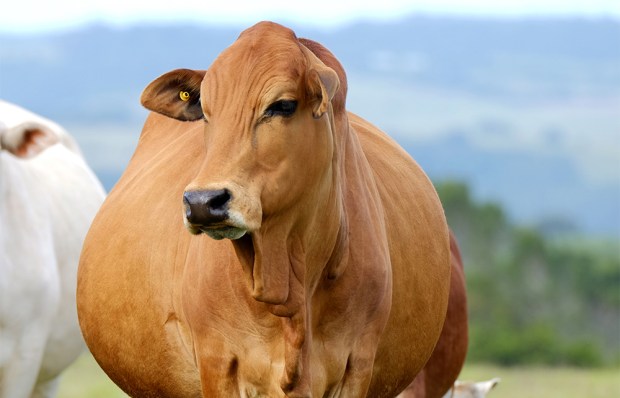
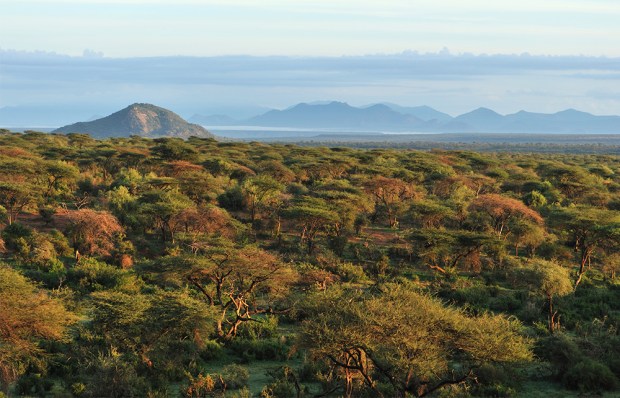
What he really wanted was scoops. My story on Prince William shooting an ibis (a protected bird in Kenya) was splashed across the UK dailies, as was my exclusive on Rowan Atkinson having to seize the controls of an aircraft flying him and his family over the African bush after the hungover pilot fell unconscious. Around this time, my ex-wife and I pitched a tent in a remote corner of the Laikipia plateau, north of Mount Kenya, where we began ranching cattle. The editor Boris Johnson liked my farming tales and moved me into the magazine. For 25 years I think it has been the only regular column out of Africa in any western publication.
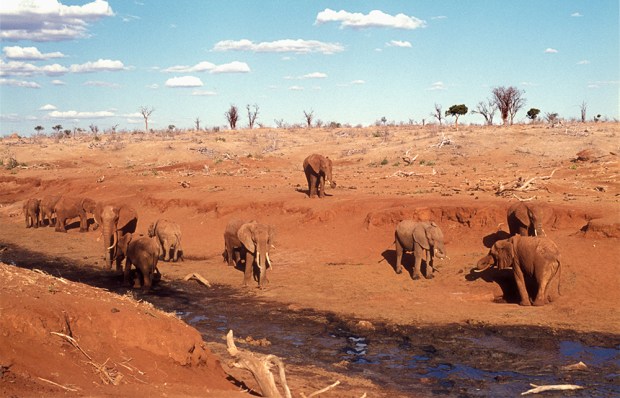
Life in Africa’s wilderness was often strange, beautiful or violent, but writing this column brought me back to earth every 30 days, when I had to capture what it was like for faraway readers. On the farm, our tent became a mud hut and then a stone house. Our two children were raised alongside dogs and cats, but also livestock and wild creatures. Seeds we planted in the soil have become towering, shade-giving trees. Our cattle won cups and rosettes at the cattle shows. My best friend was murdered, an elephant killed my neighbour, a leopard ate a farm worker, a baboon tried to eat my toddler son and I blew the heads off cobras that spat poison in our faces. Dust devils brought drought and torrential rains made the savannah as green as Ireland. Bullets and spears flew when Samburu warriors rustled our cattle. I spent happy days tracking them, laying ambushes or having my car riddled with bullets. Our firebrand local MP led the violent invasion of Laikipia farms, ranch houses were torched and my left hand was nearly amputated after I was surrounded by nomads throwing rocks at me. My mother died in my arms with Vera Lynn singing ‘We’ll meet again’ and my ex-wife survived cancer after a heroic battle.
During the time that I’ve written Wild Life, Africa’s population has nearly doubled. On the ranch, cowhands who were youths when we started have become grandfathers. Back in the new millennium, Africa still appeared remote and unimportant. Today, Africa’s diaspora is embedded in British life. I hear more than a third of players in this year’s England World Cup team are of African descent. Kemi Badenoch leads the Conservatives, African novelists like Abdulrazak Gurnah are household names and Afrobeats have gone mainstream. A quarter-century ago, whenever I flew out of Jomo Kenyatta
bound for Heathrow, I felt I was heading to the well-run Mother Country. These days, departing England for my birthplace Nairobi brings relief as I swig my Tusker beers, knowing that I’m returning to a young, energetic nation which may even have a bright future, if we can elect better leaders. Kenya will always be home.
For a long time, to help raise money for the farm’s development, I stayed working in TV and the news, which allowed me to cover stories on five continents. Whenever my day job was done in Haiti, or Beijing, Borneo or Abkhazia, it was fun bashing out the stories I heard at the bar for the Speccie. I wrote while deaf after being blown up by an al-Qaeda bomb in Mogadishu, scribbled notes while feverish with malaria in South Sudan and filed minutes before deadline from Mad Pig Ranch in Mexico, before crossing into Arizona with ‘coyote’ human-traffickers.
Whenever we suffered one of our setbacks on the ranch, the consolation was that at least it would make good copy. Laikipia was still pretty wild country and at times it was pioneering stuff. We were on one piece of land, 5km long and 2km wide, which felt like an entire world in itself, bringing disasters, sadness, humour or folly. We saw the cycle of seasons and nothing was permanent, nothing repeated. Each day brought fresh adventures. Farming is about learning as you go and trying different things, many of which fail. Some are OK and some hit the mark – a bit like writing columns.
In the past two years our lives saw radical changes. My marriage ended and I am in a new relationship. At 61, I still have a great deal to learn. This is my last Wild Life. I am grateful to readers for keeping up with my dispatches from the long grass of Africa all this time.
Got something to add? Join the discussion and comment below.
You might disagree with half of it, but you’ll enjoy reading all of it. Try your first month for free, then just $2 a week for the remainder of your first year.