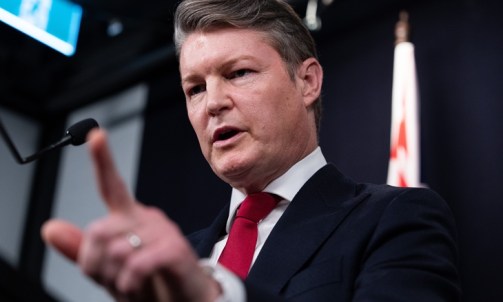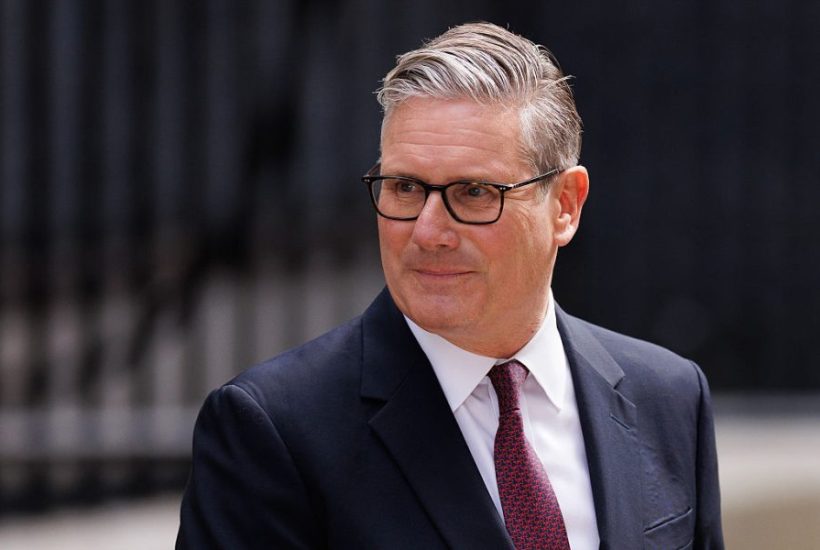
Despite resigning as prime minister and leader of the Labour party on Monday, Keir Starmer is determined to publish the much-delayed defence investment plan (DIP) ahead of the Nato summit in Turkey on 7 July. Speaking at a conference in London yesterday, Defence Secretary Dan Jarvis confirmed that he was ‘working to finalise and publish the DIP before I travel to Ankara with the Prime Minister’ in less than a fortnight.
The fact that Starmer is still determined to publish the DIP is surprising. Most presumed after his resignation that the defence spending blueprint, along with any other unfinalised policies and projects, would be put on ice, ready for his successor – expected to be the former Manchester mayor Andy Burnham – to review, drop or push through. Government convention dictates that caretaker governments – as Starmer’s has become – must hold off from making any new spending commitments. Starmer is arguing that the DIP constitutes an existing spending commitment.
In his first address as Defence Secretary at the Rusi Land Warfare conference yesterday, Jarvis – who has been in the role for less than two weeks – insisted he had had ‘very good and constructive meetings’ with the Chancellor Rachel Reeves about getting the ‘best possible deal’ for defence spending. Jarvis’s predecessor John Healey resigned earlier this month, accusing Starmer and Reeves of putting together a DIP that ‘falls well short of what is required for defence’.
The DIP was supposed to form a key part of Starmer’s prime ministerial legacy
It is understood that negotiations between Jarvis, the Treasury and No.10 are down to the wire, with the Defence Secretary pushing for more than the £13.5 billion Reeves is reportedly prepared to give the Ministry of Defence (MoD). There have been suggestions that Jarvis might succeed on this front.
The Defence Secretary hinted that a breakthrough might also come when it comes to the government’s Nato defence spending commitment of 3.5 per cent of GDP by 2035. Jarvis told The Spectator: ‘Those negotiations are underway as we speak.’ Conversations, he added, would continue for ‘the next day or two’. Healey had tried, and failed, to get the Treasury to agree to committing 3 per cent of GDP to defence spending by 2030, revealing in his resignation letter that the costings presented to him in a draft of the DIP would raise defence spending to just 2.68 per cent by that year.
Why Starmer is still pushing to publish the DIP seems relatively clear. On 7 July, Nato leaders, led by US president Donald Trump, will gather in Ankara, Turkey, to discuss the progress each member state is making towards spending 5 per cent of their GDP on defence by 2035. At a meeting of Nato defence ministers last week, US secretary of war Pete Hegseth announced that America would be conducting a six-month review of its troop presence in Europe: ‘It’s a review that some countries will fail, and others will pass with flying colours,’ adding that ‘where other allies do not spend with urgency, our [Nato] contributions will go down.’
Much to the reported anger of Burnham’s allies, Starmer has clearly decided that he does not want to suffer one last indignity on the world stage by turning up to the summit empty-handed. Whether he is also partly motivated by a stubborn desire to complicate life for his successor by making the DIP harder for Burnham to reassess or scrap isn’t clear. His decision to open nominations for the Labour leadership on 9 July, two days after the Nato summit, is reportedly deliberate.
The DIP was supposed to form a key part of Starmer’s prime ministerial legacy. Instead, delayed by over seven months and discredited by Healey’s resignation, it helped to drain away the remaining dregs of Starmer’s authority and seal his fate as a prime minister on borrowed time. The outgoing prime minister had, in the last few floundering weeks before his resignation, hoped to publish the DIP and with it shore up his credibility as a prime minister who, at the very least, could make tough decisions on defence.
Much less is, however, known about how Burnham will approach the question of defence spending. Beyond a vague indication he made earlier this month that he would be prepared to cut welfare to fund defence, he has not elaborated on whether he would seek to spend more on defence, or how he would fund it. It may be that, despite Burnham’s nominal anger, Starmer publishing the DIP gives his successor a convenient excuse for not revising defence spending upwards in the face of competing economic pressures.
With several weeks to go before Burnham can officially put his name down to succeed Starmer as prime minister, his camp has given no indication yet whether he will keep Jarvis in place as Defence Secretary or offer the job to someone else. Along with his appointments to the Treasury and Foreign Office, his choice for Defence Secretary will be one of the most consequential of his premiership. Despite Starmer’s best efforts to the contrary, only Burnham can say if the DIP will survive his entry into No. 10. Regardless, the damage to Starmer’s legacy has already been done.