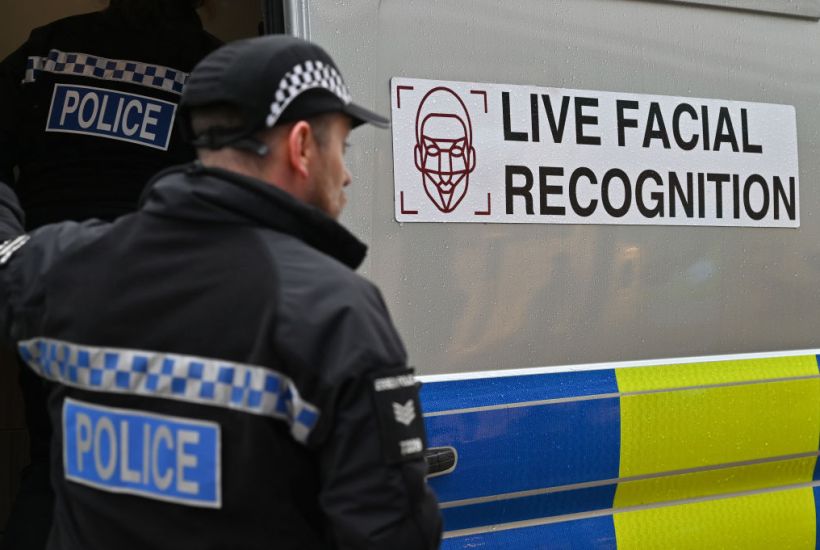
The use of facial recognition technology to catch criminals is controversial. Earlier this year Essex police paused a trial of the technology, after research found it ‘was statistically more likely to identify black people’. The human rights organisation Liberty has warned that the technology would ‘always be used disproportionately against communities of colour’, and the campaign group Big Brother Watch says that ‘AI surveillance that is experimental, untested, inaccurate or potentially biased has no place on our streets’. In The Spectator, one writer has argued that she wants ‘no part in the brave new world of supermarket surveillance’. But with today’s King’s Speech promising a national ‘legal framework’ for facial recognition technology, new evidence suggests that the benefits of the technology far outweigh the costs.
Very real harms can be and are caused by dangerous criminals remaining at large, a problem exacerbated by our justice system’s tendency to lose track of them.
Today the Metropolitan police have published the results of a six month live facial recognition pilot in Croydon, which resulted in 170 arrests of wanted criminals, and crime in the area falling by over 10 per cent. The trial, which ran from October 2025 to March 2026, used ‘static cameras’ fixed to lampposts, instead of the specialised vans which have been used in other trials. This means that the system can be monitored remotely, rather than requiring officers to be present.
It did not just lead to arrests for low-level crimes. People wanted for kidnap, rape and serious sexual assault were caught by the cameras. The system also identified 37 people who were breaching court-imposed conditions, including Kastriot Krrashi, a registered sex offender. Krrashi was arrested by police, and in February received a sentence of six months imprisonment. Other arrests included a man wanted for voyeurism for more than six months, and a man wanted for rape. The system even caught a woman who had been unlawfully at large since 2004.
The reductions in local crime recorded during the study (down by 10.5 per cent overall, and 21 per cent for violence against women and girls) likely represent the deterrent effect of the cameras. There is a strong body of evidence that the likely prospect or certainty of being caught significantly reduces offending.
The benefits of facial recognition technology are clear. But is it racist? The evidence seems to suggest that it might be. Home Office commissioned research into Retrospective Facial Recognition, produced last year by the National Physical Laboratory, did find a substantial difference in false positives for different ethnicities. The false positive rate ‘for White subjects (0.04 per cent) is lower than that for Asian subjects (4.0 per cent) and Black subjects (5.5 per cent)’. This means that black and Asian people are more likely to be incorrectly identified by the system, and approached by the police when they are not actually wanted for a crime.
While this may well be embarrassing or annoying for those people, it seems that it would only take moments to demonstrate to the police that they are not the wanted person, and be allowed to go on their way. No one is going to be jailed because of a mistaken facial recognition match. On the other hand, very real harms can be and are caused by dangerous criminals remaining at large, a problem exacerbated by our justice system’s tendency to lose track of them.
Indeed, only this week it was reported that a Ifedayo Adeyeye, who had been jailed over the abduction of his five-year-old son was released in error by HMP Pentonville. It took the prison three days to notify police, during which, according to Mr Justice Hayden, Adeyeye ‘strolled about’ London, ‘had a very nice dinner’, ‘quite a lot of drink’, transferred thousands of pounds to others from a bank account and then flew to Spain. Last month, Thabani Maposa, a migrant who assaulted a 14-year-old girl at a Weymouth holiday park failed to appear for his trial. It is not clear if he is still at large. Widespread facial recognition cameras would be able to catch men like him.
This is the context of the debate about facial recognition technology – the state’s inability to keep track of criminals, even those it already has in custody. If it displaces crime rather than eliminating it, that’s an argument for wider deployment of these systems rather than their rejection. Indeed, even Liberty seem to accept that facial recognition is here to stay. Their Director, Akiko Hart, told me that ‘robust safeguards, oversight, and transparency on the use of facial recognition cameras should have been in place before they were ever introduced to our town centres and high streets’, before noting that ‘there should be clear and consistent rules around how police are using facial recognition to ensure the rights of the public are protected at all times. It is critical that the government’s legal framework for facial recognition addresses these issues.’
But the truth is that the false positive rate will not lead to arrests in error, let alone convictions or jail sentences, and the minor inconvenience to some people of having to prove their identity to the police is not a good enough reason to ban technology which will make us safer.