This book got glowing reviews when it was published in the US a few months ago: ‘Irresistible’ (New York Times); ‘Riveting’ (Boston Globe); ‘Energetic and engaging’ (Washington Post). I kept wondering if I was reading the same book. You wouldn’t have thought it possible to make the Rolling Stones boring, but Bob Spitz somehow manages to. Let me count the ways. By giving his own programme notes on every Stones record; by paying far too much attention to the actual recording process and crediting every new sound engineer; and by totally missing the point that it is the Stones themselves we are interested in.
I’m fairly typical of diehard Stones fans in that I got hooked in the 1960s and have stayed with them ever since. I am now 82. My children have barely heard of them and my grand-children not at all. Their last LA concert in 2024 was sponsored by the American Association of Retired Persons. It had an extended interval because the audience took so long to shuffle to the toilets. Mick Jagger and Keith Richards were 80; Bill Wyman had retired; and Charlie Watts was dead. But still it attracted 65,000 people. Stones fans are nothing if not loyal. Back in 1969, Mick said: ‘Obviously I can’t do this for-ever. I mean we’re so old. We’ve been going for eight years and we can’t go on for another eight.’
Because Stones fans are so old we know a lot of stuff about them already. We know about Keith and Mick meeting at Dartford station on 17 October 1961 and bonding over the American blues records Mick was carrying. We know about them teaming up with Brian Jones and their early gigs at the Crawdaddy club. We know about the squalid flat in Edith Grove and Mick deciding to drop out of the LSE. We know about Andrew Loog Oldham becoming their manager and having to take his mother to co-sign their Decca contract because he was still a minor. We know about the Redlands drugs bust, the death of Brian Jones and the carnage at Altamont.
What we want is new stuff – or at least news of what the Stones have been up to in, say, the past 40 years. But this Spitz signally fails to provide. By page 570 we have only reached 1989, and he gallops through the rest of their career. He has little to say about Keith’s fall from a coconut tree or the death of Charlie, or Mick’s later relationships with L’Wren Scott, who committed suicide, or his current fiancée Melanie Hamrick. He barely even mentions their 2023 album Hackney Diamonds. And of course not a hint of The Cockroaches.
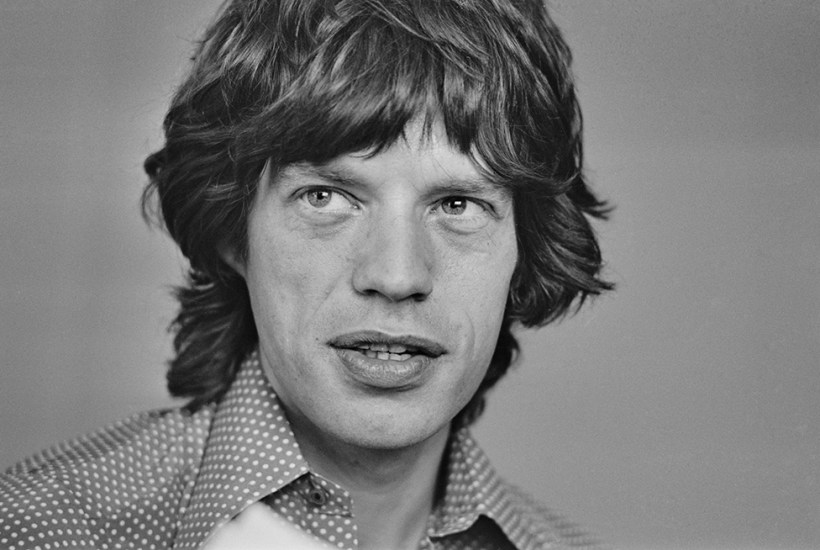
So what did I learn? That Mick couldn’t stop crying when he was sent to prison after the Redlands bust; that he went off with Marsha Hunt rather than Marianne Faithfull after the Brian Jones memorial concert but lost interest in her by the time she had their baby, Karis, so that she had to sue for paternity payments. He was always a tightwad. He insisted on replacing chocolate biscuits with plain ones at recording sessions and he paid an art student only £50 to design their outstretched tongue logo. After Altamont, while the others fled home, Mick flew to Geneva to deposit the $1.8 million takings in a Swiss bank. Marianne said of him that he was ‘infatuated with the aristocracy per se. He would attend dinners given by any silly thing with a title and a castle.’ Keith was furious when Mick accepted a knighthood in 2003 and said: ‘The idea of Sir Mick Jagger is grotesque.’
‘The idea of Sir Mick Jagger is grotesque,’ said Keith, furious that Mick had accepted a knighthood
I learned much more about Charlie: that he collected Arab stallions though he didn’t ride, and classic cars though he didn’t drive. When the others stayed at the Playboy mansion during one of their American tours, he refused to join them because his wife Shirley wouldn’t have liked it. He was always the straightest of the band, but even he succumbed to drink and drugs at one stage. Bill was a ‘pussyhound’, who would look for girls he fancied in the audience and send assistants to shepherd them to his bed. Mick was disgusted when he started going out with Mandy Smith, who, at 13, was younger than his daughters Jade and Karis. Not that Mick was ever a puritan; but he was not keen on underage groupies. Still, there is a strong strain of misogyny in all Mick’s lyrics, especially ‘Some Girls’.
There are plenty of other, better Stones books. The outstanding one is Keith’s Life, brilliantly ghosted by James Fox. John Perry’s Exile on Main Street is a gripping account of the Nellcote years, when the group lived in tax exile in France. Mick was given an advance for an autobiography back in the 1970s but failed to write it and repaid the money. He said he had no interest in remembering the past. I very much doubt he’ll be reading this book. I suggest you emulate him.
Got something to add? Join the discussion and comment below.
You might disagree with half of it, but you’ll enjoy reading all of it. Try your first month for free, then just $2 a week for the remainder of your first year.