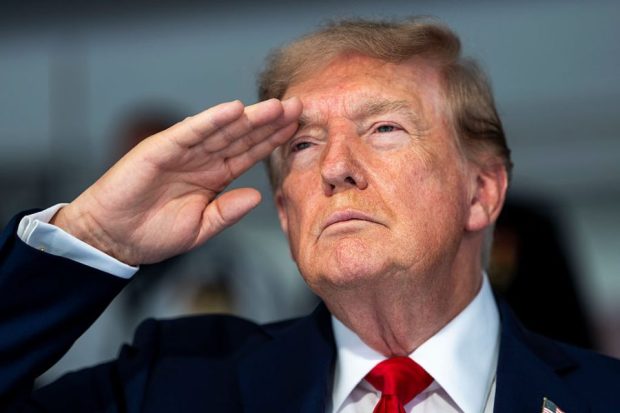
In declaring an extension to the ceasefire in the Iran war, President Trump signaled clearly enough that he would prefer to strike a peace deal with Tehran. J.D. Vance, the Vice President, has been kicking his heels, waiting to return to the Pakistani capital Islamabad for another go at achieving a breakthrough. The Iranians keep blowing hot and cold on whether they are ready to play their part. Trump suggested in a social media post earlier this week that he believes this is because Iran’s government is “seriously fractured.” His ceasefire extension is aimed at allowing the regime time to deliver a new proposal.
Trump may want to hammer everything out in Islamabad, but he is not dealing with an ordinary government operating under a straightforward power structure. At the last round of talks in Islamabad, Tehran was represented by its Foreign Minister, Abbas Araghchi, and the parliamentary speaker, Mohammad Bagher Ghalibaf. The Americans believe Ghalibaf, in particular, to be a significant force in Iran. He may well be an important figure, and one of the highest-ranking officials to escape assassination, but he is not the ultimate decision-maker. Far from it.
The same caveats apply to Araghchi. The Foreign Minister signaled after the last round of negotiations that the Strait of Hormuz was now “completely open,” and also hinted that Iran would be prepared to be flexible over the critical issue of uranium enrichment. His comments were publicly disowned just hours later by senior figures in Tehran, who accused him of “deviation” from the agreed mandate. Araghchi found himself denounced on Iranian state TV, the propaganda arm of the regime. He won’t be making the same mistake any time soon.
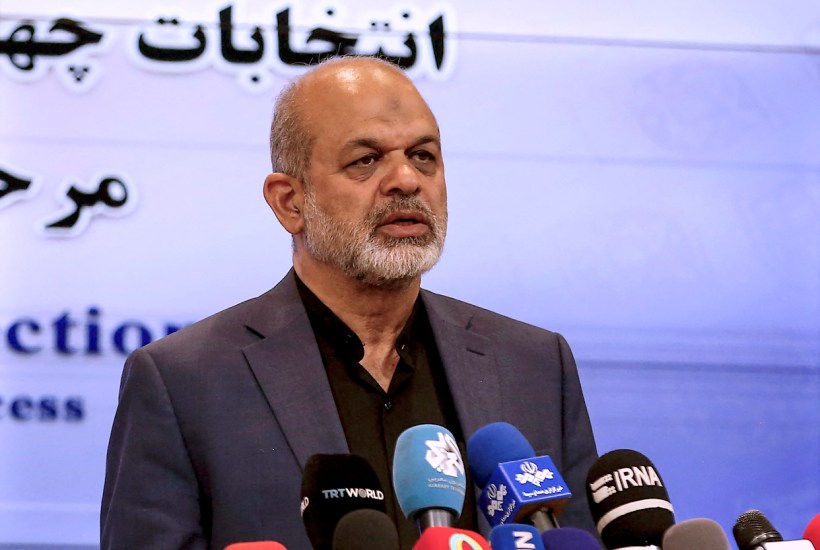
So, who exactly is calling the shots on Tehran’s behalf, and on what authority? Look no further than the Islamic Revolutionary Guards Corps (IRGC), and its new leader, Ahmad Vahidi. He is a hardline former interior minister and a founding member of the IRGC. He is also a member of the other significant source of power and authority in Iran: the Supreme National Security Council. This is the body that coordinates military, intelligence and foreign policy. Its head is Mohammad Bagher Zoghadr, a founder of the notorious Quds force, responsible for training and funding Iran’s foreign proxy militias. The IRGC and the Supreme National Security Council will decide what Iran will – or won’t – concede in any peace deal. Their red lines are clear: little ground is to be given on enrichment, sanctions must be lifted, and the country’s missile program preserved. That’s their gambit for the moment, at least.
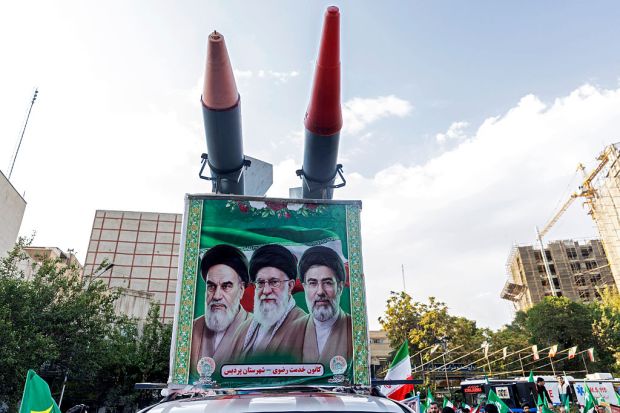
This stance points to another fundamental change in Iran since this war began. Power in Iran has become even more concentrated. The killing of Ayatollah Ali Khamenei, the former supreme leader, as well as many of the old-timers in the ruling circle, has left the country a military dictatorship in all but name. President Trump has suggested that the new figures in power are “less radical and much more reasonable than the old ones” but there is no obvious evidence to back up his claims. If anything, they appear even less open to compromise or reason. The rest of Iran’s conventional governing structure is little more than a facade. That is not to say that civilian institutions, such as the presidency and the foreign ministry, are completely irrelevant – it is just that they count for little in a power structure that is heavily weighted towards the military and security establishment. The clergy – the other conventional pillar of authority in the Islamic Republic of old – looks sidelined for the moment. What is less immediately clear is the position and influence of Mojtaba Khamenei, who replaced his father as supreme leader. The problem for Mojtaba is that he is not quite supreme. He has made no televised appearances since the war began and speculation about his real state of health continues. It is hard to be convinced that he will ever be the ultimate decision-maker.
What happens now is anyone’s guess. In the latest developments, Iran says it has seized two cargo ships in the Strait of Hormuz. President Trump is maintaining the US blockade of Iranian ports. The status of peace talks in Pakistan remains up in the air. Trump has hinted once again that negotiations with Iran remain “possible” in the next few days. Maybe, maybe not.