The dark side of the Moon, a broken loo and a floating jar of Nutella: such was Artemis II. When Helen Sharman joined the Mir space station in 1991, becoming the first Briton to visit space, the appetite was rather for oranges. Not only were they ‘rare in the Soviet Union then’, Sharman recalls on a new podcast, but they lent the cramped space a reassuringly fresh aroma.
The Art of Adventure hosts an interview about a different exploration each week, from George Mallory’s expedition to Everest in 1924, to Ernest Shackleton’s ill-fated Endurance, and Sharman’s space flight. It has been steadily climbing the charts, which is a feat in itself, given that it’s hosted by a shop, rather than the likes of Goalhanger. Arthur Beale, the country’s ‘oldest yacht chandlers’, have been outfitters of adventurers for half a millennium and so are thoroughly on topic. As far as I’m aware they are yet to venture into spacesuits.
D’Angeville took 18 bottles of wine, 26 roast chickens and a carrier pigeon to the summit of Mt Blanc
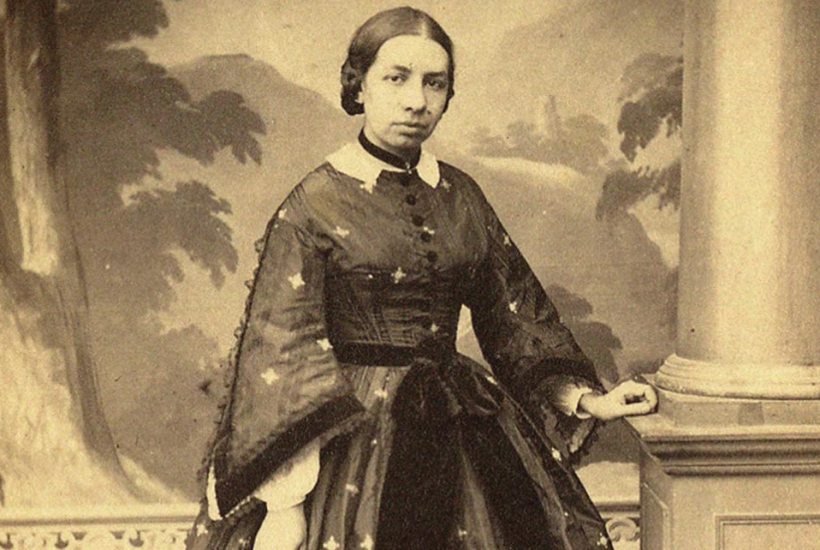
Today, they sell hefty pullovers, thermals and beanies, but time was that lady adventurers were in the market for bonnets. In 1838, a 44-year-old Frenchwoman named Henriette d’Angeville donned a sizeable hood – plus corset plus knickerbockers concealed under her skirts – and became the first woman to scale Mt Blanc unaided. Modern adventurer Lise Wortley told the podcast of her attempt to emulate the climb – albeit without the 18 bottles of wine, 26 roast chickens and (live) carrier pigeon, which d’Angeville took to announce news of her success from the summit.
Arthur Beale can also claim Ernest Shackleton as a customer, supplying his ropes and kit. I enjoyed polar exploration historian Henrietta Hammant’s discussion of his one-upmanship with Scott. Legend has it that the enterprising Shackleton put out an advertisement for a crew, promising ‘small wages, bitter cold, long months of complete darkness, constant danger, safe return doubtful, honour and recognition in case of success’. Hammant doubts this ad existed – it’s never been found in spite of the offer of rewards – but in either case some 5,000 men applied to join Endurance.
The story doesn’t sound so outlandish given that Sharman was moved to apply for her space flight after hearing an advert on the car radio. ‘Astronauts wanted, no experience required,’ ran the campaign to open up the Soviet programme to capable outsiders. More than 13,000 people put in applications for what came to resemble an early form of reality TV. Sharman described her discomfort at certain aspects of the build-up, but the end clearly justified the means. If you want to know how astronauts prepare themselves for risk and reason out adverse eventualities, I recommend her episode heartily.
Modern adventurers may be especially interested to note the discrepancies between what Sharman and Shackleton valued in a team explorer. Where Shackleton looked for optimism, patience, idealism and courage, Sharman stressed the need for tolerance, flexibility, openness and modesty (‘there’s no space for egos in a spaceship’). One fears Shackleton wouldn’t have fared so well
in space.
Have you been wondering what life would be like without the Moon? I should direct you to actor-comedian Alan Davies’s new podcast, Life Without, but the answer may not entirely be to your satisfaction. The new series subtracts a different thing from the world each week and tries to imagine life without it. With the Moon, I had assumed that the effects on the tides and seasons would be pretty instant, but I came away with the impression that we wouldn’t need to worry about major problems such as destabilisation for hundreds of thousands of years. Can this be right?
Davies is an endearing host. In the episode on rats, we learn that the people of Alberta, Canada, established an anti-rat campaign in 1950, with border controls and anti-rat jeeps. For one of the interviewees, who has kept rats as pets, the expansion of such a programme would be a travesty. Apparently rats love playing hide and seek and being tickled, and recent experiments have revealed that they also enjoy driving little cars (though sadly not jeeps). They sound like a reasonable substitute for a life partner.
According to one of the experts interviewed for Davies’s episode Life Without Sex, a ‘brilliant belly laugh’ could also take the place of physical intimacy, but on this I was less convinced. Another suggestion was that many of us would be satisfied playing board games. You’ll find me on Mt Blanc.
Got something to add? Join the discussion and comment below.
You might disagree with half of it, but you’ll enjoy reading all of it. Try your first month for free, then just $2 a week for the remainder of your first year.