As the United States and Israel’s war with Iran continues to escalate with no clear end in sight, Australia’s politicians and policymakers must adopt a clear-eyed, Australia-first understanding of the conflict – guided by our national interests and not those of others.
This means understanding both the immediate risks and the longer-term strategic consequences across all fronts – economic, military, and geopolitical – so that Australia can effectively navigate this crisis, safeguard our security, and secure the best geopolitical outcomes for our country in an increasingly unstable world.
Regional Background
Since antiquity, the defining constant in the Middle East has been persistent conflict from wars foretold in the Bible to successive invasions and conquests by empires such as the Persians, Romans, and Ottomans, and later by the colonial powers of France and Britain.
With the exception of Persia, the region’s modern borders were largely shaped by France and Britain through the Sykes-Picot Agreement of 1916, with Russian approval, and with little regard for the tribal, religious, cultural, linguistic, and ethnic realities of the peoples within those boundaries.
Persia, by contrast, is an ancient civilisation dating back over 2,500 years. Its modern successor state, Iran, has seen its borders defined over centuries through conflicts, treaties, and agreements with successive powers such as Russia and Britain, rather than by a single imposed settlement. This continuity has instilled a deep sense of national pride, rooted in cultural endurance, historical achievement, and a strong sense of sovereignty in the face of external pressure.
Overlaying these historical and cultural complexities, the region also possesses the most coveted geopolitical asset of the current and past century: vast hydrocarbon reserves that fuel the global economy.
The Thucydides Trap
In a region with no shortage of impactful events, there were, in my view, two watershed moments that led to this inevitable conflict.
The first was the Iranian Revolution, which overthrew the Pahlavi dynasty and brought Ayatollah Ruhollah Khomeini to power. This reignited and intensified the Shia-Sunni divide across the Middle East and laid the foundation for Iran to position itself as the centre of a revolutionary order aimed at reshaping the region and removing Western influence.
In response, Gulf states – fearful of this shift – backed Saddam Hussein’s war against Iran in the 1980s, with American and European support. Iran, largely isolated, endured a brutal conflict that ended in stalemate, while simultaneously beginning to export its revolutionary ideology through Shia proxy networks, starting with Lebanon.
Following Khomeini’s death, Ali Khamenei maintained this strategic direction. The American ‘War on Terror’ and later, the Arab Spring created further instability, which Iran leveraged to expand its regional influence while refining its asymmetric warfare capabilities.
From the late 1980s, Iran pursued ballistic and nuclear capabilities, building on its civilian program established in the 1950s. These efforts were framed as deterrence – particularly amid fears of encirclement by US forces in Afghanistan, Iraq, and allied Gulf states; however, they also point to an ambition for regional hegemony. Khamenei has consistently maintained that nuclear weapons are against Islamic principles, and US intelligence assessments have long stated that Iran has not made a definitive decision to build a nuclear weapon.
This tension culminated in the 2015 nuclear agreement (JCPOA), which sought to limit Iran’s program in exchange for sanctions relief, but its collapse reignited uncertainty. This uncertainty escalated into the 12-day war from June 13 to June 24, 2025, during which direct strikes by the United States and Israel on Iranian nuclear-linked facilities reportedly destroyed key elements of the program; however, concern remained that enriched uranium stockpiles had been moved prior to the strikes. While battlefield claims remain contested, the strategic effect was clear: escalation without resolution.
Nonetheless, in March 2026 testimony to Congress, Tulsi Gabbard confirmed that the intelligence community assessed that Iran has not ‘dashed’ for a nuclear weapon and had made no effort to rebuild its program following the strikes. She reiterated prior assessments that Iran had not reauthorised the nuclear weapons program suspended in 2003, despite mounting internal pressure, while also warning that Iran is advancing missile systems capable of delivering both nuclear and conventional payloads that can reach the US homeland.
However, Iran’s long-standing pattern of opacity and strategic ambiguity has eroded confidence among Israel, Western, and Arab states, leaving any assurances or agreements viewed with deep scepticism and limited trust.
The second watershed moment in the Middle East was the October 7, 2023, Hamas attack on Israel, in which over 1,200 people were brutally killed. This attack deeply traumatised the State of Israel and the Jewish community across the world. Its much-vaunted and highly respected intelligence and security apparatus had failed so catastrophically, something previously unimaginable for a country so accustomed to military and intelligence dominance.
On a trip to Israel in August 2022, I made two observations. First, almost daily, major newspapers such as The Jerusalem Post, The Times of Israel, and Haaretz carried warnings about the existential threat posed by Iran’s nuclear program, effectively conditioning the public for the inevitability of war with Iran. Second, Netanyahu was deeply unpopular in inner-city metropolitan areas, particularly among more educated and liberal populations.
Former Israeli Prime Minister Yitzhak Rabin operated within institutional constraints – pragmatic, measured, and cognisant of the limits of military force. Benjamin Netanyahu represents the opposite approach. This was evident in the 2023 judicial reforms and the undermining of the Oslo Accords. It was Netanyahu’s strategic decision to allow Qatari funds to flow into Hamas-controlled Gaza, deliberately fracturing Palestinian political unity between Hamas and the Fatah-led Palestinian Authority, thereby weakening the viability of a two-state solution.
Politically, Netanyahu has also used conflict to consolidate leadership and reinforce his position as Israel’s indispensable security guarantor. Following October 7, he regained political ground through the invasion of Gaza and the campaign to destroy Hamas, including targeted killings of its leadership abroad. He then expanded operations into South Lebanon, significantly degrading Hezbollah’s capabilities, moved into and occupied Syrian territory and then conducted airstrikes against the Houthis in Yemen.
At the same time, Netanyahu capitalised on a uniquely favourable geopolitical alignment, leveraging the most pro-Israel US administrations in modern history to advance a long-held strategic objective: war with Iran. This aligns with Israel’s broader regional strategy of systematically weakening or removing central authorities in rival states – as seen in Syria and Iraq – and now extended to Iran.
More broadly, beyond any individual leader, Israel’s enduring strategic doctrine has long been to preserve regional military and technological superiority as a means of ensuring its long-term survival in a hostile region.
With this alignment in place, while the 12-day war of June 2025 the United States-Israel campaign achieved key operational objectives – particularly the degradation of Iran’s nuclear infrastructure, it failed to eliminate Iran as a strategic threat to Israel and the wider region. The conditions were therefore set for the next phase of the conflict.
Both Iran and Israel can be seen through the lens of the Thucydides Trap, as coined by Graham Allison. The Thucydides Trap is the tendency for war to become more likely when a rising power threatens to displace an established one, creating fear and tension that can escalate into conflict. In this case, Israel, fearing the loss of its regional hegemonic status should Iran acquire both ballistic and nuclear capabilities, made conflict increasingly likely.
American Interventionism
Since the end of the second world war, one pattern has become increasingly clear: except for the liberation of Kuwait, American interventionism in the Middle East – whether direct or indirect – has frequently produced more destabilising outcomes within the region. The overthrow of Mohammad Mossadegh in 1953 and the reinstatement of the Pahlavi dynasty contributed to the conditions that ultimately gave rise to the Khomeini regime.
Similarly, the removal of Saddam Hussein in 2003 fractured Iraq along sectarian lines, creating the conditions for the emergence of Al-Qaeda in Iraq, which later evolved into the Islamic State (ISIS). A comparable pattern can be observed in Syria with the recent overthrow of Bashar al-Assad, where the collapse of the central authority has led to fragmented control and the rise of extremist factions, further entrenching regional instability. Syria is now under the tenuous control of Hayat Tahrir al-Sham (HTS), an outgrowth of the former United States – designated terror group al-Nusra Front, fronted and led by Ahmad al-Sharaa – with significant Turkish backing and influence.
In effect, intervention has rarely delivered durable stability, and more often has left the Middle East more upended than it was before.
In the post-second world war global order, it is important to recognise that the United States is a country like no other. It remains the world’s pre-eminent superpower. The international rules-based order was primarily established and underpinned by the power and economic might of the United States of America, in concert with its Western allies. However, great powers do not merely uphold the rules; they can also reshape them when their core interests are perceived to be at stake. Even a superpower can drift toward imperial tendencies, bending or redefining the rules of the order to serve its own strategic objectives.
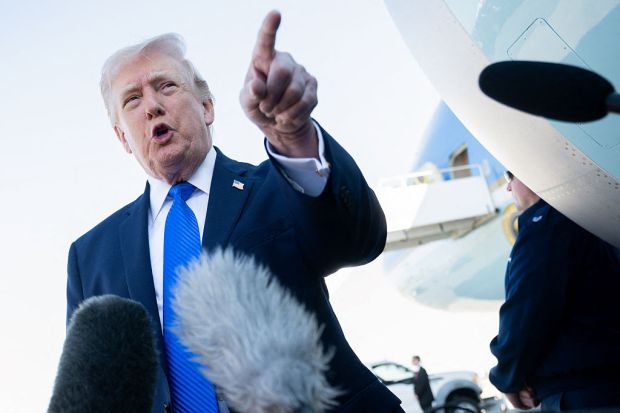
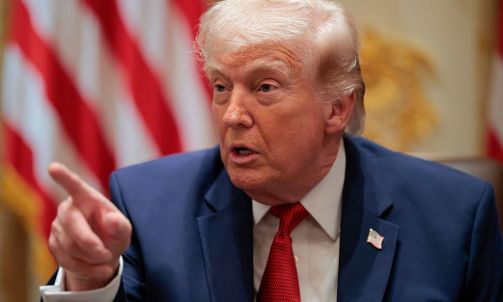
Buoyed by the successful capture operation of Venezuela’s President Nicolas Maduro earlier this year, the Trump Administration shifted its focus to ensuring that the Iranian regime could not acquire a nuclear weapon. Inside Iran, mounting economic pressure from sanctions – combined with inflation and worsening water shortages – has intensified domestic strain and contributed to ongoing unrest against the Khamenei regime.
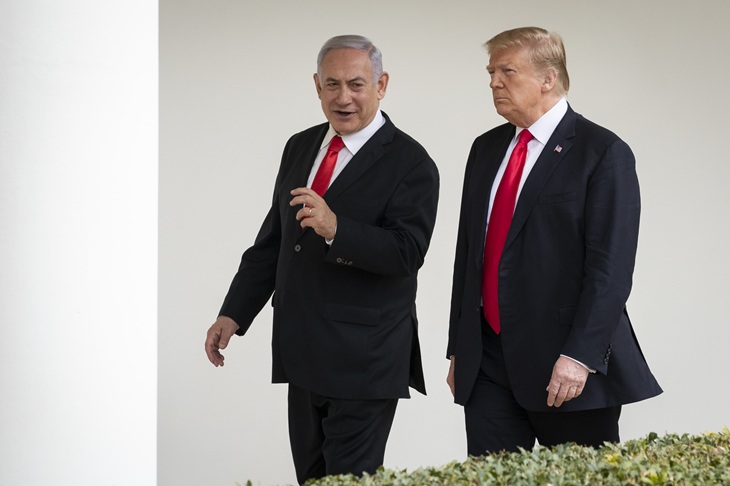
Around the same time, Netanyahu engaged in sustained lobbying efforts in Washington. Since Trump’s return to office, the two leaders have held multiple high-level meetings – six in total – focused largely on Iran and the broader regional strategy. These discussions took place even as US-Iran negotiations were continuing in the background.
The Administration’s public position was that Israel was likely to strike Iran, that Tehran would retaliate against American interests in the region, and that pre-emptive action was therefore necessary. However, the decision to strike Iran ultimately rested with President Trump.
If the objective of the war was a decapitation strike – to remove the primary obstacle to a negotiated nuclear settlement by eliminating Khamenei, triggering either rapid capitulation or the collapse of the Iranian regime – then it suggests a potential misreading of Iran’s political structure and historical resilience.
The United States now risks being drawn into a conflict with little strategic upside and significant downside. Instead of pivoting toward China, it is being pulled back into the Middle East – into a war that threatens to expand beyond its original scope. What began as a targeted strike now carries the real risk of cascading into a broader regional conflict, as Iran’s proxies and regional actors are drawn in.
At its most dangerous edge, the risk of nuclear escalation through proliferation, miscalculation, or desperation can no longer be ignored. In seeking to eliminate one threat, the United States may have opened the door to a far greater and more uncontrollable one. With mid-term elections approaching, the Trump administration may find itself increasingly constrained, facing outcomes that are difficult to control.
Brendan Perera spent five years living and working in the Middle East during the War on Terror, where he contributed to the delivery of critical major infrastructure projects.