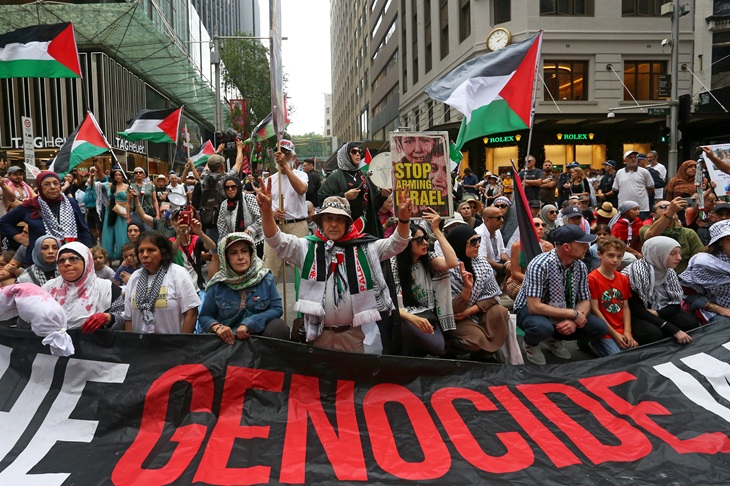
Ongoing claims of genocide perpetrated by Israel have reached the point where it is, in modern terms, normative.
That is, it is stated openly without opposition as if it were a declared fact.
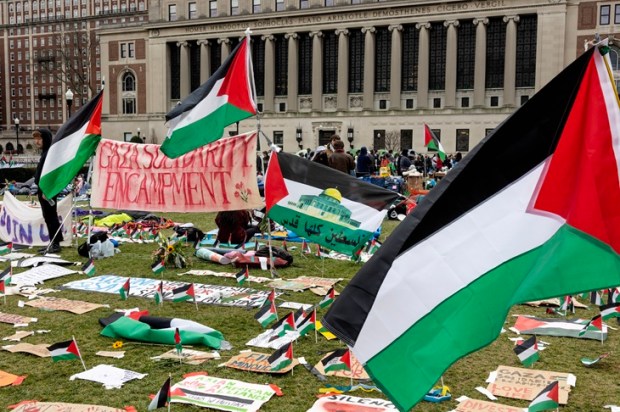
In Australia, the visit of Israeli President Isaac Herzog has been filtered through this view in all mainstream media and state media reports on the issue. Indeed, many global institutions have lent their weight to the charge, openly declaring Israel to be a genocidal state.
For me, this is as distasteful as the celebrations of Jewish slaughter on the steps of the Sydney Opera House on October 9, 2023, in the wake of the pogrom two days before.
As someone at the upper end of Generation X, I grew up in the shadow of the Holocaust. An event so uniquely evil that it gave rise to the term genocide.
It is a term coined by Raphael Lemkin, a Polish-Jewish lawyer and legal scholar who introduced the word in 1944 in his book Axis Rule in Occupied Europe. He combined the Greek genos (race or people), understood through the racial categories of the time, with the Latin cide (killing) to describe something he believed existing legal categories could not adequately capture. Although it was not defined before 1944, everyone came to know the attributes of a genocide.
This is not an argument about whether Israel meets the legal threshold of genocide under international law. It is an argument about what the word itself once described, and what is lost when that meaning no longer governs its use.
First, you don’t get to surrender in a genocide. The Holocaust is the history of a people who weren’t even at war with the Nazis. They were civilians living peacefully in Germany and historic footage is filled with Jewish prisoners and civilians trying very hard to appease their assailants, obsequiously in many cases, but to no avail.
Second, there weren’t pockets of Jews living elsewhere in occupied Europe who were safe and unconcerned. In fact, they had already qualified for extermination simply by dint of their birth. There were only Jews who had already been rounded up, Jews who were living on borrowed time, and Jews who were in hiding.
None of this even slightly represents the situation in Gaza today. Something you would never guess if you got your international news from Australia’s state media today. Moreover, the Holocaust allowed recognition of prior acts of genocidal intent before the second world war.
The early 20th Century was marked by successive genocides by the Islamic Ottoman Empire as it floundered. The Armenian Genocide (1915-1923) saw a systematic extermination of 1-1.5 million Armenians. The Assyrian Genocide (1914-1920) consisted of mass killings, deportations, and looting of Assyrian/Syriac Christians in the Ottoman Empire and Persia. The Greek Genocide (1913-1923) saw the systematic destruction of Greek populations in Thrace, Anatolia, and the Pontus region, including the burning of Smyrna. And the Diyarbekir Genocide (1915) was a localised, intense campaign of violence against all Christian denominations in the Diyarbekir region.
In every case up to and including the Holocaust, there was no way of seeking a respite of any kind, and in every case, there was a concerted effort to eliminate a population root and stem merely for existing. This is what genocide was understood as.
So, if the difference between Gaza and historic genocides is so stark and so obvious, why have international bodies lent their authority to it? Because genocide had to be defined for the application of international agreements. The 1948 UN Genocide Convention (Article II) defines genocide as ‘acts committed with the intent to destroy, in whole or in part, a national, ethnic, racial, or religious group’.
The words ‘in whole or in part’ are doing a lot of heavy lifting here. It reduces the threshold for legal genocide from what many people of my generation recall to something that would apply in many armed conflicts these days. Moreover, the religious aspect of it qualifies the oppression of the Uyghur and Rohingya populations in China and Burma, respectively, and other non-lethal assaults on a population as potentially genocidal events.
While the intention of those who coined the term were laudable, preventing a Holocaust like event prior to the final extermination phases, what they achieved was to broaden the term so much that it no longer represents just the elimination-level events that my generation associates with the word.
Today when the international bodies ponder whether Gaza is an act of genocide as defined by the UN convention, they are invoking the horror of pre-1948 extermination-level events, to define what is a war. One where the instigators could have surrendered and returned their hostages, providing them with an off-ramp that pre-definition genocides did not contain.
But where are the defenders of the Jews in Australia today? Where are the political warriors lining up to correct the record and defend the honour of invited guest, Israeli President Isaac Herzog? They are definitely not in the ALP, but neither are they in the waning political force that is the Coalition.
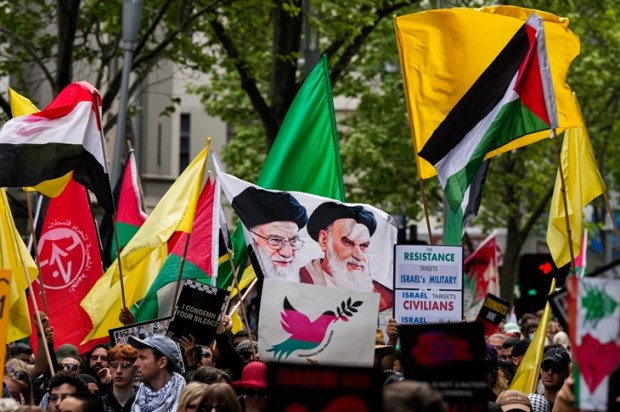
In fact, it has been left to the NSW police to deal with the often intimidating and misguided protestors targeting the Israeli President.
Hopefully, our political leaders will also show the same level of courage our police forces have finally displayed.