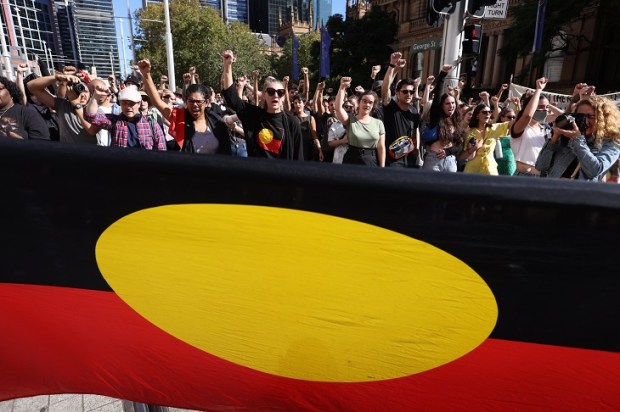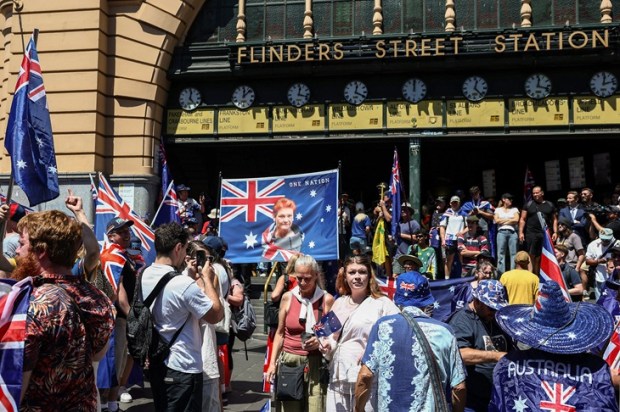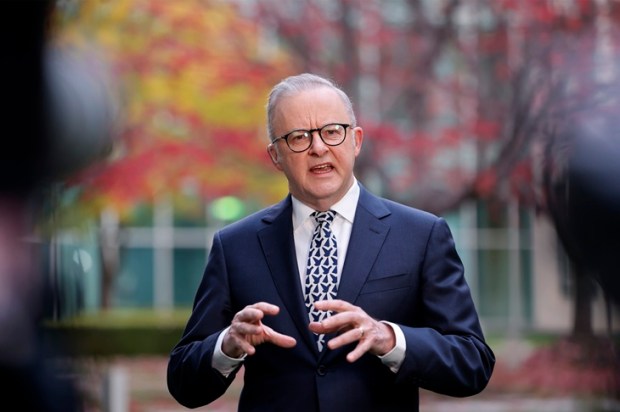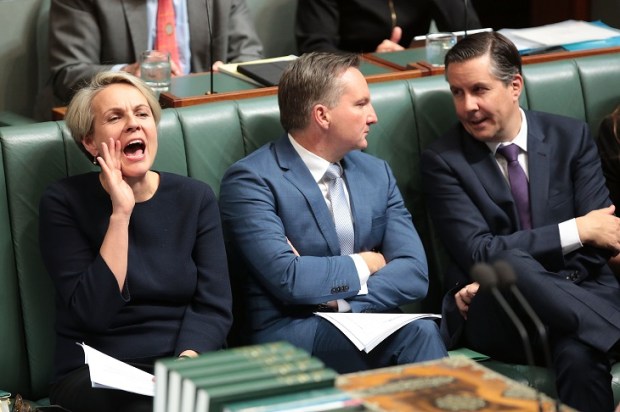
Victorian Liberal MP Beverley McArthur was one of the few to speak in firm opposition to the state Treaty which forever threatens to undermine the equality of citizens.
TRANSCRIPT OF SPEECH
I rise to speak on the Statewide Treaty Bill 2025, and at the outset I would like to thank my shadow ministerial colleague Ms Bath for the mountain of work she has done on this momentous piece of legislation. I would also like to recognise Ms Tyrrell from One Nation, who was not recognised by those on the other side for her contribution as an Indigenous member of this Parliament.
I oppose this bill, and it is difficult to oppose it in so many ways. Every facet of this bill I oppose strongly.
I oppose it in principle. I oppose it theoretically and politically. I oppose the language in the bill. I oppose its intent, the processes it creates, the bureaucracy, the expense. I disagree with the starting point of its advocates, and I do not believe for one minute it will deliver the outcomes they universally proclaim.
My opposition to this bill has only strengthened since 2022, when I spoke against its predecessor in this place. I do not doubt the sincerity of those who believe this bill represents progress. But sincerity is not the same as wisdom, and passion is not a substitute for principle.
This state has already suffered enough from a Parliament, a media and a political class that too often give blank cheques to unexamined feel-good ideas. Too many failed measures began as legislated virtue signalling by the self-appointed moral elite, the activist class, the inner-city educated set who mistake emotion for evidence and outrage for argument.
I have made that point at the start of many debates in this place, but this bill is the most serious example yet.
Patronising, smug and sanctimonious people are utterly convinced of their own virtue and see dissent not as disagreement but as moral failure. They demand conformity, not scrutiny. I am sorry to say we have heard some of that this afternoon – perhaps we should have it up on a banner on the wall – we are not here to be popular, we are here to do the right thing.
It is disgraceful that in this debate some have suggested that to oppose this bill is to oppose Indigenous people themselves. That is offensive, dishonest and beneath the dignity of this Parliament. If you do not support their policy, they say you hate the cause. If you question their proposal, they question your morality. It is a false choice. It is shameful politics.
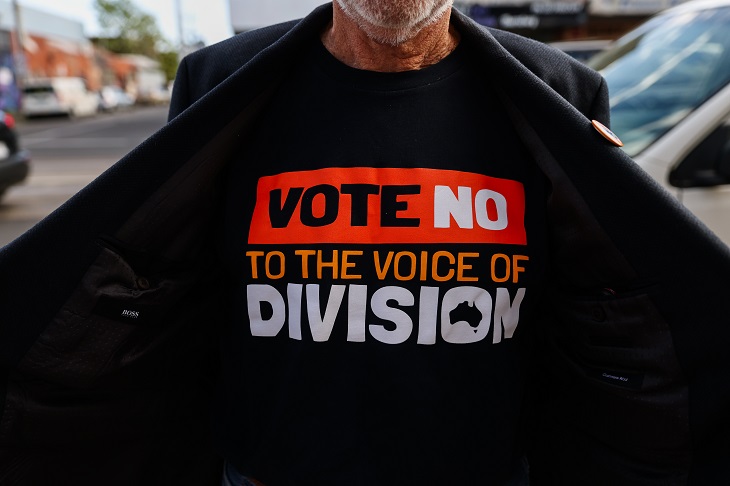
Almost two years ago, Australia voted on what was described as a modest change to our Constitution – the Indigenous Voice to Parliament. The result was decisive: every state rejected it. Even here in Victoria, a substantial majority said no. Across Western Victoria Region, every federal electorate – that is Wannon, Corangamite, Corio, Ballarat, Mallee and Hawke – voted no.
They said no to enshrining racial division in our democracy. They said no to creating a separate class of citizens. They said yes to equality. They said yes to unity.
Despite that, this Labor government has now introduced the Statewide Treaty Bill 2025. I have heard the claim that their electoral mandate in previous elections justifies it. That is quite simply laughable. As if those people voting in 2018 and 2022 had the first idea of what treaty meant. It is still impossible to know now, even as professional politicians with the benefit of the bill itself. To pretend the voting public gave Labor a mandate for this three years ago is either deliberately dishonest or disingenuous to Victorian citizens.
Under this bill, Gellung Warl will receive automatic escalating payments starting at $24 million a year and rising beyond $70 million by the end of the decade. Parliament will have no control over this funding, and the minister will have no authority to direct or oversee it.
Hundreds of millions of dollars will be handed to an unelected, race-based body that is accountable to no one.
The First Peoples’ Assembly can create its own electoral system, issue binding standards and demand that ministers, departments and even the Chief Commissioner of Police develop policies in consultation with it.
Every bill introduced to Parliament must include a statement of treaty compatibility, compelling MPs to adopt the government’s ideological interpretation of history.
This control of history should terrify us; the echoes of totalitarianism are unnerving.
This framework gives Gellung Warl sweeping powers to intervene in almost any matter – planning, education, health, justice – since matters affecting First Peoples is undefined. It can direct inquiries, demand responses from ministers, and even involve integrity bodies meant to oversee it. In short, it is a blank cheque for interference across government. It is a fourth level of government created for one group of citizens, funded by all and accountable to none.
This bill also creates an untested legal risk, locking us into the principles of the United Nations Declaration on the Rights of Indigenous Peoples, which include restitution of land, compensation and tax relief.
It imparts an international agenda into Victorian law without public consent.
The minister must tell Victorians what they will be asked to fund or forfeit. It is surely beyond reckless to legislate in a way that invites perpetual grievance and litigation.
In 2022, when this process began, I warned that we were creating a bureaucracy of division, empowering the few at the expense of the many, and entrenching rather than eliminating disadvantage. I quoted Jacinta Price’s maiden speech to the Senate stating her goal:
…to halt the pointless virtue signalling and focus on the solutions that bring real change … that give them real lives, not the enduring nightmare of violence and terror they currently live.
Those words are as true now as they were then. She also said that those who have benefited from the Aboriginal industry have done so without effecting change for the most vulnerable. That is exactly what is happening here. Hundreds of millions of dollars are being poured into structures and committees that employ bureaucrats but deliver little for the people they claim to represent. Poverty, poor health and violence will not be solved by new officers of the First Nations people.
Even the consultation that underpins this bill is deeply flawed. As I have spoken about previously, only a small fraction of Indigenous Victorians voted for the assembly that negotiated it. It is certainly no mandate for entirely reshaping our state’s governance. And now we have the extraordinary situation revealed by my colleague the member for Narracan, who read into the record a letter from Kurnai elder Aunty Pauline Mullett:
I write to express deep concern regarding the use of the term Gellung Warl in the Treaty Bill recently introduced to the Victorian Parliament.
Gellung Warl is a word from the Kurnai language, a language that belongs to our people, our ancestors, and our Country.
She continued:
To use our language to name a political body that the Kurnai people do not support is not only inappropriate it is harmful. It misrepresents our stance and risks turning our sacred words into symbols of a process we have not endorsed.
That letter should give every member pause. If the government cannot even consult properly on the name of the body, what confidence can Victorians have in its wider claims of respect and consent?
On the topic of language, the Minister for Treaty and First Peoples Natalie Hutchins said in her speech in the second-reading debate:
…treaty … is a commitment … it is an affirmation of First Peoples’ sovereignty and their rightful place in this place…
‘First Peoples’ sovereignty’, ‘their rightful place in this place’ – we need to think about those words seriously.
What does it mean in a democratic state founded on equality before the law?
Do First Peoples hold a different form of sovereignty derived from a different source?
How does this coexist with parliamentary sovereignty and one person, one vote?
And what of their rightful place in this place?
We should stop for a minute. How does that fit with a bill that does not even alter the constitution of Victoria? Either this is mere symbolism dressed up or it is the language of legal separation without the honesty to declare it.
At the state level alone we have extraordinary expenditure on the Indigenous problems, and on a conservative estimate we can suggest that approximately $4 billion has been spent by Labor since 2014 on so-called targeted programs and services. Why has the gap not been closed then? On this side we do not oppose progress. We support initiatives that deliver real, practical solutions to close the gap. We believe in empowerment, not entitlement; partnership, not paternalism. We should measure outcomes, not intentions, to determine whether programs actually work and at what cost. Yet where in this bill is there any requirement for an accountable organisation or results?
There is none – no accountability, no transparency.
In 2022 I quoted the story of Neville Bonner, and it is just as relevant today. The first Aboriginal Australian elected to the federal Parliament, he rejected the patronising and paternalistic attitudes that this bill revives. He once told of an encounter with former Labor leader Bill Hayden, who confronted him for handing out how-to-vote cards for a Liberal friend.
‘What are you doing handing out those cards?’ Hayden said. ‘We do more for you bloody Aborigines than those bastards do,’ said Bill Hayden.
It was not the language that offended Senator Bonner but the assumption behind it that his race should dictate his politics and that he should be grateful for the handouts of others. His belief in liberty was like mine. It is fundamentally illiberal to treat any group within society differently to another.
I acknowledge the wrongs of the past and the continuing disadvantage faced by many Aboriginal Australians. But I am proud of a country that strives to help and offers opportunity to all. If there is disadvantage, we should treat disadvantage at that point of disadvantage no matter the colour of your skin, your ethnicity or your background. Liberal democracy rests on equality before the law and accountability to the people as a whole. This bill undermines that foundation. It takes us back to tribal division and competing identities. Australians want fairness, not division, unity, not hierarchy.
The answer is ‘we, the people’ not ‘we, some of the people’.
The truth is that this bill is a mess. Labor promised a place in this place but cannot explain what that means. They claim truth telling but cannot even consult with those whose language they appropriate. They proclaim reconciliation but pursue power. It is like a bold, badly cooked soufflé. It looks grand on the outside, but the moment you touch it, it collapses on itself.
I believe passionately in reconciliation: real reconciliation, grounded in honesty, equality and shared purpose. But this bill is not reconciliation, it is separation. It is a monument to division. As I said three years ago, I cannot support something which I fundamentally do not believe in. It is wrong in principle, and it will not work in practice. Victoria does not need two governments. It needs one government that governs for all. We do not need two sets of laws. We need one law that protects everyone equally.
We are one, but we are many
And from all the lands on earth we come
We’ll share a dream and sing with one voice
‘I am, you are, we are Australian’
For that reason and for the unity of this state, I oppose this bill.