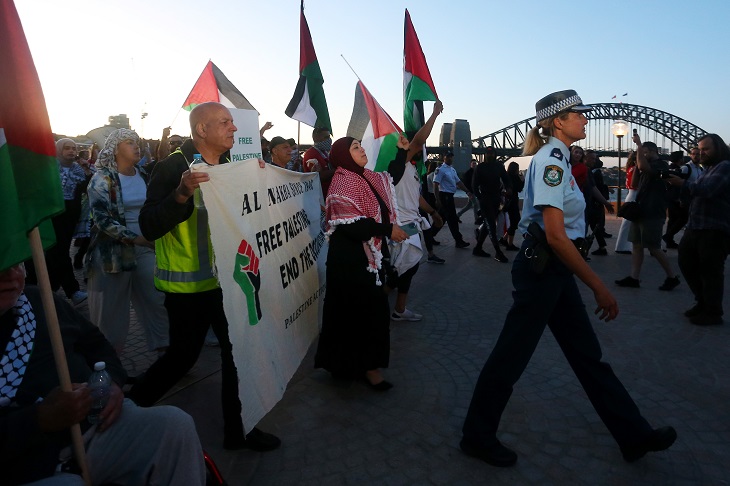
The decision, delivered on Saturday morning, came just 24 hours before the demonstration – expected to draw thousands – is set to shut down one of Australia’s busiest transport corridors.
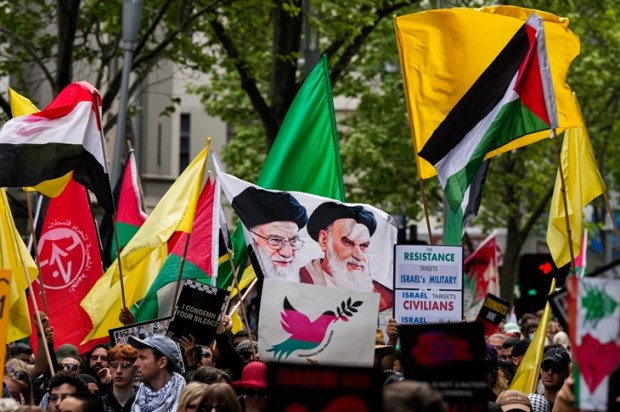
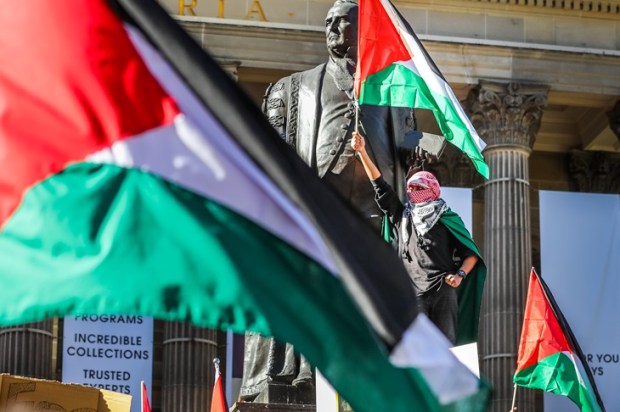
The protest, organised by the Palestine Action Group Sydney, is being described by organisers as a ‘march for humanity’ in response to what they call ‘widespread starvation, malnutrition, and disease’ in Gaza. The group cites reports from United Nations bodies and humanitarian organisations.
However, the NSW Police Force opposed the march, arguing it would pose serious risks to public safety and create major logistical disruption. That argument was rejected, stating that inconvenience is not a lawful reason to prevent protest.
‘It is in the nature of peaceful protests to cause disruption to others,’ said the ruling.
The court’s decision ensures that participants will be protected under NSW protest laws. Without the ruling, the demonstration would still have been permitted, but participants could have faced criminal charges for acts such as obstructing traffic or blocking access points.
A spokesperson for the Palestine Action Group said outside the courthouse:
‘This will go down, I think, as one of those moments in history when the people of the world – and in our case, the people of Sydney and NSW – stood up to be on the right side of history.’
But while organisers have framed the demonstration around humanitarian concerns, critics are wary – citing the historical context of previous protests in Sydney.
On October 9, 2023 – two days after Hamas killed 1,200 Israelis and took 250 hostages – the Sydney Opera House was illuminated in blue and white in solidarity with Israel. That same night, pro-Palestinian demonstrators took over the forecourt, where documented chants of ‘Gas the Jews’ and ‘F*** the Jews’ shocked the nation and drew international condemnation.
Is this the ‘right side of history’?
Such incidents have left many questioning whether Sunday’s event will similarly provide a platform for antisemitism. Is this the kind of ‘peaceful protest’ the courts are protecting? If history is any guide, what should we expect to hear on the bridge?
Since October 7, 2023, accusations of starvation and humanitarian collapse in Gaza have dominated international headlines.
Suddenly, because recent media coverage featured malnourished children in Gaza, the narrative is that Israel is starving Gazans. The New York Times faced backlash this week for featuring a malnourished child on its front page as evidence of famine in Gaza – only to later acknowledge the child had a severe pre-existing condition unrelated to the conflict.
A leaked internal email from a BBC executive editor also revealed that the corporation issued prescriptive instructions to staff on how to cover the humanitarian situation in Gaza.
In my opinion, claims of mass starvation are baseless and ignore key facts. More than 1.4 million metric tonnes of food have entered Gaza since the start of the conflict – roughly 1 kilogram per person per day, according to Israeli authorities. There is mounting evidence that Hamas seizes and re-sells aid at inflated prices to fund its operations.
Reports also suggest food is used as a weapon – with families allegedly receiving aid in exchange for handing over children to militant factions, and even greater rewards if the child dies a ‘martyr’. After all, martyrdom is the highest honour in jihadist ideology. We saw it during the various Intifadas, when Palestinians boarded buses and entered public spaces wearing suicide vests and blew themselves up.
If true, this is the ‘pay for slay’ program – using funds donated by the international community. The greater the number of Israelis killed, the greater the pension for the jihadist’s family.
Meanwhile, Israeli hostages held by Hamas describe being starved, beaten, and denied basic care. Eli Sharabi, who was held for 16 months and lost his wife and daughters in the October 7 attack, reportedly lost 40 per cent of his body weight during captivity. Other hostages, when paraded by Hamas during prisoner exchanges, were barely recognisable to their families.
Even Gaza’s own Hamas-run Ministry of Health has reported 127 deaths due to hunger or malnutrition since the start of the conflict – including 85 children. WHO figures for July 2025 alone show 63 malnutrition-related deaths, among them 25 children.
In response to the July figures, Israeli Prime Minister Benjamin Netanyahu ordered an increase in aid deliveries – a move many say contradicts the claim that Israel is using starvation as a weapon of war.
As tragic as these deaths are, war is never pleasant.
So why does Gaza receive such disproportionate global focus compared to other humanitarian crises?
Bosnia: 11,000 malnutrition-related deaths during the 1990s war
Somalia: 250,000
Sudan: over 500,000
Democratic Republic of Congo: more than 4 million
Why the silence on Somalia, Sudan, or the Congo? Why does Gaza dominate the headlines? Because anti-Zionism has become the new socially acceptable form of antisemitism – dressed up as humanitarian concern, or whatever narrative suits the day.
For many, the issue isn’t just humanitarian. It’s political. It’s ideological.
Greens senators have previously said that Australian Jews ‘should be made to feel uncomfortable’. The party’s vocal anti-Israel stance long predates the current war.
Meanwhile, activists continue to share images of emotionally charged scenes that lack full context – further fuelling tensions.
By contrast, the true image of starvation lies in history: the skeletal frames of Jews in Nazi concentration camps, where victims survived on stale bread and watery soup made from potato skins. Many died even after liberation – their bodies too weak to digest food.
From the chants at the Opera House to whatever may be heard on the Harbour Bridge this Sunday, the concern is not about protest itself – but about what is being protested, how it’s being expressed, and at whose expense.
A more productive demand protestors could make: call on Hamas to surrender and release the remaining 50 hostages – a move many believe would bring the war to an end. Even several Arab governments are now calling for that.
Then again, the antisemitic chants on October 9, 2023, began nearly three weeks before a single Israeli soldier set foot in Gaza.
Sadly, Australia is losing itself to these ideologies, whose followers now appear able to say and do as they please without consequence.
As demonstrations spread to Melbourne and other cities, Australians will be watching closely – not just to see how law enforcement responds, but to witness what message is ultimately carried across the bridge.
And frankly, I am not expecting anything pleasant.