The Trump administration’s recent crackdown on foreign students was probably the right thing to do – but if our federal government is asleep at the wheel, Australians will be the ones paying a price.
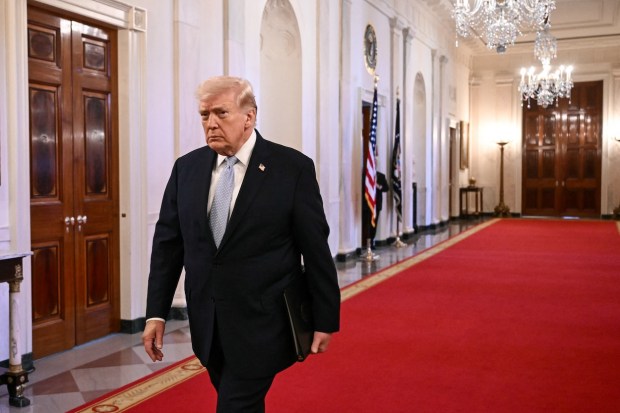
In May, following a decision to cut government funding to one of the United States’ most prestigious universities, Harvard, President Trump ordered a pause in its ability to enrol international students.
If Trump expands these orders to the entire American higher education sector, Australia could be inundated with even more international students.
At a time when our government has demonstrated it can’t keep a promise to limit international student numbers, this could leave Australian students at a distinct disadvantage.
Just last year the federal government announced a new ‘cap’ on international student numbers, leading Australians to believe that the international student intake would be reduced. However, the opposite has occurred.
Recently released Australian Bureau of Statistics data shows international student arrivals hit historic highs in the first quarter of 2025. Net arrivals reached 198,860 – up 15 per cent from the same quarter last year and just shy of the all-time record of 200,980 set in the first quarter of 2019. February 2025 saw the largest net monthly international student arrivals in history.
Far from slowing down, the growth in international student numbers seems to be accelerating.
The disconnect between what the public was led to believe, when Federal Education Minister Jason Clare announced his so-called cap, and what is actually occurring, highlights a broader pattern in the use of political spin. Furthermore, the growing overseas student intake in Australia’s tertiary education sector is having real consequences for domestic students and the broader public.
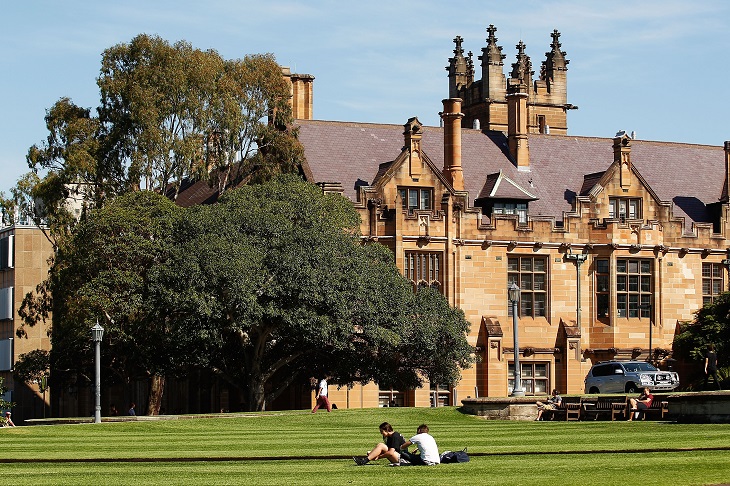
As a proportion of the total university cohort, international students rose from 14 per cent in the year 2000 to 29 per cent in 2022. Institute of Public Affairs analysis of the latest federal Department of Education data shows that domestic student dropout rates have steadily increased over the past decade, with approximately one in four now failing to complete their degrees within six years.
This trend suggests a worrying trade-off.
As universities grow to be increasingly dependent on the higher fees paid by international students, domestic students are experiencing worse outcomes. The system, in effect, is being reoriented around international demand at the expense of domestic students. Earlier this year, Public Universities Australia – a group of more than 200 academics – accused universities of ‘soft marking’ which risked ‘dumbing down’ the nation off the back of, among other things, enrolling international students who struggle to speak English.
Meanwhile, there is a knock-on effect in the housing market, particularly markets in Australia’s capital cities. IPA analysis reveals that demand from international students accounted for the equivalent of 70 per cent of net new housing supply in the 2023 financial year.
With net migration well over one million people since the Albanese government took office, the strain on housing availability has intensified – pushing up rents, property prices, and exacerbating the cost-of-living crisis for Australians.
The rate of immigration, over the last three years, has so consistently exceeded budget forecasts that future migration estimates no longer have much credibility. The Albanese government’s first Federal Budget (in October 2022) projected net migration between the 2023 and 2025 financial years would be 705,000. The next Budget revised this number to 975,000. The next Budget revised it further to 1.18 million. The next one after that revised it to 1.3 million.
Excessive migration intake is not an abstract concern. It places acute and measurable pressures on university campuses, rental markets, and household budgets across the country. There is also the increased strain placed on infrastructure such as roads, schools, and hospitals.
Politicians say they are serious about addressing the issue, but the numbers say otherwise. No wonder trust in our political institutions is at a historic low.
According to the Australian Constitutional Values Survey, just 16 per cent of Australians expressed any trust in politicians heading into the recent federal election. This erosion of confidence is fuelled by policy doublespeak – when governments say one thing and do another.
If we are to restore integrity to public debate and implement meaningful reforms, our political leaders must begin with simple honesty. The issues around international students, educational quality, and immigration are complex – but they cannot be solved until there is a genuine commitment to take real action.
As things stand, the current system benefits a small number of stakeholders – including university vice-chancellors and the higher education sector – while domestic students and everyday Australians bear the burden of systems and infrastructure stretched far beyond their capacities.
Brianna McKee is a Research Fellow and Dr Kevin You is a Senior Fellow at the Institute of Public Affairs