One thing is certain about the government’s August productivity summit – there will be no policies adopted, and even fewer implemented, that might arrest the disastrous decline in Australia’s output per person. That decline can be measured in many ways, but it is non-controversial that output per head has fallen at least 5 per cent since 2022. Australia’s performance is just about the worst among nations in the developed world.
The immediate cause of this disaster is a precipitous decline in investment, which is the key factor in labour productivity.
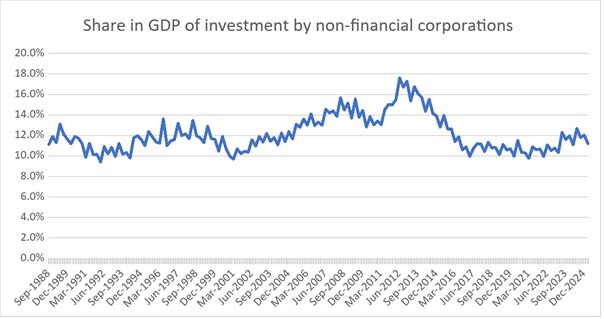
Australia’s investment level as a share of GDP was increasing rapidly in the years to 2013 when investment comprised around 16 per cent of GDP but has declined since then and now languishes at under 12 per cent.
Contributing to this decline in investment is the increase in the size of government, with the Commonwealth budget alone now comprising 39 per cent of GDP compared with 35 per cent 25 years ago. This understates the actual government share because it excludes the burgeoning growth of state spending and off-budget Commonwealth spending.
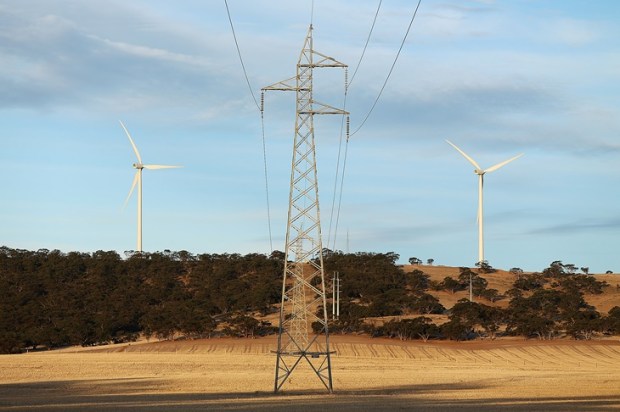
The decline in the effective investment available to propel growth is actually far more than that registered by the investment share. This is because the measure is gross investment and is expenditure is preponderantly on replacement capital. Some of this will incorporate facets that add to productivity, but a large share is in wind, solar, batteries and their associated transmission lines, which, in replacing coal-generated energy, actually reduce the productivity of the capital stock. Add to this, the progressive accumulation of environmental and other regulations has year-by-year increased the proportion of each invested dollar that must be allocated to non-core elements. Hence, a fall from 16 to 12 per cent of GDP represents a serious reduction in capital available – indeed as evidenced over the past few years – bringing about an actual fall in productivity.
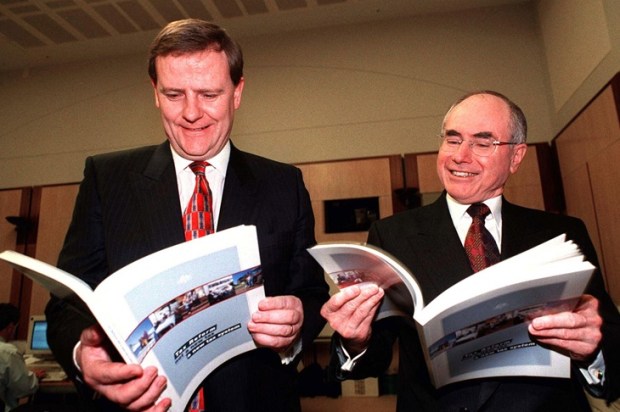
Forty or so years ago, the newly elected Hawke-Keating government surrounded itself with advisers who recognised the importance of investment. After a spending splurge on increased benefits in its first year in office, it set an agenda that increased the efficiency of investment, and hence productivity, by freeing up regulations (tariffs, finance) and ensuring, as a result of the ‘accord’ agreed to by the trade unions, that wage increases were syphoned off into savings and therefore investment.
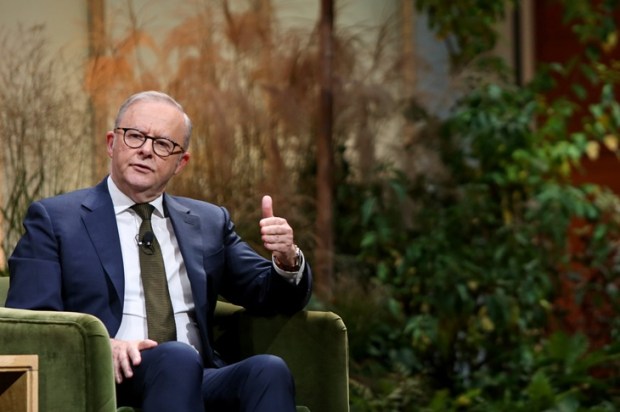
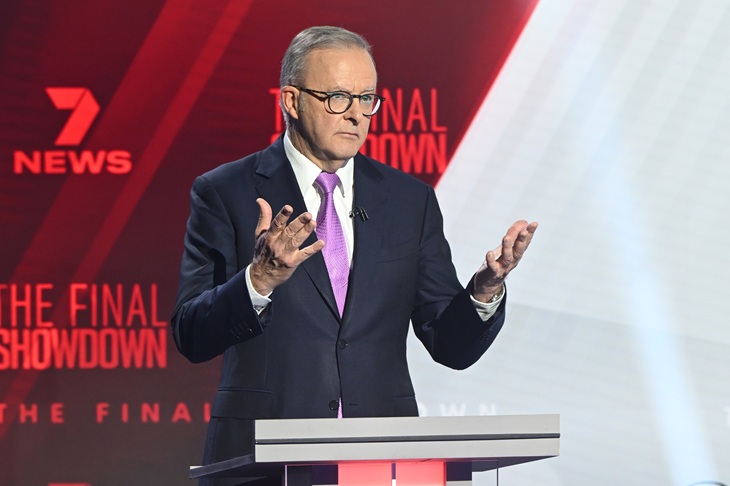
The present ALP has no such leadership (Anthony Albanese was a strong opponent of the Hawke deregulation agenda). Its own accord with the unions results only in increases in the share of wages in production through a re-arming of the ‘Fair Work’ Commission and other measures which have increased costs through same-job-same -pay laws.
Australia’s malaise is most graphically observed in manufacturing, which has declined precipitously this century and now accounts for less than 6 per cent of GDP. Manufacturing industry competitiveness has been mauled by regulatory-determined employment cost increases and higher energy prices. These impact most strongly on internationally tradeable homogeneous manufactured goods (like metals, pulp, and cement) that use plenty of energy and for which price is the key determinant of demand. Those industries have Swords of Damocles hovering above them and the Prime Minister is desperately seeking ways of selectively supporting them to keep them afloat while awaiting some angel of deliverance.
The Prime Minister says he is approaching the productivity summit with a whiteboard. The participants will provide their advice and the government will pick from the potpourri. Here is the likely outcome:
- We need to be smarter in our choices of economic activities, hence the government will select the areas of greatest potential, supply support and ‘crowd-in’ private sector investment – a program that has commenced under the Future Made in Australia with notable success in green hydrogen, batteries, wind turbine blades and green aluminium.
- We will seek to direct savings locked in superannuation to capacity-building activities where the payoff is longer term.
- We will raise taxes on those with the highest incomes which will both provide better funding for the activities selected for special support and encourage those on higher incomes to work harder and smarter.
- We will seek higher pay for all employees since this will encourage them to work harder and smarter, and we will outlaw pay differentials for people doing the same job since this discourages less well-paid employees and hands excessive profits to businesses.
- We will seek more favourable treatment for women, the Indigenous population, the LGBT+, and others as this will release the potential that has been locked up due to them having been subjected to unfair treatment.
- We will ensure the public service is fully manned and adequately recompensed to facilitate the program.
- We will ease the regulatory burden imposed by planning restrictions on new solar and wind facilities and on the transmission links that will better integrate electricity supply.
Of course, all these measures do nothing more than detract from creating increased productivity, but Anthony Albanese cut his political teeth as a Trotskyite student activist and was mentored by the extreme left. There is nothing in his history that indicates an awareness of what brings about prosperity and no indication that he has the flexibility of a Hawke, Keating or their role model, the Kiwi Labor treasurer, Roger Douglas.
The decline in Australia’s prosperity will continue – and may even accelerate.