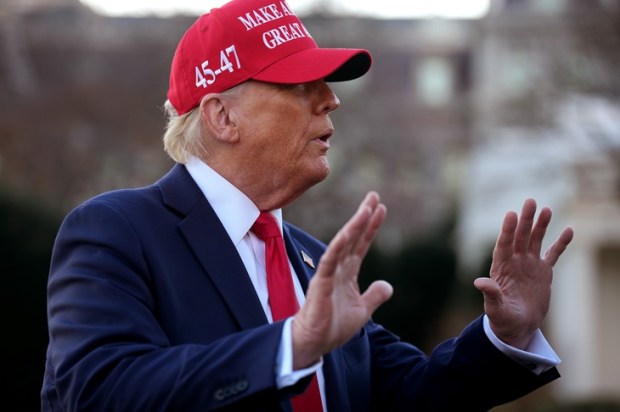
President Trump is creating the Department of Government Efficiency (DOGE) to eliminate harmful and useless layers of bureaucracy. This may be an even more radical assault on costly government impositions than that of Argentinian President Milei, who in his first year of office consolidated 18 government ministries into nine and fired 50,000 government workers. Inflation is close to being tamed and a strong economic recovery is underway.
Australia has a dismal record in such measures. Who can forget how Kevin Rudd said he would take a ‘meat-axe’ to the bloated public service, and that the reckless spending would stop?
But the present government is not even pretending to adopt Rudd’s fantasy policies and is, indeed, moving in the opposite direction. This was evidenced in the Sustainability Reporting Standard (AASB S2), which came into effect on January 1 and will progressively bring within its ambit all firms with over 100 employees.
The Act provides considerable detail on how each firm must:
- assess, act upon and assign responsibilities for climate-related risks and opportunities
- take into account climate-related risks and opportunities when overseeing its strategy, decisions on major transactions, and its risk management processes
- the inputs and parameters used (including information about data sources and the scope of operations covered in the processes)
- whether and how climate-related scenario analysis is used to inform the identification of climate-related risks
- how the nature, likelihood and magnitude of the effects of those risks is assessed
- whether and how climate-related risks are prioritised relative to other types of risk
- how climate-related risks are monitored
- fines ranging up to $751,200
- jail for failure to keep and retain sustainability records and make the Sustainability Report publicly available
- directors’ personal liability for misleading statements in Sustainability Reports