The Commonwealth Treasury is developing a ‘taxonomy to support the flow of capital into sustainable opportunities and the achievement of Australia’s climate, environmental, and social objectives’.
Initially offering voluntary guidelines for investors, this is foreshadowed to become mandatory in future. It would then become a central plan apparatus to vet capital expenditure proposals to ensure that they are consistent with the government’s goals. That is a breathtaking departure from the current market system based on individuals and businesses deciding how they should spend their own funds.
The taxonomy’s focus, as with so much of government policy, is on energy. More specifically, it is on forcing energy supply to transition from coal, oil, and gas to wind and solar as well as other prospective, politically correct carbon dioxide-light energy sources. It will add to the regulatory and spending policies that currently cost $15.6 billion a year to force the displacement of coal by designated renewables. Illustrating how far consensus politicians have travelled along the socialist road, Shadow Treasurer Angus Taylor restricted his concerns about the Taxonomy to its exclusion of gas from the sustainable investment framework.
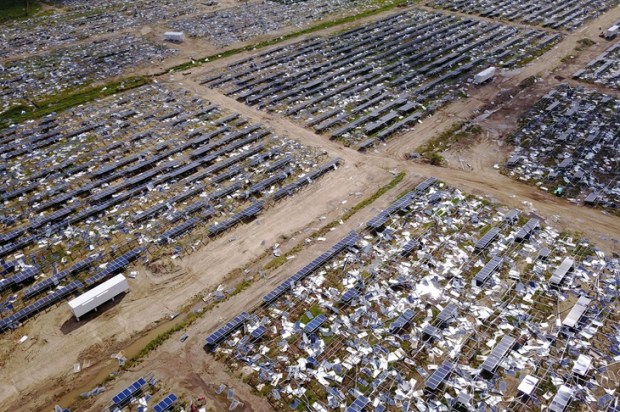
Although renewables are promoted as shifting us to a low-cost future, the higher their share in a nation’s supply source, the higher the price. For Australia, during the 20 years that decarbonisation subsidies have brought renewables from zero to 33 per cent of electricity supply, the cost of generation has risen from $38 per megawatt hour to its current $148. Additional costs stem from the renewables being more dispersed and intermittent while requiring considerably more costs for management, collection, and transmission.
Nuclear, though free of CO2 emissions, is not designated to pass the taxonomy’s test. If it were to receive the same subsidies as other low-carbon sources, it would scoop the pool. For, though nuclear is dearer than coal, it is cheaper than wind and solar because it is available when needed not when only permitted by natural conditions.
Bringing nuclear into that particular tent would mean competition to the intermittent renewables and bring about a reduction in the subsidies they could command. While lowering energy prices, this would have political repercussions because it would reduce the revenues of wind and solar and mean losses for their investors – including superannuation funds.
In adding another regulatory element to kill off traditional energy sources and promote wind and solar, the taxonomy is part of a Herculean task involving replacing low-cost energy with high-cost energy. But the government and the agencies it has staffed see this as far more important than protecting living standards and indeed, seem willing to destroy the economy to achieve it.
The market manager, AEMO, estimates Australia needs around 330,000 megawatts of generating capacity by 2050. The government’s preference is for this to be 100 per cent wind/solar with batteries as back-up. If feasible, that would entail energy cost at around $150 per megawatt hour (more than three times Australia’s the historic level) plus a vast expansion of transmission and distribution lines.
But the kicker is the need for battery storage to handle day-to-day and low wind/solar episodes. Even a week’s such storage would cost more than the power system itself and many estimates around the world suggest that cloudy and windless days mean that three week’s storage would be needed. We are therefore talking of energy prices six to fifteen-fold of those previously prevailing! It is little wonder that there are hair-brained schemes being proposed involving charging and depleting EV vehicle batteries as storage.
AEMO’s Integrated System Plan (ISP) fleshes out the state and federal governments’ decarbonisation schemes. But, contrary to government preferences, it expands gas as stand-by capacity under the subterfuge of it being ‘flexible gas’. This allows the ISP to depict an augmentation of dispatchable power from hydro and batteries. A highly optimistic interpretation might see this as limiting the government program’s prices to fourfold historic levels plus costs of the expanding transmission facilities required under the official government pipedream.
These projected outcomes can be compared to those under the market-based unsubsidised system that prevailed in Australia 20 years ago. That system would comprise 85 per cent coal and 15 per cent hydro and gas. With our abundant coal and established transmission network, there is no reason why the cost would not be under $60 per megawatt hour, similar to the (inflation-adjusted) level prevailing before renewable subsidies forced coal generators to close.
A variation on this – phasing in nuclear – might entail prices 30 per cent higher than using coal if plant could be built for costs achieved in Korea. Unfortunately, Australia’s regulatory state plus the CFMEU factor makes such an achievement doubtful.
Government regulatory-created subsidies to renewables have brought a tripled wholesale price since 2015. In an attempt to mask this, rebates costing $3.5 billion have this year been given to households. Other subsidies shelter the energy-intensive aluminium industry from the high prices the government policies entail.
But there are limits. Deindustrialisation is an outcome of the government forcing the replacement of cheap by expensive energy. The latest event is BHP’s closure of its nickel smelting as a result of energy costs making its facilities in WA uncompetitive with Indonesian smelters using coal-generated electricity. Indonesia, like other nations enjoying rapid income growth, is unwilling to sacrifice this in order to combat the apparition of climate change. Having signed up to Net Zero, Indonesia has increased its CO2 emissions by 57 per cent.