It is no secret that federal fuel excise revenues have been in decline for years, and something needs to be done about it. In fact, along with prominent transport industry experts, we wrote a book about it some five years ago. But the High Court, in a 4/3 split decision, has landed the problem in the Albanese government’s lap. What they do about it will impact us for decades to come.
Australian motorists are reluctant to pay directly for their use of roads, and it is easier for governments to have us sit in traffic rather than argue for sound transport policy. The power of habit is thus a political stonewall to introducing a system of road pricing that reflects motorists’ actual use of roads.
The advent of electric vehicles (EVs) presented an opportunity to introduce a road use charge that would change old habits. Charging EV drivers a road use charge would enable a seamless transition to replace the fuel excise. Once we were all driving EVs, a road use charge would be the new norm.
Roads aren’t free, we just don’t notice how we pay for our use of the roads. Unless you drive an EV, you currently pay 48.8 cents per litre at the bowser.
EV drivers do not pay fuel excise.
To address this problem, Victoria, South Australia, and New South Wales attempted to introduce a 2.5 cents per kilometre charge which is still less than the excise that most of us pay at the bowser. But last week’s decision by the High Court has thwarted the states’ attempt to introduce an EV road use charge. And inaction by the Albanese government to plug the leak in fuel excise revenues means that EV drivers are not paying their fair share.
Many motorists will recall that the federal fuel excise was cut by 50 per cent by the Morrison government to ease cost-of-living pressures in the post-lockdown period. This was directed at those less well-off and was smart politics at the time. But unlike GST, fuel excise is not quantified on receipts. This means many don’t realise they are paying fuel excise at around 22 per cent of the bowser price with fuel currently at around $2.20 per litre.
EV drivers, however, are getting a free ride. Some commentators think that the High Court’s decision is great because it will encourage the take-up of EVs, but only for those who can afford to buy an EV in the first place…
Those of us who cannot afford an EV (or need to travel further than an EV can manage) are subsidising rich people to drive their EVs. In a bizarre upending of ideology, the Green-Left are advocating a ‘trickle-down’ effect. Apparently, poor folk will aspire to own an EV when they see rich people driving around in their EVs while using the roads for free. Such Woke poseurs engage in ‘virtue-signalling’. But this comes at a cost and not to the poseurs.
If you own an older car and have a longer commute to work, you are paying more than your fair share in fuel excise. Although not based on a cents per kilometre method, it is a quasi-road use charge in that the further you drive on the roads, the more fuel excise you pay. The states’ EV road use charge was meant to make the use of our roads fair for all motorists. We would all pay our share.
Some commentators are suggesting that Victoria’s rather crude method of calculating the tax would stop people from buying EVs. They called it a tax on the environment. Given that 2.5 cents per kilometre is far less than what a worker living in the Western suburbs of Sydney and driving an older vehicle pays to get to work (especially when there is no other option), you are still ahead if you drive an EV.
A road use charge for EV drivers would have been a step towards much-needed transport reform.
We had a chance to change drivers’ habits by making them think about how and how often they use their cars. Rich people in their EVs would be the first to have their habits influenced by a cost-reflective road use charge. Instead, two EV drivers took their case to the High Court against Victoria’s EV tax and won. But the truth is we all lost.
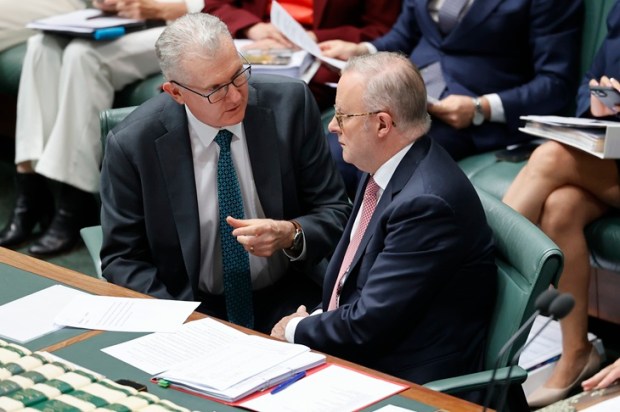
The umpire’s decision is final, and we must accept it. But now it is left to the Albanese government to take action.
I know that many readers might be screaming that ‘roads are free’ and ‘we should not have to pay for roads, we already paid for them!’ But calculate how much you pay at the bowser, and you are still paying for the roads. The impact of a road use charge will be a fizzer just like Y2K and the GST. They were both going to ruin everything, and the world was going to end, remember?
Why a road use charge? It reflects our habits like our use of water, gas, electricity (God forbid!), telephone services, and so on. The major reforms late last century didn’t end the world, but our reforms around road use missed the boat. Road use charges could have enabled reduced registration and insurance fees, more reflective road funding and maintenance, and a myriad of other improvements. But there is more to a road use charge than these alone.
The boffins at the highly regarded Bureau of Transport, Infrastructure and Regional Economics have been calling for a road use charge for decades. The projected costs of traffic congestion are astronomical, not to mention the impact on productivity. Fuel excise revenues will end soon, too.
We had a chance to make the luvvies pay for their virtue-signalling for a change. Now, old-school motorists are subsidising EV drivers.
And with a Labor government in power, that can only mean one thing – higher taxes.