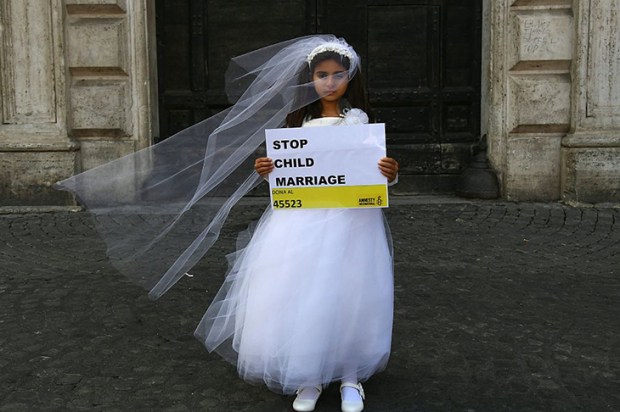
My mum was forced to marry my dad when she was only twelve and started childbearing at the age of fourteen. By the time she was twenty-seven, she had seven children. Unlike my dad, who had finished primary school, she had never been given the chance to learn how to read and write because there was no mandatory education in Iran back in the 1950s.
My mother’s life was very much limited to the domestic sphere – a prison of domesticity and patriarchal values. Her world seemed to stretch no further than her own family and her skills in basic housekeeping and child-rearing.
Life was tough; without hot water or a washing machine at home, she had to endure the sting of icy water in cold winters, washing our clothes by hand. Raising and minding seven children was so stressful that she eventually found a way to get out of the house for a brief respite. What kind of entertainment or activity was freely available for a woman of her status? Going to a game of lawn bowls or to the RSL for a game of bridge? Of course not; there were no such luxuries in her world. Instead, she went to the mosque for midday prayers or listened to religious talks without being able to analyse or question the teachings due to her lack of education. She developed an understandable attachment to Islamic programs and rituals, one of perhaps millions of women who are deeply reliant on such activities in Iran. This could explain why uneducated – or less educated – women are less likely to trust ideas and concepts other than their religious teachings, which effectively perpetuates inequality and repression in their world.
In 1963, the Shah of Iran began the White Revolution, a series of economic, social, and political reforms with the proclaimed intention of transforming Iran into a global power and modernising the nation by nationalising certain industries and granting women suffrage. The literacy rate had gradually risen above 30 per cent in the 1960s, and continued to rise at a greater rate during the following decades.
The new laws giving women equal rights to men in 1967 didn’t change my mother’s position in our household and my father continued to be domineering. The new paradigm, however, offered some hope to my sisters, who were witnessing the gradual loosening of religion’s tight grip on their lives. Women’s rights and sexual freedom were far greater in the 1970s than they are today in Iran. Access to education and equal rights with men led to more women participating in industry, society, and politics.
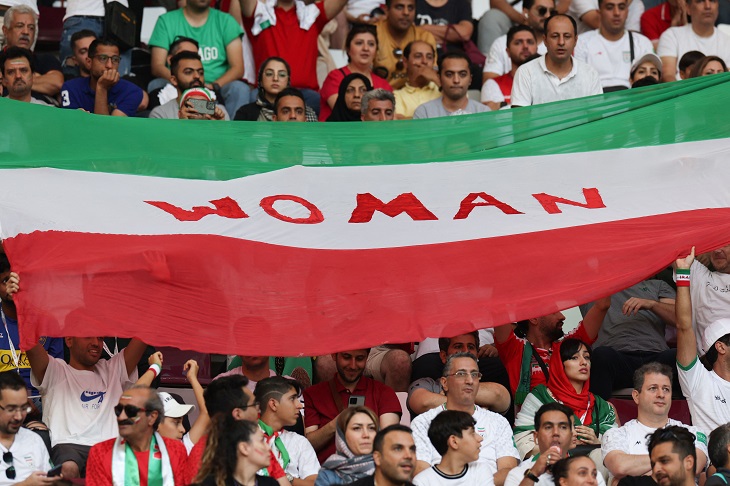
Unfortunately, all that social transformation came to an end when the Islamic revolution erupted in 1979. In short, a gender-apartheid regime was established in Iran which began to take back all the rights women had gained during the Shah’s era. According to Sharia law, the hijab is compulsory, which builds a wall between men and women. The life of a woman is worth half that of a man. For instance, if my sister and I are in a car crash, the damage a court of law awards to my sister is half that awarded to me. Another example is that the testimony of two women is tantamount to the testimony of one man in a court of law. If a married woman wants to travel, she won’t be allowed to do so without the written permission of her husband. Similar discriminatory laws apply to inheritance, and other aspects of a woman’s life in Iran.
While women in Australia are now fighting for greater goals such as equal pay in the business world and equal participation with men in politics, it is heartbreaking to see that Iranian and Afghan women are deprived of their basic civil rights, and have to suffer under gender-apartheid Islamic regimes. In Afghanistan, after only one year of Taliban rule, girls and women have effectively disappeared from Afghan society. They are not allowed to travel, go to work alone, go to public parks, talk or laugh in public, and they are not even allowed to study, and may go to school only until the age of thirteen. The year is 2022!
I lived in Iran under Islamic law until 1997 and frankly even as a man I found it depressing and suffocating. Living in a country with Islamic beliefs and laws leads people to a ‘closed-door’ culture where all matters and ambitions are expected to remain in the home. Unlike the picket fences or similar low fences around houses in cities like Sydney, it is quite common in Tehran to see tall brick or block walls enclosing back or front yards. It may be more secure, but it also reflects our religious background, which promotes a culture of closed doors, in particular for women.
As a citizen of the world living in Australia, you may ask what you can do to help; well, here are a few simple things you can consider:
- Educate yourselves and others about the situation of women in Iran and Afghanistan. It may feel overwhelming but by learning more about the injustices and challenges faced by Iranian and Afghan women, you can better understand how to help them.
- Advocate for Iranian and Afghan women’s rights. You can write to your elected representatives and ask them to support policies, initiatives, and sanctions on their governments that may benefit these women.
- Be a voice and make your government be a voice for Iranian and Afghan women. Discuss issues with your friends, colleagues and family and raise awareness about this issue.
While the Islamic regime doesn’t represent Iran’s 2,500 years of rich history and culture, I’ll leave you with something that does, a poem, Bani Adam, by the 13th century Persian poet Sadi, which is also inscribed on entrance to the UN building:
Human beings are a member of a whole
In creation of one essence and soul
If one member is afflicted with pain
Other members uneasy remain
If you have no sympathy for human pain
The name of human you cannot retain.
To this day, it saddens me that my mother was not offered an education, a basic human right. I couldn’t do much to rectify the lack for her, but I can be a voice for the repressed girls and women of Iran and Afghanistan. So can you. They desperately need our support.