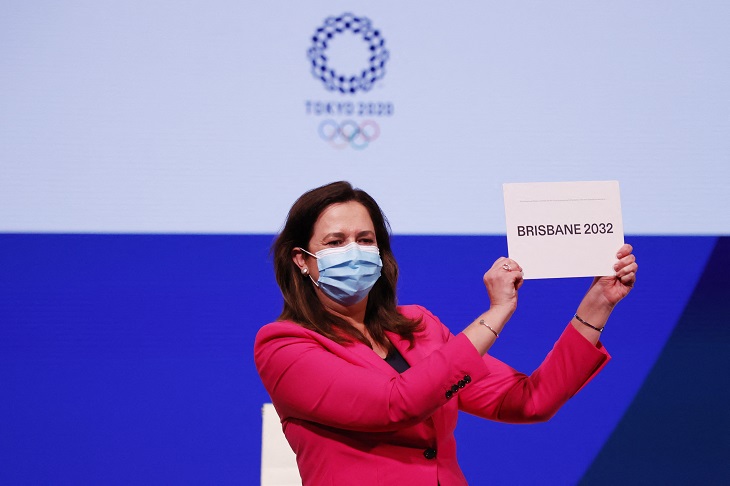
As the Tokyo Olympics wound down, enthusiasm for the Olympic Games persisted, but there is a downside to the acceptance of the Brisbane bid for 2032.
This will be the third time Australia has hosted the Olympic Games; the first, in Melbourne in 1956, was followed by the highly successful Games in Sydney in 2000. Graham Richardson, former Labor Minister, was chairman of the Sydney 2000 Committee. He commented recently on the success of the games, but failed to mention the downside cost of holding the event, currently budgeted at $5 billion.
There is now a push afoot to also apply for the World Cup soccer competition in 2030-34.
The International Olympic Committee was founded in Paris in 1894 which led to the first Olympic Games in Athens in 1896 hosted as a small event with 14 nations involved. As the number of events and participants increase, so has the cost of staging the Olympics event and the losses incurred; the worst on record resulted from the Montreal Olympics in 1976, which went 720 per cent over budget. Expecting a small profit of US$124 million, it produced a debt of US$1.5 billion and took 20 years to pay off.
Other economic disasters include the 1992 Barcelona Olympics (260 per cent over budget) and the 2016 Rio Olympics ($2 billion and 350 per cent over budget), the average loss sustained is a 213 per cent cost over-run. The last Olympic Games to make a small profit were held in Atlanta in 1996. Economists have had difficulty in establishing any long-term benefit, either local or national, with no demonstrable change in business, employment, tourism, or housing.
The Sydney Olympics in 2000 was budgeted at around AU$650 million and ended up costing around AU$2 billion, (around $3 billion in today’s money, the deficit has only recently been paid off). Some of the facilities which were built were subsequently either not used or underused, producing ongoing maintenance costs. The New South Wales government recently considered demolishing and rebuilding the main stadium, Stadium Australia, but after a public backlash, it will now attempt its renovation.
All decisions are made by the International Olympic Committee; the IOC numbers have steadily expanded to currently 105 members and 44 honorary members, with an executive of 15. They organise the Summer, Winter, Paralympics, and Youth Olympic Games. They are based in Lausanne, Switzerland, in a new headquarters completed in 2019 at a cost of US$156 million. They are all nominally volunteers who give their time out of altruism, the reality is somewhat different. An analysis in 2018 revealed they are paid daily expenses for attending meetings, with the committee members on US$900 daily and ordinary members $450. In addition, they are provided with business class travel, free hotel and meals, and free car hire. The President, Thomas Bach, received an allowance of €260,000, plus €300,000 expenses and an extra €100,000 to cover Swiss taxes (total over A$1 million). There have been regular scandals about vote buying, the worst in 1998 when 6 committee members were expelled.
There are disturbing parallels with the Soccer World Cup, organised by the international governing body, FIFA (Federation Internationale de Football Association), founded a few years after the IOC in 1904 in Paris. Initially, it had 7 members, now expanded to 209 members, (more than the UN). It too has headquarters in Switzerland and, as with The Olympic Committee, makes its income from TV licensing and sponsorships – estimated at US$4.6 billion in 2018.
Gianni Infantino has been President since 2016. Sepp Blatter, his predecessor, was also involved in the IOC bureaucracy prior to becoming FIFA President, a post he held from 1998, until he was removed over allegations of corruption (from which he was subsequently cleared). He, and his European football equivalent Michel Platini, were later acquitted of fraud. At that time, several other top leaders were purged, but concerns remain. The President oversees 7 vice presidents and 22 standing committees. The organisation oversees billions of dollars of income, with concerns relating to limited financial transparency. As with the IOC, its major function is supposedly to foster and improve the game.
The cost of hosting the World Cup is substantial; in 2014 Brazil cost US $15 billion, in Russia in 2018 US $12 billion, and the latest in Qatar in November this year, will reputedly cost a staggering US $200 billion. A full economic assessment was made following the Japanese event in 2002, it suggested a loss of US $9 billion with no ongoing improvement in tourism. The last reported financially successful tournament was in Germany 2006, when a profit of US $200 million was achieved.
Australia’s original bid for the 2022 world cup cost US$46 million of taxpayer’s money, and achieved an expensive result of a single vote. The now disgraced FIFA President, Sepp Blatter, stated ‘Australia had no chance’, perhaps because the country could not compete with other countries’ bids for broadcasting rights, (money which went to FIFA); there were again rumours of vote buying. The eventual winner, Qatar, offered US$100 million to FIFA to stage the event.
The 2026 event will take place in the US and Canada; we are now applying again for the 2030 or 2034 World Cup, having won the rights for the women’s competition (with New Zealand) in 2023. The budget discussions, both for the bid and the event, demand serious scrutiny.
The bloated governing bodies of IOC and FIFA, seem to have lost sight of their original intentions of promoting sport. They have become self-serving organisations, which are financially wealthy through sponsorships and advertising, but they leave the ever-increasing bills to the cities, (and tax-payers), that now volunteer to host the events.
There is no doubt that they provide advertising revenue for TV, but can, and should the tax-payer subsidise these show-boating events which have no long-term benefit for the hosts or the world sporting community?