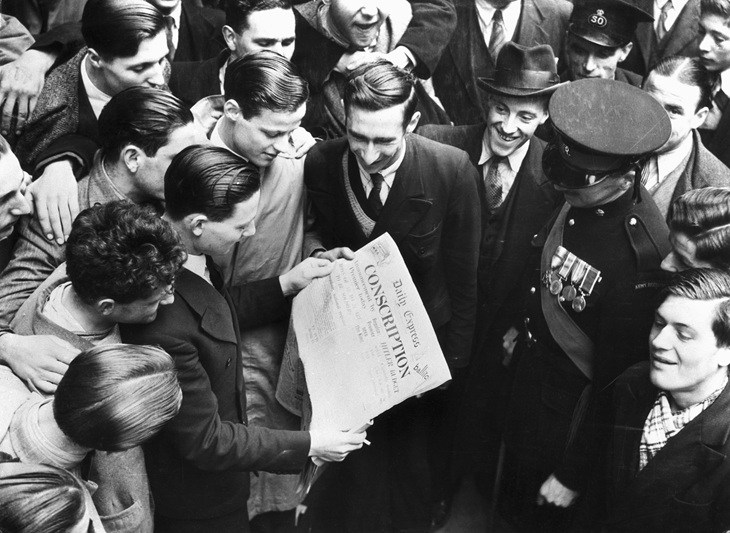
Left, right, left, right; conscription could well be in sight!
Landmark policy changes across Europe this year include military conscription models, newly expanded to meet Nato ‘readiness targets’.
Germany aims to grow the Bundeswehr to 260,000 active troops and 200,000 reservists by 2035.
An official merchandise campaign this month features hoodies, mugs, teddy bears, and a 10cm toy rubber duck for the bath (Bade Ente), equipped with tactical body armour, helmet, and a miniature Heckler & Koch G95 assault rifle. Armed and ready to quack, the ‘duck-strategy’ commando promotion is supported by Defence Minister Boris Pistorius.
Conscientious objector applications have surged but Bundeswehr military service remains voluntary at present, dubbed ‘Conscription Lite’.
Denmark has extended their mandatory conscription from 4 to 11 months, now gender-equal, with women subject to the same rules and lottery pool as men. Sweden and Norway have a mandatory but selective service, also gender neutral. Switzerland have voted decisively to reject female conscription.
Many now favour reintroduction of the draft.
The Anglosphere (UK, US, Australia, Canada) have maintained strictly all-volunteer professional forces throughout 2026.
We have been here before.
At the outbreak of the first world war, August 1914, millions of young men across the British Empire greeted conflict with an optimistic sense of adventure; (voluntary recruitment, 1914, 1915); ‘the war that will end war’ (HG Wells, 1914). This buoyant enthusiasm has recently been depicted in film (The Choral, 2025).
Older British Establishment encouraged young men to believe that the war would cleanse and invigorate society. Besides, it would ‘all be over by Christmas’, as Harry Barron, Governor of Western Australia, said in 1914.
British Army recruitment campaigns framed military service as a holiday excursion, sport or trade. They used slogans such as: ‘Free Trip to Europe’, ‘Are you fond of cycling? If so, why not cycle for the King?’, ‘Recruits wanted; cycles provided’, and ‘Wanted – smart men for the tank corps. Let Professor Tank teach you a trade’.
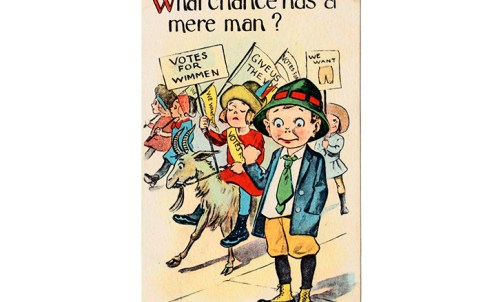
They also sought to shame.
‘Women of Lancashire; do you realise that if you keep back a son or sweetheart, you are prolonging the War?’ read one British recruitment slogan from 1915.
Recruitment would be fuelled by one of the saddest betrayals of young men in British history – the White Feather Movement – a social humiliation campaign launched in August 1914 by Admiral Charles Fitzgerald. It became widespread across Britain, Australia, and Canada where feathers, a symbol of cowardice, were handed out to shame young men who were seen out of military uniform.
In November this year, an account was published of ‘a battered Ukraine, as birth rates plunge’. Demographic change is highlighted by data sourced from the UN Population Division; decreases in millions have made significant impact; Ukraine (2022-26), 9 million down (25 per cent), Russia (2000-25) 3 million down (2 per cent); both have had further, recent exodus.
New military reforms from Kyiv earlier this June have offered fixed-term contracts and some reprieve after years of open-ended service. They have been described as ‘late for exhausted troops’. Ukrainian soldiers interviewed by the F.T. say measures fall short. Too little, too late.
In Russia, the term ‘mobilisation’ is on every tongue – civilian conscription.
Frontline brigades remain short of troops and there is fear in the fabric of the nation.
The rhythmic march of patriotic totalitarianism can be felt like a drumbeat.
Russians expect to be called upon soon.
A record number at present have chosen to head for the exit – in the three months of July, August, and September just passed, an estimated 1.13 million have left the country for Georgia, Serbia, and Armenia. Some will not be back. Choose your country, before your country chooses you…
Today’s frontlines are increasingly filled by middle-aged men and foreign recruits. The average Ukrainian frontline soldier is aged between 43 and 45 years. They are reinforced by roughly 16,000 foreign volunteers from at least 72 countries. The top foreign origin supplier is Colombia. Across the trenches, Russia’s forces have grown equally aged and far more global. They draw heavily on impoverished eastern ethnic republics, prisons, and nearly 50,000 foreign recruits from 151 countries – around 3,000 men from 37 African nations – alongside an estimated 14,000 North Korean troops.
Credible human rights organisations, investigative journalists, and international monitors have documented broad patterns in both Ukraine and in Russia of coerced military conscription for men with intellectual disabilities, psychiatric conditions such as schizophrenia, and severe physical impairments. These include the return of amputees to the frontline.
Know who you are and know your values as an individual; find yourself, before your country finds you…
Conscription will suit some. Let it be that when they are on the frontline, they are happy to represent the bankers, elites, and the gooners of warfare, whose interests they play out.
Wilfred Owen was killed on the cold, damp pre-dawn of November 4, 1918, at the Sambre-Oise Canal near the village of Ors in northern France, exactly one week before the Armistice. He was 25 years of age, hit by enemy machine-gun fire from the frozen gloom of the opposite bank, as he tried to encourage the men under his command. A model of calm in the mist, artillery smoke and chaos.
In his final letter to his mother on October 31, Owen had written warmly of the camaraderie at the front. His parents in Shrewsbury, England, received the War Office telegram to announce his death on November 11, 1918 – as local church bells rang out in celebration of the end of the war.
He wrote of the readiness of the elderly to sacrifice the young. A readiness that would lead to an entire lost generation.
Before his young voice was silenced, his poetry had stripped away the fake narratives of war to record the Old Lie: Dulce et decorum est/pro patria mori.
And with this, his timeless poetry continues to speak for the silent.