Since 2007, whenever the word ‘change’ has come up in our qualitative responses it has most often been linked to ‘climate’ but not this Victorian election.
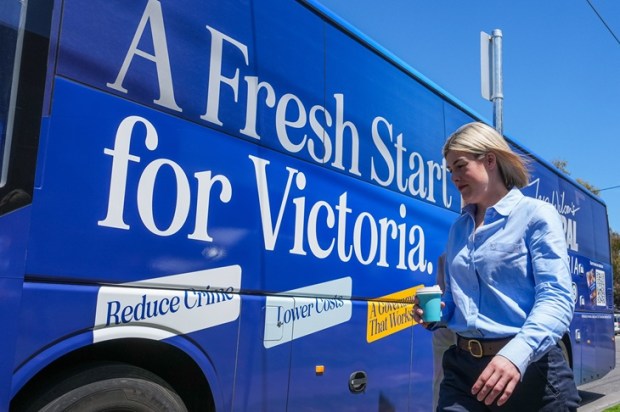
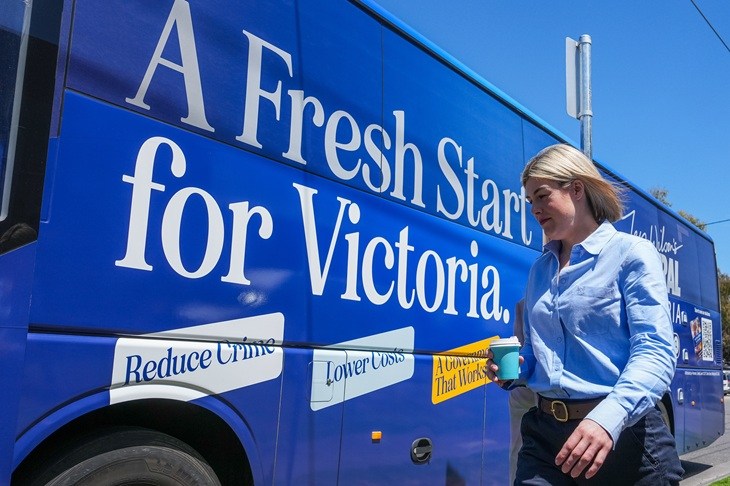
Some Victorians still prioritise climate change, but for most the change they want is of the government. They’re pretty firm on that. It would take a major upset for Jess Wilson and the Coalition to lose this election.
The things still at issue are, by how much will she win and will One Nation win enough seats to make it a minority government?
Not that our respondents are thrilled by any of the alternatives. Labor and One Nation are far underwater on approval, and the Coalition not too far ahead of them. 61 per cent of respondents don’t believe Labor deserves to be re-elected, and 63 per cent think the same about One Nation.
53 per cent don’t believe the Coalition deserves to win either, so no one breaks even.
59 per cent expect Wilson to win but only 31 per cent would like this to happen.
Our polling points to Wilson winning well, or better than well. After preferences her vote in a head-to-head against Labor is 53 per cent to 42 per cent with 4 per cent undecided. If all the undecideds go her way she wins with 57 per cent, slightly ahead of Jeff Kennett’s winning vote of 56.4 per cent in 1992
But her support will be like Anthony Albanese’s – wide as Port Phillip Bay and as shallow as its sandbanks.
The problems in Victoria are well-known. Rapidly escalating debt, decaying infrastructure, crime and corruption, but expectations are low that anyone can fix them.
In an ideal world many voters would want Labor to perform that fix but just have no confidence this could happen.
Ben Carroll is seen by critics as weak, unconvincing or politically opportunistic, while supporters see him as competent, decent, and willing to face the sins of the past.
His main problem is convincing voters he represents a fresh start when he was a part of the Andrews government.
Warren Pickering supporters see honesty, plain speaking, conservative values, and an alternative to the established parties.
Opposition to Pickering is widespread outside One Nation and is particularly intense among Labor and Greens voters, generally reflecting rejection of One Nation as racist and divisive rather than detailed assessments of Pickering himself.
In Jess Wilson, supporters see an articulate, energetic younger leader who communicates clearly, has steadied her party and offers a credible alternative to Labor.
Labor voters are more prone to criticise her party rather than her, while others think she is evasive, lacks experience or doesn’t have policy detail. Treaty and climate change are specific points on the left.
Wilson also benefits from the fact that in a head-to-head contest 72 per cent of our respondents would prefer the Coalition to One Nation. That won’t play out at a state level, but in individual seats it is important. It means that if the combined Labor and Greens vote is less than the Coalition, it will be very hard for One Nation to win many seats, and to win a seat their first preference vote needs to be at least in the high 40 per cent range.
What could go wrong for Wilson? Her biggest vulnerability is the overwhelming expectation that she will win combined with the relatively low level of enthusiasm for that win and a concern that she will cut back on services.
This may strengthen the Labor vote in the more marginal seats, even while they suffer swings against them in the safest of seats. If the Coalition wants to be sure of its win it needs to tighten the sale by pointing out how just a moderate change in voting intention could change the shape of the government.
They could also chase a strategic vote in some of the seats that, based on the South Australian result, might be ready to experience big swings. Seats like Kalkallo, Kororoit, Frankston, and St Albans with mostly long-term members, all of whom have served in cabinet.
The Coalition message to Labor voters, suitably hooked and baited, could be two-fold.
One is that if you vote Labor you may hand the seat to One Nation.
The second is that if you want a Labor Party that is fit for purpose you need to turn over some of the dead wood. A Coalition win in the seat this election would allow for a fresh, untainted Labor member to win at the 2030 election.
What should Labor be doing? Not what they are doing and unleashing personal attacks on Wilson or One Nation. They should be admitting the obvious – they are headed for a thrashing, and if it is too large, then One Nation may be in a position of influence.
‘Hold your nose and vote for us because there are worse things,’ is not the most compelling pitch, but it might save some of the Labor furniture.
One Nation could also do better with a switch in message. No one believes that they will win this election, apart from One Nation voters, so instead of projecting Pickering as a future premier, they would be better admitting the obvious and running to ‘keep the bastards honest’.
The best argument against voting for One Nation, according to the argument testing we did in our poll, is they do not have the policies or the personnel to govern. But that argument dissipates if you admit that is true, and that’s not what you’re running for.
When addressing the faithful, they can attribute their likely failure to a conspiracy by ‘the uniparty’ and still urge their voters to give the Coalition their preferences because they are the lesser of two evils.
With much of the electorate engaged in early voting, the likelihood of a dramatic change in voting outcome is low, but with social media it’s possible that quick, under-the-radar campaigns in particular seats may still make a significant difference to the result.