American economist Thomas Sowell once observed that, ‘The fatal attraction of government is that it allows busybodies to impose decisions on others without paying any price themselves. That enables them to act as if there were no price, even when there are ruinous prices – paid by others.’ Few projects illustrate this point better than Snowy 2.0.
The Chief Executive Officer of Snowy Hydro, Dennis Barnes, has finally conceded what critics have argued for years. At a recent infrastructure summit, Barnes declared that, ‘only the government can build Snowy 2.0’ and that if it were attempted by a listed company, ‘we would be taken over and toast’.
It was a remarkable and honest admission. It deserves to be taken at its word, all the way to the payroll office.
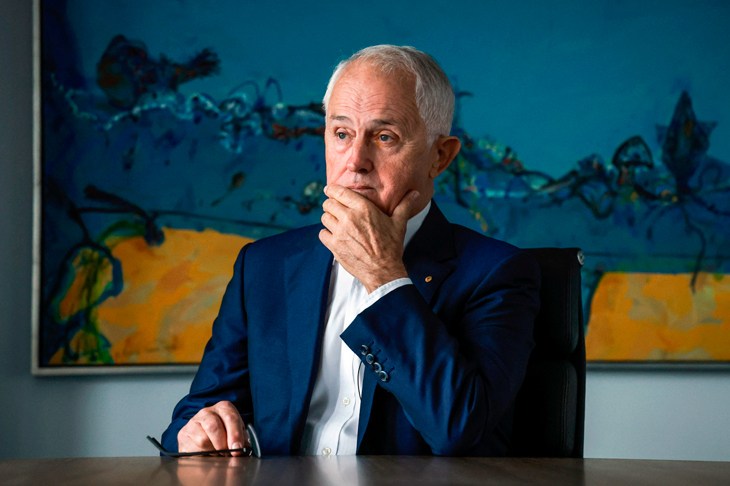
In 2017, then prime minister Malcolm Turnbull unveiled Snowy 2.0 as a $2-billion project. It is now expected to cost up to $25 billion, a mere 1,150 per cent increase. Completion has slipped to late-2029, eight years behind schedule. Energy economists estimate the transmission lines needed to connect it to the grid will add another $12 billion, taking the bill to about $37 billion before interest. The National Audit Office says only $11.1 billion of the $25 billion build had been spent by March 2026. More than half the money is yet to go out the door.
Snowy 2.0 was announced before anyone knew whether it could be built for the price. Snowy now admits only 44 per cent of the design was complete at the 2023 reset and blames design immaturity at the time of the investment decision.
The lesson is that governments should not try to price something before it has been designed, as did the Turnbull government. If history is a guide, the lesson will not be learned because it might delay media opportunities.
The original Snowy 2.0 construction contract was for a fixed price on the idea that the risk of forty kilometres of tunnelling through uncertain mountain geology could be pushed onto the builder. It failed. The 2023 ‘reset’ moved the project onto a cost-plus footing with contractor Webuild, and taxpayers have carried the risk and the costs ever since.
A cost-plus contract is a wonderful thing. For the contractor. The longer a project takes and the more it costs, the more the contractor earns. Snowy says it has bolstered incentives and controls, but arithmetic still rewards delay over thrift.
What will Australians get for their buckets of money? Snowy’s own commissioned analysis claims the project will cut wholesale power costs by about $7 billion by 2075. Spending $37 billion to save $7 billion over half a century is not an investment case but rather a fiscal bonfire. And the bonfire will burn perpetually.
Snowy Hydro is wholly owned by the Commonwealth, so every dollar it sinks into Snowy 2.0 is a dollar it cannot return to taxpayers as a dividend or pass on as cheaper power. With Commonwealth debt above $1 trillion, every dollar the government forgoes in dividends is a dollar it must borrow. In economic terms, the whole project is financed with borrowed money.
At current 10-year bond yields of about 5.2 per cent, interest on the $25 billion ‘battery’ alone is roughly $1.3 billion a year. Snowy’s own 2024 business case forecast average net revenue of about $1 billion a year from Snowy 2.0, and that was when the project was meant to cost $12 billion. Taxpayers will be paying this fiscal sinkhole for as long as the debt is rolled over.
But back to Barnes. If Snowy 2.0 can exist only because government funds and protects it, then Snowy Hydro is not a commercial enterprise that happens to have a government shareholder. It is a public sector entity and public sector entities should pay public sector wages.
Last financial year Barnes received $1.89 million, almost all of it base salary. The Prime Minister earns about $622,000.
Paying the executives of government-owned businesses private-sector rates has always rested on two claims. First, that they face private-sector disciplines and second, that they could command private-sector salaries elsewhere. Barnes has admitted the first claim does not hold. The second should go with it.
Snowy’s executive pay should be benchmarked against the senior public service and not against listed energy companies whose shareholders would, by his own account, have pulled the plug long ago.
Ditto for the board, which recently welcomed former Liberal leader Sussan Ley rather than a seasoned builder of major projects. Board remuneration should reflect the same public-sector standards, not the commercial benchmarks of companies exposed to genuine market discipline.
These salary reductions would be a small saving against a $37 billion problem, but it points to a larger truth. Taxpayers and energy users bear the costs, while those who championed the projects have long since moved on. The announcements are made, the cameras flash, and the bill arrives a decade later, addressed to someone else.
So here is a modest proposal. If politicians escape the economic price of their monuments to failure, they should not escape the reputational one. Name these projects after the people who championed them, permanently and on the signage.
Snowy 2.0 should be renamed Turnbull’s Trench. The National Broadband Network, promised at $43 billion and delivered late, over budget and still leaning on old copper, should be renamed Rudd’s Relic. And Victoria’s Suburban Rail Loop, which the Victorian Parliamentary Budget Office costed at $125 billion, should be Andrews’ Albatross.
In the private sector, a project that ballooned from $2 billion to $25 billion would have triggered a reckoning long ago. In Canberra, it triggers another funding announcement. The politicians move on, the executives collect their salaries, the contractors submit their invoices, and taxpayers pick up the tab.
There is still time to stop digging. The $11.1 billion already spent cannot be recovered, but the billions yet to be committed can be spared. Turnbull’s Taxpayer Trench is already deep enough.
The only question is how much more of Australia’s money Canberra intends to bury in it.
Got something to add? Join the discussion and comment below.
You might disagree with half of it, but you’ll enjoy reading all of it. Try your first month for free, then just $2 a week for the remainder of your first year.