Ministers blame the war, yet it left Australia with higher core inflation and interest rates than America, Britain, Canada, or Europe.
On Melbourne Cup Day the Reserve Bank raised the cash rate to 4.85 per cent, its fifth rise since February, on a split vote of six to three. It has lifted rates on Cup Day before, in 2010 and 2023, and whether that timing is convenience or good public relations, borrowers pay regardless. If banks pass on all five rises, a $600,000 variable mortgage costs about $490 a month more than in January. The Bank’s own statement concedes that ‘the economy is slowing, housing prices have fallen significantly and the unemployment rate has risen’, and it raised rates anyway.
The excuse is global, the failure is local
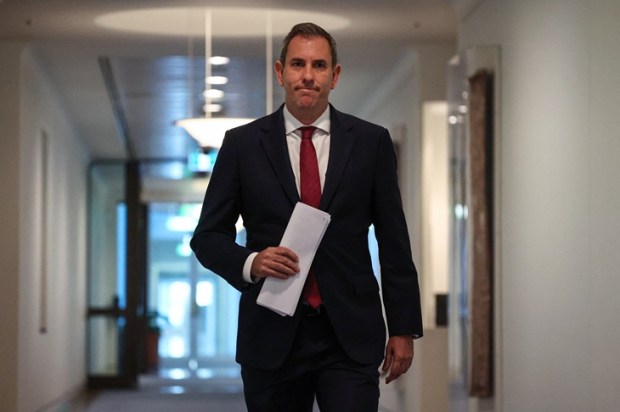
‘The war in the Middle East is pushing up inflation and interest rates all around the world,’ the Treasurer said in September. Every comparable country faced the same war and oil price, yet September figures put Australia’s core inflation, which strips out the fuel he blames, at 3.6 per cent against 2.8 in Britain, 2.6 in the United States, 2.5 in the euro area, and about 1.9 in Canada. The Reserve Bank calls our inflation ‘broadly based’ and says the economy is ‘operating with excess demand’ while weak productivity limits supply. The war explains the petrol price, not why everything else is rising faster here.
In the 12 months to Cup Day the Reserve Bank lifted rates by more than the other five central banks below combined.
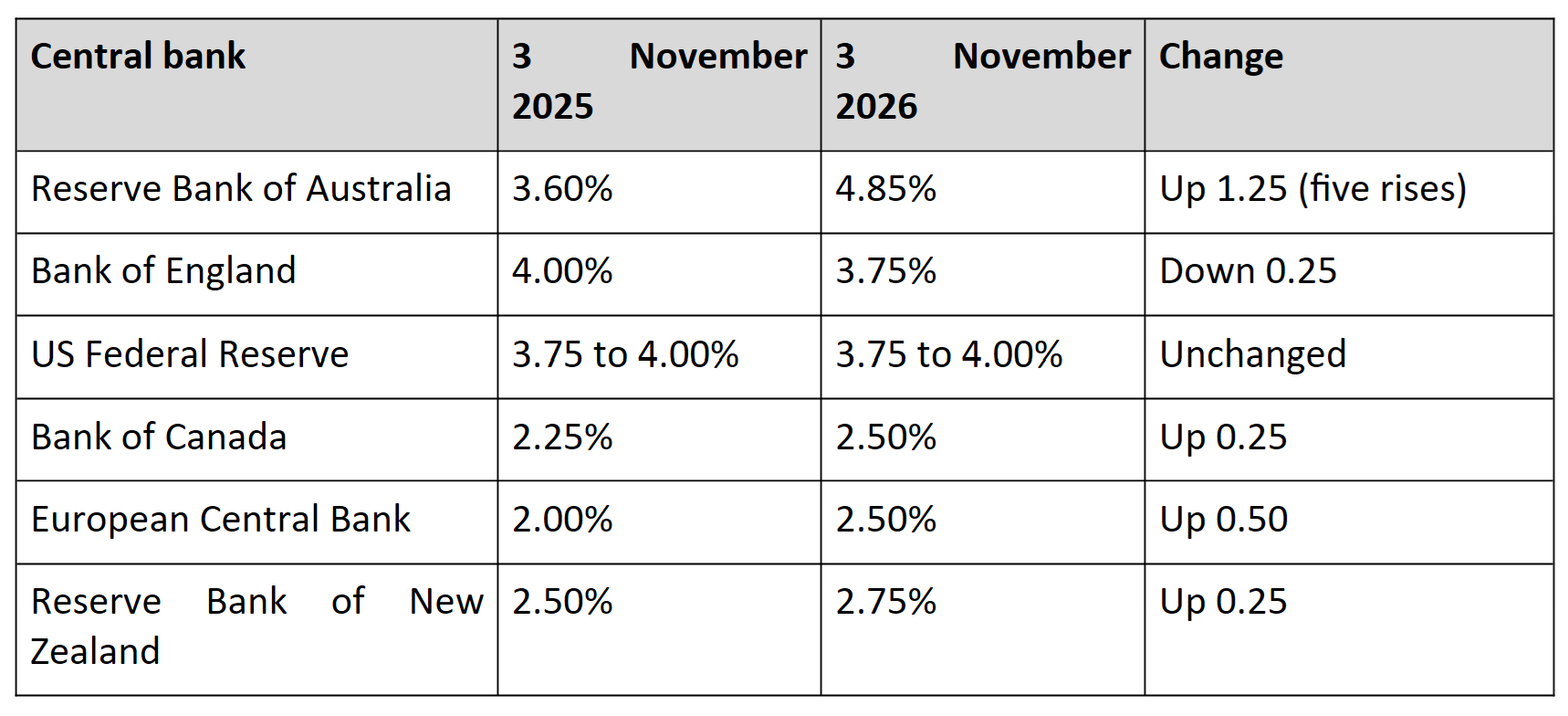
The markers are all there
Output per person fell 1.1 per cent in 2023-24, went nowhere in 2024-25, fell again in the March quarter of 2026 and was flat in June, leaving it below its 2022-23 level. Wages rose 3.2 per cent in the year to June while living costs for employee households rose 3.7 per cent, so the typical worker went backwards. Private sector vacancies fell over the year while public sector vacancies rose 7.8 per cent. Unemployment reached 4.7 per cent in September, above the Reserve Bank’s own December forecast, and NAB’s survey puts business confidence in the bottom five per cent of its history. ANZ and NAB have announced about 6,000 job cuts between them, NAB on 20 October.
The employment figure that hides the pain
The Bureau counts you as employed if you worked one hour or more for pay in the survey week. One hour does not pay rent, yet it counts exactly as a full-time job does, and the figures ministers never quote tell the real story.
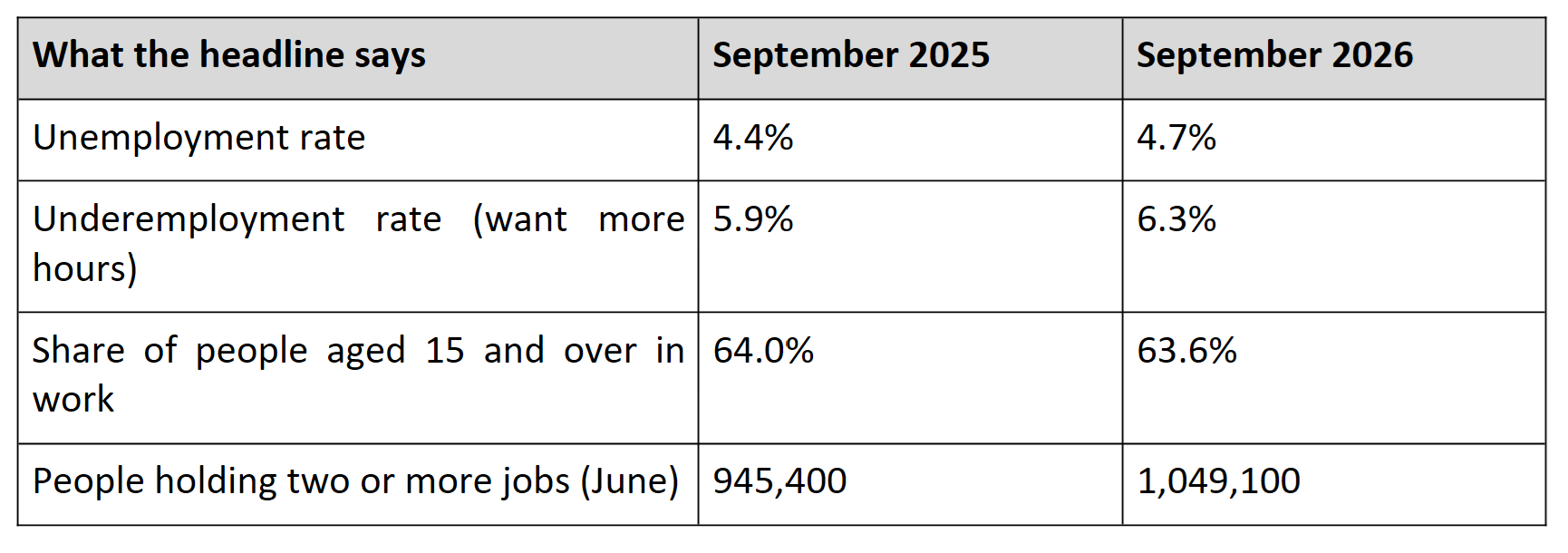
Underutilisation, counting the jobless and those wanting more work, is 11 per cent, about 1.7 million people. Multiple job holding rose 11 per cent in a year, as households take second jobs to cover the bills. Since June 2023 more than half of net jobs growth has come in health care and social assistance, a sector funded heavily by taxpayers.
A tax cut you never see
The Treasurer’s cut to the lowest tax rate is worth $268 this year to an average earner and $536 from next July. Canberra’s own Parliamentary Budget Office projects the average personal tax rate rising from 24.9 per cent to a historical high of 28.6 per cent by 2036-37, mostly through bracket creep, the arithmetic drag economists call fiscal drag, in which wages chasing prices push workers into higher brackets without a vote of Parliament. In 2025 it said plainly that the budget projections rely on bracket creep for fiscal repair. Budget Paper No. 1 calls this year’s package broadly revenue neutral, paid for partly by a minimum tax on family trusts and capital gains changes that hit the structures small business owners use. Small business already owes the Tax Office $35.9 billion, up 118 per cent since 2018-19, at 11.51 per cent interest that, since 1 July 2025, cannot be deducted.
The state that grows while you shrink
Between June 2022 and June 2025, the Australian Public Service grew by almost a quarter, about four times faster than the population. Commonwealth payments will reach $829.6 billion this year, 26.8 per cent of the economy against 24.6 before the pandemic. Deficits are forecast every year to 2029-30, gross debt hit $971.4 billion in June, and interest payments will climb from $29.6 billion to $42.3 billion. The Treasurer announced $63.8 billion of ‘savings and reprioritisations’, yet his own reconciliation shows policy decisions improve the budget by only $26.1 billion, while Budget Paper No. 4 praises ‘a modern, efficient and productive public service’. Canberra finds its efficiencies in your pay packet, not its own payroll.
They watch your money and hide their own
From July 1, 2026, lawyers, accountants, and real estate agents who handle client money became anti-money laundering reporting entities, a regime the government’s own impact analysis says adds $13.9 billion in regulatory burden over ten years. The Tax Office matches rental bond records for about 2.2 million people a year, and Single Touch Payroll hands it every payroll on every payday. Ask how it spends yours and the door closes. A quarter of 2024-25 freedom of information decisions refused access entirely, 27 per cent came late, and reviews took 13.7 months on average. Claims of Cabinet secrecy nearly doubled in two years, from 128 to 245, and the government’s Bill to charge fees, ban anonymous requests, and widen the Cabinet exemption passed the House before dying in the Senate. Meanwhile it spent $265.3 million on advertising in 2024-25 and $99.1 million on news media grants.
Who gets the money, and why
Community battery sites, the Auditor-General found, were set using modelling the Labor Party commissioned in opposition, and the department never advised whether those locations were appropriate. Marginal seats received batteries at a rate of 47 per cent against 32 per cent for other seats, at an average cost of $1,586 per kilowatt hour against an agreed $1,000. The program was still rated largely effective, which shows how low the bar now sits. Whyalla got a $2.4 billion joint rescue and Glencore’s smelters up to $600 million, while the café down the road gets a director penalty notice. I allege no dishonesty by any official, but the pattern is on the record.
The law that makes it personal
Under s8AAD of the Taxation Administration Act 1953 (Cth) the interest charge is the bank bill rate plus seven points, so the recent rise lifts it too, and s26-5(1A) of the Income Tax Assessment Act 1997 (Cth) denies a deduction for it. Division 269 of Schedule 1 to the 1953 Act makes a director personally liable for unpaid withholding, GST and super after a notice and 21 days, subject to a reasonable steps defence (Pedley v Deputy Commissioner of Taxation [2019] FCAFC 130). Section 260-5 lets the Commissioner order a bank to pay a debtor’s money straight to the Tax Office. Each power is lawful; together they make a company’s bad year a family’s personal debt.
The government’s answer, and why it fails
Ministers will say the economy grew 2.1 per cent, faster than Britain, Canada or Europe, that unemployment is historically low and the tax cuts are real. Each point is true and none answers the charge, because growth driven by population and public spending is not prosperity per person, a jobless rate that counts one hour as a job hides 1.7 million underused workers, and a cut that bracket creep swallows within a few years is not relief.
The test
Index the tax brackets to inflation so fiscal drag stops being Canberra’s silent revenue stream, restore the deduction for the interest charge, and cap public service growth at population growth until the Budget is in surplus. Publish every contract variation over $1 million within 30 days, release Cabinet spending decisions after five years, and lead the jobs figures with underemployment. Under the False Claims and Public Revenue Protection Bill I have drafted, an insider who exposes waste could bring a claim in the Federal Court and keep 10 to 30 per cent of what is recovered. Australians are not asking Canberra for generosity; they are asking it to stop taking more than it gives, open its books as wide as it has opened ours, and live by the rules it enforces on everyone else.
Hold the line.
Tony Nikolic, Ashley, Francina, Leonard & Associates