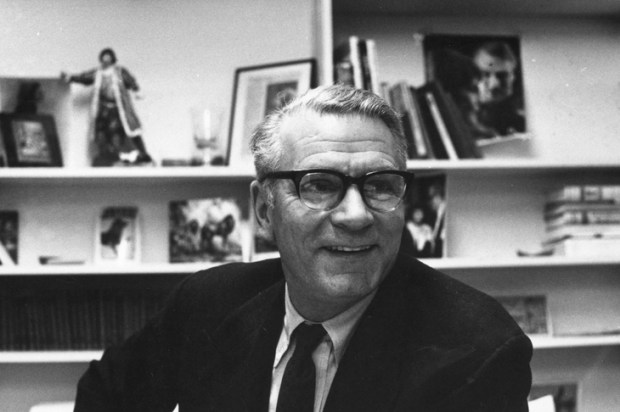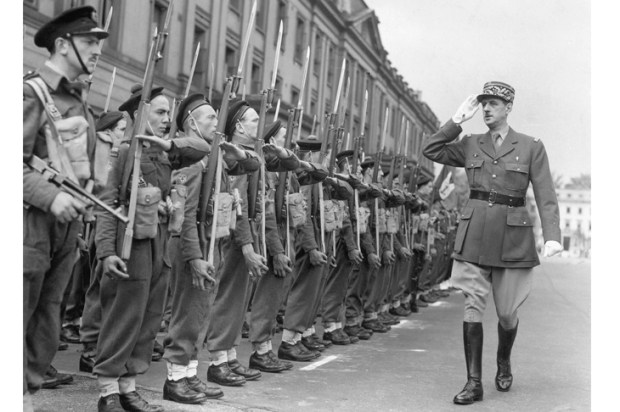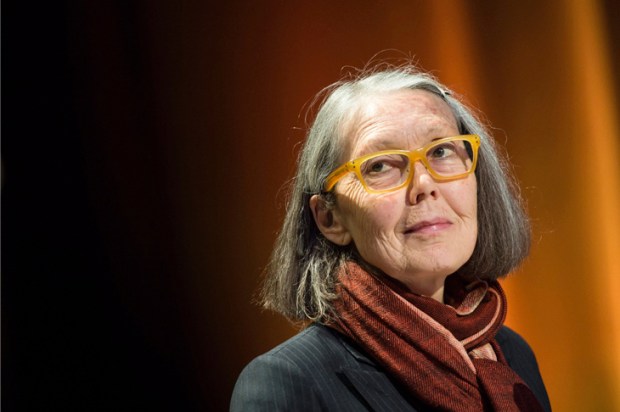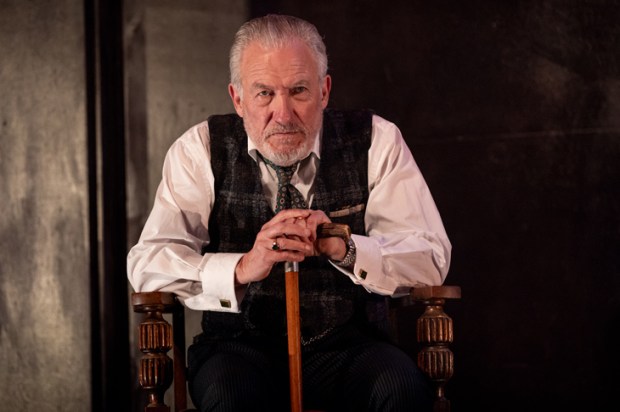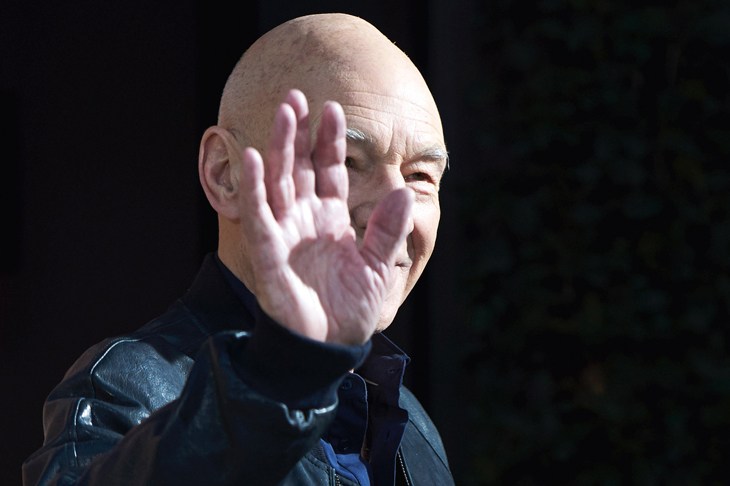
Patrick Stewart, the man who played Captain Jean-Luc Picard in Star Trek: The Next Generation and then went on to X-Men with Hugh Jackman and his old comrade-in-arms Ian McKellen, has died in Los Angeles, of Alzheimer’s and Lewy body dementia, at the age of 86. He was a superb actor but the funny thing about his acting career was that he used his somewhat belated popular visibility as a way of conquering the peaks of the classical theatre that might have eluded him. By the time we saw him do Pinter’s The Caretaker in New York in 2003 in a production with Kyle MacLachlan and Aidan Gillen he was already a distinguished stage actor but it had been a while coming despite his steadiness and splendour in a great range of roles.
I remember him as the guest of John Bell at Melbourne’s Athenaeum for a Bell Shakespeare production of The Winter’s Tale and wondering what the chivalric gent who had projected the grandeurs of Jean-Luc Picard would make of it. Dame Peggy Ashcroft had warned him, when he played the part himself, that audiences loathed Leontes, the King who falsely imagines his wife’s adultery.
Patrick Stewart had had a rough time in his early Yorkshire childhood where his father would knock his mother around. He achieved extraordinary things against the odds. He was, for instance, a cadet reporter and got a scoop apropos of Trevor Huddleston, the Anglo-Catholic priest who came out against apartheid in South Africa. He also somehow made it to acting auditions. Olivier said to the already bald Stewart, ‘Try it without the cap.’ He didn’t give him a job but was clearly struck by him.
The job, such as it was, came from Vivien Leigh, Larry’s erstwhile wife, when she was touring the Commonwealth with Robert Helpmann, who saw Stewart as a useless jobbing understudy. Fortunately, the sometime Scarlett O’Hara and Blanche DuBois took a shine to him and they lit each other’s nights to the displeasure of the great Australian actor-dancer. But if you had looked on Patrick Stewart’s classical career 50 years ago it would have had a power and a glory but clear limits. In 1976 he played Sejanus in the BBC’s I, Claudius with Derek Jacobi in the title role and Siân Phillips as the Empress Livia. Sejanus, you’ll recall, bends Tiberius to his will and creates a reign knee-deep in blood and terror. It’s a supreme alienating tough-guy role. Then there’s Enobarbus, a different kind of male cynic, who comes bitterly to regret his rational disloyalty to Antony, in Trevor Nunn’s Antony and Cleopatra with Janet Suzman, where Stewart got to recite, ‘The barge she sat in, like a burnish’d throne, / Burn’d on the water.’
Patrick Stewart got a job with the Royal Shakespeare Company and kept it for 15 years. Why not, he asked, was there better work elsewhere? He was taken aback by the Star Trek: The Next Generation gig and was aware that his performance gave a patina of majesty, like Prospero in a comic book. It worked like a dream, and then X-Men, with its vast budget and rich variety of dramatic foils in Ian McKellen and Hugh Jackman, was a brilliant exploitation of the Lord of the Rings moment and allowed elements of blood and evil which thrilled the world and created a massive magnification of the middle-aged lords of the mysteries.
Patrick Stewart was effortlessly competent in The Caretaker but he was still aware of being a character actor in a stage actor’s world. He was stunned when he heard that Billie Whitelaw was terrified of doing Who’s Afraid of Virginia Woolf? with him even though she’d been Beckett’s muse through Footfalls.
But as recently as 2008 Patrick Stewart played a very sumptuous and secure King to David Tennant’s Hamlet. It was shot in a house – spaciously – with Australia’s Penny Downie as the Queen, but Stewart’s performance was a grand foil to Tennant’s Hamlet and was certainly not going to get in the way of any Doctor Who fans who saw Tennant as the idealised shadow of their sweet prince.
Stewart also – at once shrewdly and ambitiously – partnered McKellen in Beckett’s Waiting for Godot. By the time it reached Melbourne’s Comedy Theatre this production – by Sean Mathias – had shed Stewart, who was replaced by Roger Rees – Trevor Nunn’s Nicholas Nickleby – but you could see that this was a muscled, densely poetic production of a great dramatic classic and it’s fascinating to look at the last – penultimate – moment of Stewart’s career. As a young actor he had built up a bank of great speeches appropriated from the repertoires of heroic actors who saw the magnificent roles as a birthright.
So the mighty speeches like, ‘Is this a dagger which I see before me, / The handle toward my hand?’ and ‘Light thickens, and the crow / Makes wing to th’ rooky wood. / Good things of day begin to droop and drowse, / Whiles night’s black agents to their preys do rouse’ made part of the armature of his subjectivity. They were inseparable from his sense of self, even though they might have lain unenacted. It caused a degree of unamused disbelief on the part of some actresses that Stewart chose such a strikingly young and good-looking Lady Macbeth in Kate Fleetwood, but the Scottish tragedy played at the Chichester Festival Theatre and ended up with a long secure run on Broadway.
Antony and Cleopatra was an opposite case. It’s Cleopatra’s play and he chose that great actress Harriet Walter to play ‘the serpent of old Nile’. She must be about 76 now and she was not young when she did it with Stewart in 2006. It was a generous choice of partner but also an appropriate one. But Patrick Stewart was like that. He had a vision and a version of Shakespeare he unleashed on the world and they were verbal storehouses of dramatic poetry in search of a resting place.
Got something to add? Join the discussion and comment below.
You might disagree with half of it, but you’ll enjoy reading all of it. Try your first month for free, then just $2 a week for the remainder of your first year.