There are times when the screen, big or small, looks like a gift of the gods. In the last week we saw a stunning masterpiece about De Gaulle and then capped this off with an irresistible piece of Australian bush noir.
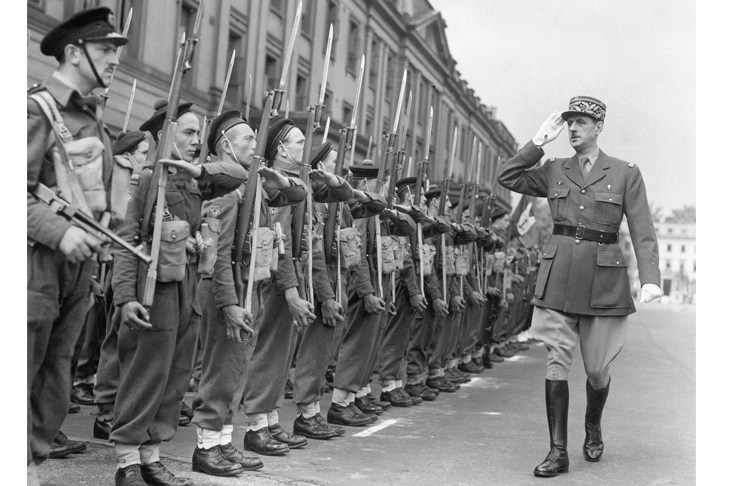
Antonin Baudry’s De Gaulle: Résistance, the first of two parts, in cinemas at the time of writing and available to rent on Apple TV, is a masterpiece the like of which we never dream of seeing. Was it Truffaut who attacked monolithic films like David Lean’s The Bridge on the River Kwai? Well, De Gaulle has all the scenic grandeur of the 1950s epics of war with the clairvoyant quality of being a wholly credible representation of a great man who was also a good man, though a very difficult one. Simon Abkarian, as the man who led the Free French against the collaborators of Vichy, is extraordinarily good, almost blind in his valour but tremendously empowered by his sense of honour in a way that stays in the mind abidingly.
Peter Ryan, sometime lefty, sometime firebrand of conservatism, who fought in New Guinea, said once that if Australia had produced one leader, just one, to rival De Gaulle it should count itself lucky.
The film is magnificently composed so that it indicates in an almost painterly fashion the beauty of the ruthless truth: this is a completely credible portrait of the stiff general who weighed the horror, the sorrow and the pity of every step he took. It never compromises for a second the complexity of just yesterday’s world and how close it came to capitulating to the Nazis.
The Fall of France is something old-timers, now in their tenth decade, remember like a distant doom. French radio played nothing but Berlioz’s Requiem. One of the wonders of Baudry’s film, rapturously shot by Pierre Cottereau and Giora Bejach like the animation of a sacred text, is the way it validates an ancient fervour. A priest in a confessional says to De Gaulle – in a reversal of the scene in Bertolucci’s The Conformist – ‘May God give you grace to follow the true path, with iron in your soul.’
This is a film with a surging moral power that is not separate from its painstaking sense of scruple. Much of it is in English, and it has the immense advantage of that great actor Simon Russell Beale as Churchill. It is the least imitative Churchill we have ever seen but a magnificent embodiment of the old bulldog, and one of the many joys of the two leaders’ complicated camaraderie is the spectacle of them singing tunelessly together out of nothing but sheer passion and a hope beyond hope.
It is also an extraordinary rendition of war at its most terrible and its most grand. Here, before our appalled eyes, is the British attack on the French fleet at Mers-el-Kébir, which kills sailors who had been allies only weeks before. What else can Churchill do when the ships might fall to Hitler?
On the British side there is a very persuasive portrait of Anthony Eden by Tom Mison, right down to the cultivated diplomat’s moustache. ‘Ah, Tony,’ says Churchill, with a mixture of tenderness and contempt, ‘It’s your first war.’ Still, we’re confronted by Pétainist military men who say, ‘Even if the Republic is corrupt, it’s still the Republic,’ and we can’t look away: it’s so feasible.
It is hard to praise De Gaulle too highly. It has all the ferocity of war at its most daring and world-destroying, and it counts the cost of every early lost life, every sudden flaring cruelty. It runs for nearly three hours, and in its second half we see a heroic boy doing everything in his power to give a travel pass to a beautiful Jewish girl in the hope of getting her to Algiers. The majesty with which the action is orchestrated and the sullen nobility of the General in the face of temptation are extraordinary in their grace and power.
This is an optimistic film only in the sense that it defies the idea of might conquering right. But it presents the idea of fighting the battle beyond the odds with an attention to every moral scruple that can afflict a good man in a dire predicament. Can a general reasonably and morally succeed without a loss of integrity? Abkarian gives maximum attention to this and the film is riveting beyond words. It’s not a simple morality play but one of the most complex kind. De Gaulle can be rude and slow, but somehow we believe that the gates of hell will not prevail against him.
The second part is due to be released in April of next year, but everyone should see this one. What was it that the American mystic Thomas Merton said? The Danish response to the Nazi occupation was for the royal family to wear the Star of David. This, Merton says, is not anomalous behaviour: according to the precepts of Judeo-Christian religion it is normal.
The strange magic of De Gaulle is to call down the sacramental glory of the heavens on the leader who insisted the French should be free – free from the engulfment of black evil – and to celebrate with a fervent sense of drama the goodness of its hero.
Dustfall, the ABC’s new six-part crime series, is utterly different. We’re in North Gap, cane country. An eighteen-year-old girl tells a boy her own age she doesn’t want to spend the night with him, not now, not ever. We next see her badly beaten, with no memory of having been brutally raped.
The investigating detective, Tig Pollard, is played with understatement and power by Anna Torv. She captures the frailty of the inquisitor. The raped girl, Edie, magnificently played by Zoe Phillips, slowly stirs into recognition. We become conscious that Tig herself had been groomed by an older man. Then there is Tig’s relationship with her mother, Olivia – played by Juliet Stevenson – who is accused of deserting her daughter. Gradually there are revelations, and we see Edie dancing a dance of vendetta.
Dustfall, directed by Emma Freeman, is superb Australian television. It is not, like De Gaulle, a masterpiece, but it is gripping high-level crime that will keep you watching as everything in this world of enigma and contradiction moves like a snake. It ends with a twist which is narratologically brilliant but a bit strained dramatically. Never mind: it does its damnedest to keep you up past the dawn.
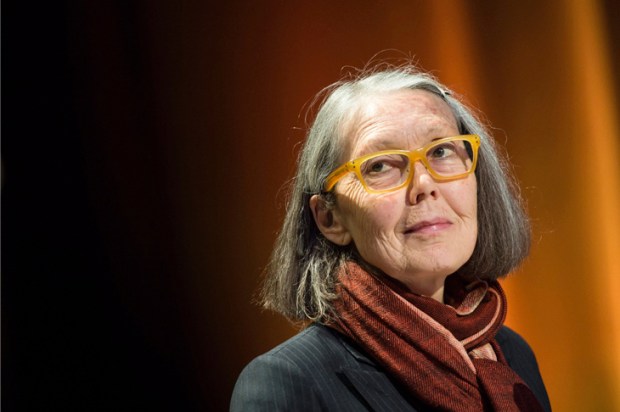
It’s hard not to think the judges of the Nobel Prize for Literature might have given thought to the fact that Anne Carson comes from a moderate middle power, Canada, though she has spent a lot of her blindingly grand career in the land of which Glenda Jackson said, ‘America will always be great.’ On YouTube Anne Carson looks a bit bewildered though you can see the tranquility and the humour that goes along with it.
Got something to add? Join the discussion and comment below.
You might disagree with half of it, but you’ll enjoy reading all of it. Try your first month for free, then just $2 a week for the remainder of your first year.