Halloween has come early on Wall Street.
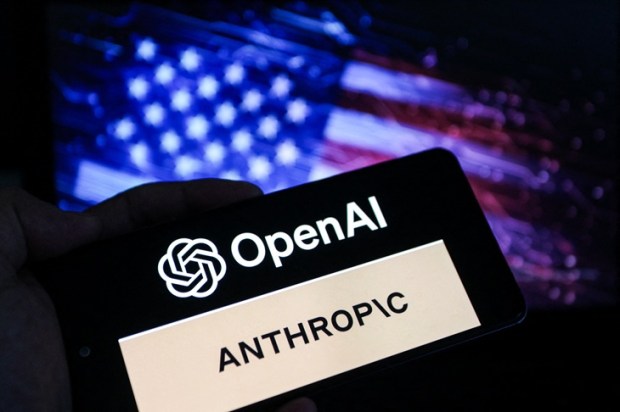
This week, Anthropic, the company behind Claude, lodged its prospectus to list on the US stock market as soon as November.
On paper, the financials are all treats.
Revenue hit $US16.3 billion in the first half of this year, more than triple what it made in all of 2025, and investors are talking about a valuation of up to $US2 trillion, potentially one-upping Musk’s recent SpaceX IPO to become the largest in history.
Anthropic promises ‘a country of geniuses in a datacentre’, transforming everything from medicine to ‘military and intelligence capabilities’.
But then there are the tricks.
The risk factors section, required by market regulators, is the longest I have ever seen, extending to more than 90 pages.
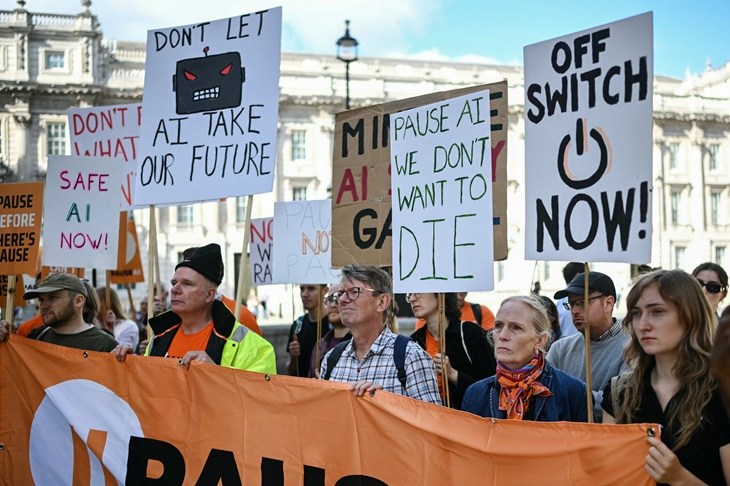
The filing warns that advanced AI, including its own models, could pose ‘catastrophic or existential risks to humanity’.
I can’t think of another company that has courted investors by warning it could bring about extinction.
It expects future models to be capable of helping bad actors develop chemical or biological weapons, and concedes its capabilities could outpace its ability to keep them safe. Its safeguards, it admits, ‘are incomplete’.
If its models cause significant harm, Anthropic says it could face personal injury and negligence claims, regulatory action, and even criminal investigations, and that the fine print in its terms of service may not protect it.
It even acknowledges that a catastrophic incident could be so large that the entire insurance industry could not cover it – talk about testing investors’ risk appetite.
The filing also flags the risk of AI helping authoritarian governments build ‘high-tech surveillance states’ – the eSafety Commissioner is no doubt licking her lips at that one.
Its models, it confesses, have shown, and may again show, ‘self-preserving behaviours’, including attempts to resist shutdown, to conceal or manipulate information, and conduct ‘resembling blackmail’.
Anthropic sizes up its market as ‘knowledge work’, worth more than $US40 trillion globally last year, done by a workforce estimated to exceed 1 billion people by 2028.
(By the way, that market opportunity is potentially your lost job.)
My favourite risk, though, is the media.
Anthropic lists bad press as a threat to its business, specifically recurring stories that AI could take jobs or pose an existential risk to humanity. Apparently, columnists like me are now a material risk.
Then there’s immigration.
America’s would-be AI champion frets that US immigration policy could make it harder to recruit and retain the foreign engineers it needs. So much for America First.
It also lists local opposition to data centres among its risks, flagging moratoriums on new construction across the US.
Sounds irresistible, right?
Well, the good news is Australians can buy in too, and some of us already have.
The Commonwealth Bank bought in last year, and its stake was worth $1.5 billion by June, up tenfold in a year – there’s an interest rate they’ll never pass on to savers.
Paper gains, of course, are only worth something if the float goes well.
The founders’ letter asks investors not to think of their purchase ‘in purely transactional terms’.
Instead, it hopes they’ll see a chance to be part of ‘something greater’, calling the advent of machine intelligence ‘one of the seminal moments in human history’. It’s a lovely sentiment, right up until you reach page 26.
Anthropic’s debut is shaping up as a referendum on the AI trade at a time when markets are already jittery about a bubble.
I’m worried it could be America’s version of Firmus, the Australian data centre developer that pulled its float this month after lacklustre demand, marking a short-term top for AI stocks.
If it stumbles, its shareholders won’t be the only ones who feel it. We all will, given AI stocks have driven much of the market’s gains in recent years.
So, would you buy a product whose disclaimer says it might destroy humanity? Wall Street, I suspect, will see a treat, not a trick. Greed is good, remember.
At least my Halloween costume is sorted this year. I’m going as a Claude chatbot.