One of my fondest childhood memories is walking Dudley High Street with my mother, aunt and sister at dusk on Sundays, window shopping, envious of those able to afford the clothes, jewellery, shoes, toys and ornaments on display. With its flourishing open-air market, brand-name stores, family-owned businesses, tea shops and long-established pubs, Dudley of the 1960s and ‘70s was a safe, respectful community – the very definition of middle-class England.
Stretched out between a Norman castle at one end and rising toward the spire of St. Thomas and St. Luke’s Church at the other, the high street was the thriving centre of local life, a dominant presence at the heart of the industrial Black Country in the West Midlands. It’s the town where I cut my teeth in journalism on my local weekly newspaper, dispatched to cover council meetings, church services, concerts, school plays, planning hearings, inquests and the odd crimes. There was little misbehaviour; courtesy and hard work were valued.
I appreciate we live in a different age but I was stunned to read in a Sunday Times survey last year that the town of my youth was ranked the third-worst place to live in England based on crime rates, Ofsted ratings, GP wait times, parks, and community assets. Despite living and working in America for three decades, I’ve long been aware that British high streets are in decline. I know political parties of all colours continually vow to regenerate them and bring back a sense of community.
Andy Burnham proudly boasted during Prime Minister’s Questions this week that he’s determined to revive Britain’s declining high streets, giving £210 million to councils to help end the blight of shuttered buildings in town centres. If my return to Dudley after years away was any indication, I doubt ten times that amount would be enough.
From everything I saw, the town has surrendered in the fight to remain relevant
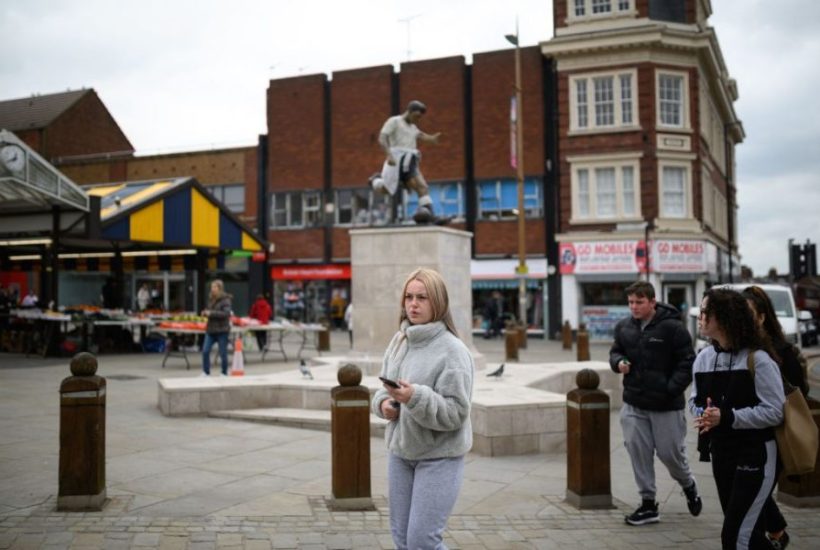
It was hard to reconcile what I found with the town where I’d grown up. What had once been vibrant, bustling and full of life was now a run-down, depressing parade of discount stores, multiple charity and vape shops, cheap takeaway restaurants, amusement arcades, betting shops and empty buildings. At ten in the morning, a Wetherspoons pub displayed the most sign of life, pints of lager being the breakfast of choice.
Since the 1980s, a sprawling shopping centre a few miles away has been a magnet for major brands, leaving gaping holes in the commercial heart of Dudley. But from everything I saw, the town has surrendered, politically and financially, in the fight to remain relevant.
Dudley once epitomised civic pride, boastful of its architectural and historical heritage, its regional and cultural importance embodied by its fine council buildings and courthouses, its museum and library, its schools and churches. All of that has been lost, leaving an overwhelming feeling of abandonment: echoing arcades devoid of shoppers, cracked pavements, litter, unfinished roadworks, seemingly random one-way systems, deserted market stalls. A magnificent Grade II-listed 1909 Post Office building stands crumbling, awaiting its fate.
I appreciate it’s always easy to look back through rose-tinted glasses, so I met someone whose experiences illustrated a sad story of decline. I’d found Abigail Wakelam online. Like me, she was Dudley-born, bred and educated, but had never left. She’s slight but energetic, articulate, intelligent, and, until recently, passionate about succeeding for herself and her town.
It’s long been said that Britain is a nation of shopkeepers. Meeting her over coffee, I thought about how hard it would be to find someone more aptly fitting that description. At 22 years old, she borrowed £17,000 to buy a long-established business just off the high street.
Castle Crafts sold wool, buttons, patterns, sewing and knitting accessories. And Abigail not only stocked fabric, she was part of the town’s fabric, offering sewing and knitting lessons to young girls, their mothers and grandmothers, giving part-time jobs to two cousins on Fridays and Saturdays. She made a profit, enough to begin repaying her loan, enough to live on. It would never be a huge business but she built relationships with customers and suppliers, immensely proud of what she was achieving.
She moved to a new store where customers could drive to pick up their orders. You might expect the town to do everything in its power to encourage small businesses, especially with a large shopping centre on the doorstep. But Abigail discovered common sense is in desperately short supply in the council chamber.
For example, a small car park opposite her premises stood sealed off, part of some council plan to create what it calls an ‘Entertainment Quarter’. In a space where shoppers used to enjoy easy access to town centre stores, the council promises a destination where people will ‘step into a realm of exhilaration!’ For years, it’s remained empty and undeveloped, a far-fetched dream.
Despite being in competition with rivals offering day-long free parking, Abigail said the council took the inexplicable decision to charge drivers to park. Even her most loyal customers struggled to get to her store, many collecting tickets when they stopped outside. After eight years, with her business and health suffering, she closed her doors.
Last year, she decided to reopen Castle Crafts in a smaller store. But the deterioration of the town centre in the intervening years left her fighting for survival from day one. This time, she would last only seven months. On Facebook, she outlined a litany of missteps by the council, including moving 600 of its own workers out of the town centre, depriving traders of a huge percentage of their footfall.
She became emotional as we stood in front of her last location, now yet another in a long line of dusty, abandoned shells. She told me of teenagers smoking dope with impunity outside her shop, while homeless people wandered the town centre. Some days, she’d take less than £3. She closed on Wednesdays to take cleaning jobs to keep the business running. She offered to sweep the arcade in lieu of rent.
But she also gave the council creative suggestions to bring in trade: weekend craft fairs or tourist rides from the nearby, successful Black Country Museum to the town centre. Only one councillor replied. All her ideas were ignored.
For decades, the council has bounced between Tory, Labour or no party in overall control. But Abigail tells me nothing changes, except for more decline. As we walked the streets, past empty shopfronts interspersed with the worst of business offerings, I asked her to point out improvements the present, or any, council had made. She laughed.
Benches and tables for shoppers in the market, put in at a cost of £150,000, became an instant refuge for the homeless, until, of course, they were vandalized. Seating areas on pavements are gathering places for kids with no jobs. The ‘Entertainment Quarter’ boasts a ‘parklet’, paid for by the European Regional Development Fund. It’s a small wooden shack and planting boxes filled with weeds. On this day, the cheap structure carried the distinct smell of urine, more ‘toilet’ than ‘parklet’.
These are sticking plaster solutions while the disease of neglect and decline goes untreated. The struggles of small business owners may not be helped by actions in Whitehall but it is the political indifference and inaction at a local level that infuriates people like Abigail. She asked for no help except for an environment in which to succeed: easy parking for customers, clean streets, pavement repairs, roadworks finished, a clamp down on loitering. It’s not a lot to ask.
And isn’t Abigail Wakelam exactly the type of person politicians say we need to encourage to save the local high street? She’s bright, determined, creative, ambitious and loves her town. She offered badly-needed part-time employment to teenagers. But even before her 40th birthday, the ideas and fight have been squeezed out of her, the community a worse place for her walking away.
On regional authority websites, Dudley council boasts of its regeneration projects. It says a new £24,000,000 bus and tram complex, due to open soon, will bring shoppers flocking into town. They should be more worried that it offers people a quick way out of town. I read online how the council believes:
Shopping locally helps build a stronger community, promoting a sense of belonging and connection among residents, as well as keeping our local high streets alive and thriving.
In a town where even McDonald’s on the high street is boarded up, that seems wishful thinking.
In the centre of Dudley stands an imposing 1867 stone drinking fountain, designed by the renowned Scottish sculptor James Forsyth, whose work appears in St Paul’s Cathedral. Around its triumphal arch are lions’ heads and horses and it’s topped by a tall, graceful statue.
The few people passing by paid it no attention. The water doesn’t flow. Rubbish and moss have gathered in the basins where it once ran. It is, in so many ways, a perfect synonym for what has happened, and continues to happen, to the town of Dudley itself.