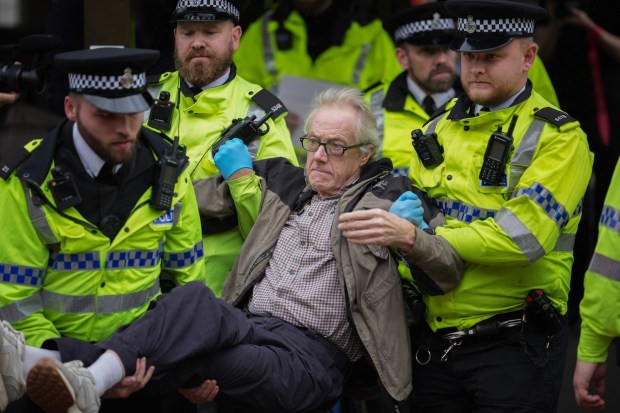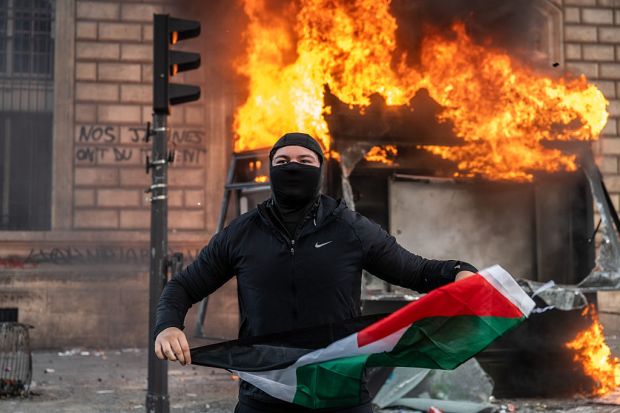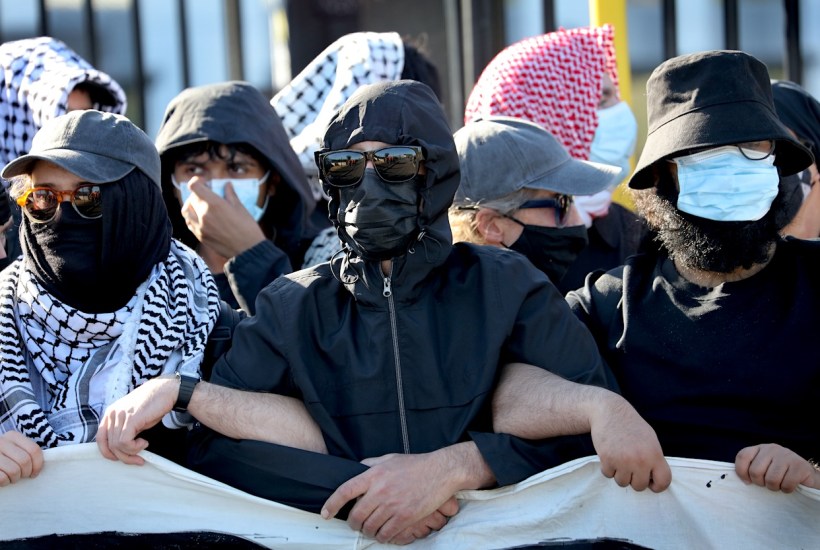
Proscribing Palestine Action as a terrorist group was probably the most contentious action Yvette Cooper ever took as home secretary. Thousands were arrested for showing support for the group, the ban was appealed by Palestine Action’s co-founder, and its future rests with the Supreme Court. Now, an open letter signed by various artistic and public figures and published in the New Statesman has sought to highlight the ‘repressive absurdity’ of the government’s stance.
The case for Palestine Action’s proscription was been laid out by the Joint Terrorism Analysis Centre (JTAC), which sets the UK’s national terror threat and is based within MI5, in a memo that was drafted in March 2025 and obtained by the New York Times. The Times chose to emphasise JTAC’s conclusion that the ‘majority of the group’s activity would not be classified as terrorism’.
The natural conclusion to draw from this, though, is that a minority of it must be. That was the JTAC view. A sentence after saying that the ‘majority’ of Palestine Action’s activities were not terrorism, JTAC explained that Palestine Action ‘commits or participates in acts of terrorism’, and ‘has conducted incidents that have resulted in serious property damage with the aim of progressing its political cause’.
It is a contention supported by evidence. Consider the events of August 2024. Four Palestine Action members broke into an Elbit Systems factory near Bristol aiming to carry out the latest ‘direct action’ operation against the Israeli defence company. Yet this time it involved not just property damage but taking a sledgehammer to a security guard and two police officers. One of the officers suffered a fractured spine and the four Palestine Action members ended up in prison.
The UK’s definition of terrorism is ‘an action or threat designed to influence the government or intimidate the public’ in order ‘to advance a political, religious or ideological cause’. It can include ‘serious violence against a person’ or ‘serious damage to property’. You can argue that our definition of terrorism is wrong but I struggle to understand how you can argue that Palestine Action’s operation in Bristol that night does not meet the definition we have.
The case against Palestine Action goes beyond Elbit. The June 2025 break-in to RAF Brize Norton led to millions of pounds of criminal damage. The ‘Palestine Action Underground Manual’ provides a list of targets and deployable criminal techniques while also encouraging readers to ‘[d]ream up crazy ideas’ and to ‘destrupt [sic], damage or destroy your target’. The group celebrates and promotes such actions on social media.
It may not pull off terrorist spectaculars that you associate with al-Qaeda or Isis. But in other ways, Palestine Action looks, feels and acts like a terrorist group. This was also the conclusion of the US Treasury, which labelled Palestine Action a ‘violent far-left terrorist group’ in August of this year and hit them with sanctions.
Now consider some of the consequences of Palestine Action’s proscription being overturned. First, might other proscribed groups conclude that they actually have as strong a case as Palestine Action and decide a legal challenge of their own is worth considering? Whether the newly discovered free speech absolutists getting arrested on Palestine Action’s behalf will be as keen to do so on behalf of the neo-Nazis of National Action is untested.
Second, and while I cannot speak on their behalf, it would seem to signal something profoundly dark to Britain’s Jewish communities. During my first year as the government’s independent adviser on extremism (2021, before all that 7 October unleashed), Palestine Action was trying to chase Elbit Systems out of the country by doxxing its employees and by activists locking themselves to its gates. That was bad enough. But by the end of my term in 2025, they were carrying weapons and vandalising the property of Jewish businesses and communal Jewish organisations. There is no reason to believe that their violence, and expansion of targets, would not have escalated. If Palestine Action’s proscription is overturned, Jewish people’s confidence in the British state’s ability to protect them will likely plummet further.
The sad reality, evidenced by the New Statesman, is that Palestine Action has kept a modicum of polite opinion onside
The sad reality, evidenced by the New Statesman letter, is that Palestine Action has managed to keep a modicum of polite opinion onside. The squalid reality of their activities has tended to get lost in the noise around pensioners being arrested and the controversy around Sally Rooney.
Still, the truth will out eventually, and by intertwining their struggle with violent attacks on the state, however, and by targeting Jews simply for being Jews, Palestine Action has also likely put a ceiling on its support.
Readers will have different views on the desirability of the growth of Palestinian activism in recent years, but most sympathisers have proven able to voice their opinions without the use of sledgehammers. For all the ways the country has changed, Britons still do not go in for violence and militancy. Furthermore, endless vocal attempts to make where one stands on Palestine the most pressing question in political life will surely alienate the mainstream further.
The Supreme Court will decide Palestine Action’s future in a hearing in November. Regardless of the outcome, if Palestine Action is the future of Palestinian activism, the cause it wishes to advance is irrevocably tainted.