England once taxed daylight. It did so for 155 years. That is the number to keep in mind as we watch Canberra defend a tobacco excise that has handed four-fifths of a legal market to organised crime.
King William III introduced the window tax in 1696. The logic was seductive and progressive: the rich lived in big houses, big houses had many windows, so count the windows and you have a rough-and-ready wealth tax without the bother of valuing anybody’s estate. It was, in effect, a graduated levy on sunlight.
What followed is the oldest lesson in public finance, and the one government never learns. People respond to incentives. Owners bricked up windows. Builders designed houses with fewer of them. Revenue fell short, so parliament raised the rate, so more windows were bricked up. Landlords, assessed on every aperture in their tenements, sealed the smallest openings and passed the rest of the bill to tenants in rent. The tax meant to spare the poor fell hardest on them.
The cost was not merely fiscal. Deprived of light and ventilation, the poor sickened. Rickets, tuberculosis and stunted growth became so characteristic of the slums that the French called them the ‘British sickness’. Jean-Baptiste Say, renting a room in England with its window bricked up, used the experience to teach the world what economists now call excess burden: the dead-weight loss a tax inflicts over and above the money it raises.
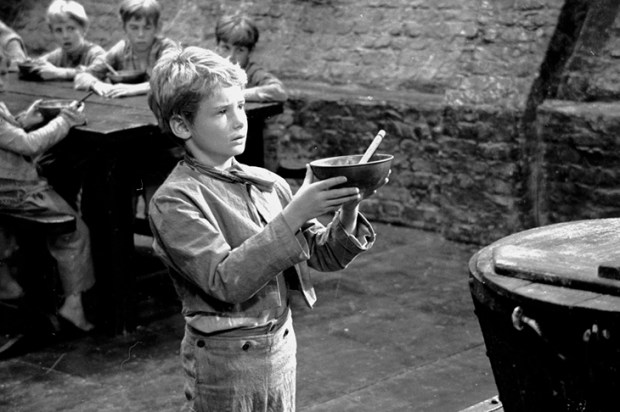
Charles Dickens, in Household Words, complained that neither air nor light had been free since the imposition of the window tax, and mocked the red-tape clerks who assessed it while the population beneath their windows slid into scrofula, consumption and pauperism. Charlotte Brontë had her narrator marvel at Belgian rooms full of windows because, she wrote, light was not taxed in Belgium.
Everybody knew. Physicians knew, novelists knew, economists knew. And the tax survived until 1851. Once a levy is on the books and its revenue is spent, the machinery of the state develops an interest in its survival that no evidence can dislodge. Bricked-up windows on Georgian terraces still stand as monuments to how long a bad law can outlive its victims.
Australia has managed the mirror image. For a quarter of a century, since John Howard’s modest Renewable Energy Target of 2001 metastasised into today’s subsidy edifice, we have taxed cheap, reliable coal and gas in order to subsidise sunlight. England starved its poor of light to soak the rich; we starve industry of affordable power to bathe rooftops in it. The results are symmetrical. The country that sits on some of the cheapest energy on earth now has among the dearest electricity in the developed world, an aluminium and refining sector on life support, and a grid that fails whenever the wind drops. As with the window tax, the beneficiaries are vocal, organised and well represented in every ministry; the losers are diffuse. And as with the window tax, everybody knows.
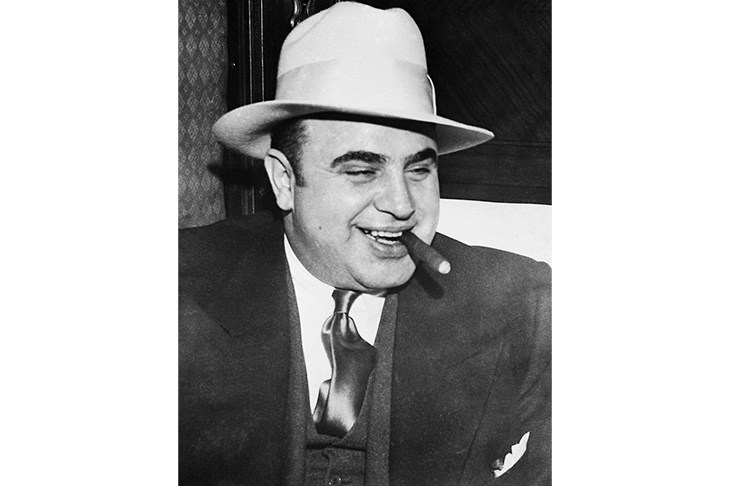
The Americans supplied the purest example of the genre. Prohibition, written into the Constitution by the Eighteenth Amendment and enforced from 1920 by Congress’s Volstead Act, did not abolish the demand for alcohol; it abolished the legal supply. The gap was filled, at monopoly margins, by men with guns. Al Capone’s Chicago Outfit was less a criminal enterprise than a government-created franchise, its profits a direct transfer from the Volstead Act. It took thirteen years, hundreds of dead and the corruption of a generation of police before Congress admitted the obvious.
Which brings us to the tobacco excise, the window tax of our own day. Successive governments have ratcheted the excise so relentlessly that the tax alone on a packet of twenty cigarettes is now about $30, and the legal retail price sits between $40 and $50, the most expensive cigarettes on the planet. The professed purpose was health. The actual result, documented in June by the Australian Bureau of Statistics, is that illicit sources supplied 12 per cent of nicotine consumption in 2017 and 80 per cent in 2025. Legal tobacco sales have collapsed to less than a third of their 2017 level while total nicotine consumption, measured in the sewers, has risen by almost 40 per cent, nearly three times the growth in population. The Treasury forgoes between $8 billion and $12 billion a year in evaded excise. We have achieved the extraordinary feat of raising less money while people smoke more.
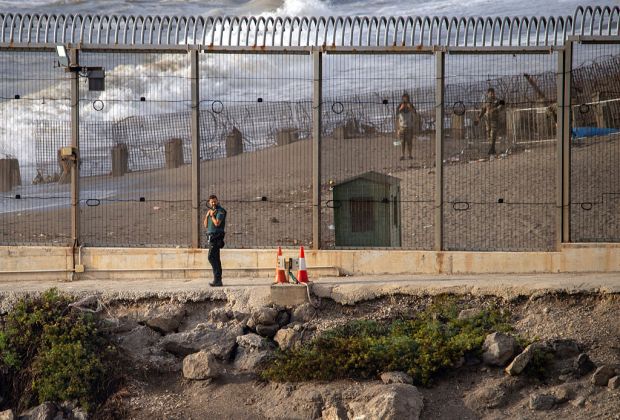
And, as in Chicago, the trade has gone to the men with guns. Melbourne’s tobacco wars have produced well over a hundred fire-bombings of rival shops in Victoria alone, with the arson now spreading interstate; shopkeepers have been murdered; whole suburban strips have been gutted. The Middle Eastern crime syndicates running the trade did not create the demand. Canberra did, by legislating a price gap so wide that a shipping container of illegal cigarettes now yields margins Capone would have recognised. Border Force seized 2.66 billion illegal cigarettes last year, up from 480 million in 2016; the trade barely noticed.
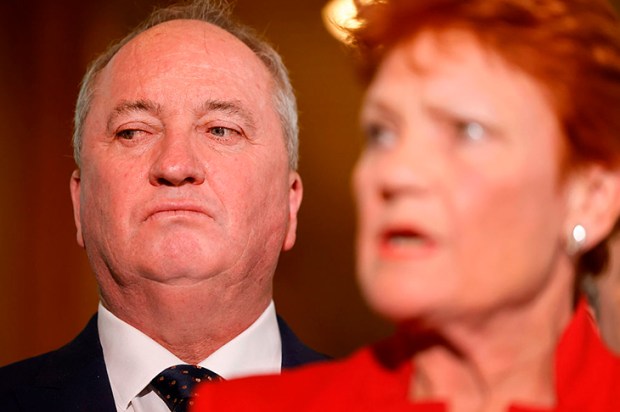
The public health establishment, which lobbied for every one of these excise rises, now insists that cutting the tax would be a ‘backward step’ and that criminals would simply undercut a lower legal price. This is the argument of the window-tax assessor: whatever the evidence, the levy must stay. In truth an 80-per-cent cut, which is what the Coalition under Angus Taylor and Matt Canavan announced on Thursday, following One Nation’s 75-per-cent proposal, would take the excise on a packet from $30 to $6 and the retail price to something like $16 to $26. At that point the criminal’s margin evaporates, and so does his reason to fire-bomb his competitors. The Treasurer says he is ‘sceptical’. Sceptical of what? The Bureau of Statistics has already run the experiment for him and published the answer.
The window tax lasted 155 years because no government wanted to be the one that lost the revenue, even revenue that was falling, even revenue that was killing people. Prohibition lasted thirteen. The tobacco excise, in its current lunatic form, has lasted about a decade. The question is not whether it will be repealed but how many more shops will burn before it is. Dickens would have recognised the ministers now defending it’, and seen them ‘bound hand and foot with red tape’.
Got something to add? Join the discussion and comment below.
Peter Swan AO is Emeritus Professor of Finance in the UNSW-Sydney Business School.
You might disagree with half of it, but you’ll enjoy reading all of it. Try your first month for free, then just $2 a week for the remainder of your first year.