When I was at school, the closest thing we had to AI was Clippy, the little animated paperclip who would pop up to ask if I needed help writing a letter.
It didn’t tend to be very helpful.
Today, students have Claude, ChatGPT, and Gemini, which can do the whole assignment for them. It turns out that might not be such an upgrade.
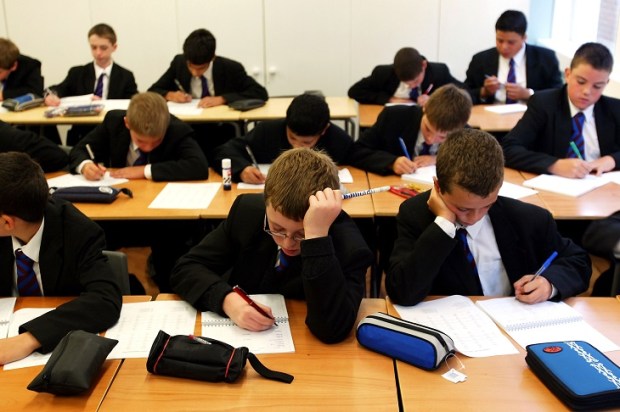
A large study of more than 26,000 Chinese secondary students followed over 30 months has found that AI can make students better at homework while making them worse at exams.
Students using AI saw their homework scores rise by 18 per cent and the time they spent completing assignments fall by about 30 per cent. Happy days.
Except within six months, their exam scores had started to slide.
And the longer they used AI, the worse it got. After two years, scores on China’s high-school entrance exam were down 24 per cent and college entrance exam scores 18 per cent.
The likely culprit is something researchers call cognitive offloading: outsourcing a task to free up your own working memory.
We’ve always done it. Sticky notes, shopping lists, calculators. The difference with AI is that it can outsource the thinking itself.
Tellingly, the losses were concentrated among students who appeared to be outsourcing their homework. Those who still put in the time suffered little decline.
A separate study of nearly 1,000 Turkish high schoolers published last year found the same double-edged sword.
Students using a conventional AI tutor scored 48 per cent better during maths practice. But when exam time came and the AI disappeared, they scored 17 per cent worse than students who had never used it.
The tempting immediate reaction is to ban AI, but as we know, children are better at getting around Big Tech roadblocks than we give them credit for.
There is another approach.
The Turkish researchers also tested an AI tutor with guardrails, one that dished out hints instead of answers. It boosted practice scores by 127 per cent while wiping out nearly all the subsequent harm.
But not all offloading is equal. Another study published earlier this year divided it into two types: dependent and autonomous.
Dependent offloading is essentially ‘do this for me’: handing the thinking over to AI and accepting the result. Researchers found it was associated with weaker independent judgment and deep processing.
Autonomous offloading is more like ‘help me check this, explain this, structure this, while I still do the thinking’.
Here, AI acts as a scaffold rather than a substitute, with more favourable associations with those same cognitive abilities.
And this doesn’t appear to be just a problem for students.
A recent experiment found that AI improved adults’ performance on a business problem-solving task, but some of that advantage disappeared when the technology was taken away.
Those who combined it with sustained effort performed better afterwards than those who relied heavily on it.
I’ve taken to calling AI the Ozempic of the mind. It makes the work easier, but there is a risk we’re losing the very cognitive muscle we’re supposed to be exercising.
Trying to keep AI out of education altogether is probably a losing battle.
Almost 80 per cent of Australian university students already report using it in their studies, while 44 per cent of Australian workers now use AI at least several times a week.
Students need to learn how to use AI without becoming dependent on it before they enter a workforce where it is already commonplace (assuming AI doesn’t take all the jobs first).
The uncomfortable truth is that when something feels hard is when the learning takes place.
AI can make an assignment easier, faster and even better. But if it removes the struggle involved in getting there, it may also remove some of the point of doing it.
For generations, homework has rested on a fairly basic assumption: that the student is the one doing the work (overenthusiastic parents notwithstanding).
If unsupervised take-home work is increasingly unreliable, perhaps we should be giving students less of it and putting more weight on assessments where they have to demonstrate what they actually know: timed in-class writing, oral exams, board work and closed-book quizzes.
The dog eating your homework might have cost you a few marks. Letting Claude do it for you could cost you the lesson.