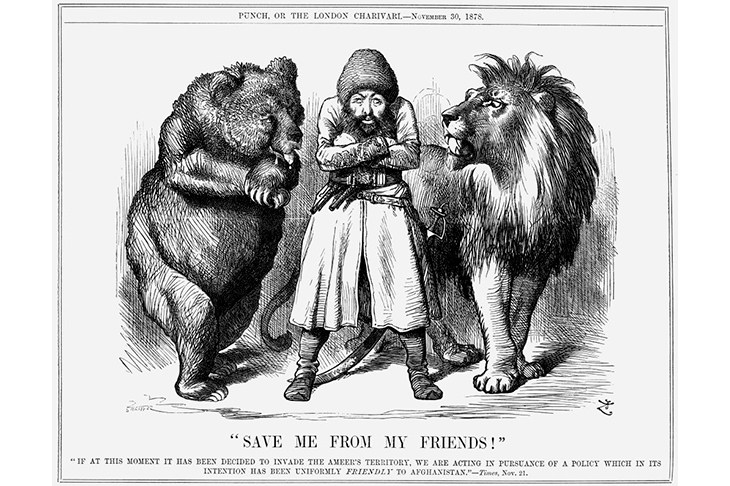
The ‘Great Game’ is an expression largely forgotten these days. The compound noun ‘the Great Game’ seems to have been coined around 1841. It’s certainly used in the Literary Gazette of that year referring to ‘Eastern politics’. Originally ‘the Great Game’ meant, ‘The struggle for power and influence in southern central Asia and the north-west borders of India’ (Oxford English Dictionary) – and it was between the British and Russian empires.
It often involved manipulation, lobbying, propaganda, espionage and influence peddling – a kind of ‘cold war’. But from time to time it burst out into a ‘hot war’ (such as the Crimean War, 1853 to 1856). The term ‘the Great Game’ was popularised by Rudyard Kipling in his novel Kim. In that book Kim is told, ‘When everyone is dead the Great Game is finished. Not before.’
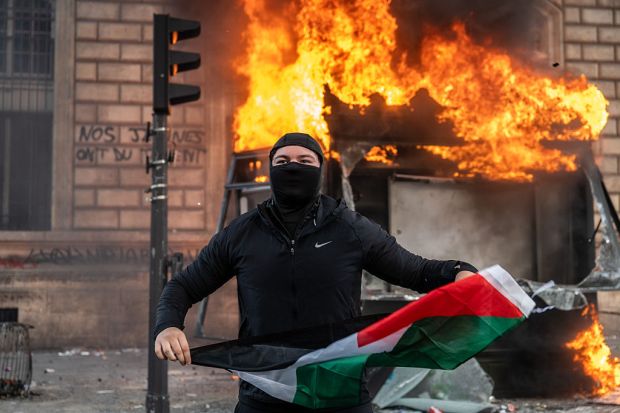
Today there is a new ‘Great Game’ – this time between Western civilisation and Islamist global insurgency. This new ‘Great Game’ is often played politically – with Islamists lobbying their Marxist friends for political influence, with noisy street demonstrations, with anti-Jewish and anti-Western power struggles in universities, and so on.
But this new ‘Great Game’ can also sometimes switch from being a ‘cold war’ into a ‘hot war’ – as in the Bondi terrorist attack, similar terrorist attacks around the Western world, rockets fired by Hezbollah into Israel, missiles fired by Houthis at ships in the Red Sea, and so on. And, just as Rudyard Kipling says in Kim, we should be clear that this ‘Great Game’ will be played to the death – either Western civilisation dies, or radical Islamism dies: ‘When everyone is dead the Great Game is finished. Not before.’ It might be time to revive this long-forgotten expression – ‘the Great Game’.
Got something to add? Join the discussion and comment below.
Contact Kel at ozwords.com.au
You might disagree with half of it, but you’ll enjoy reading all of it. Try your first month for free, then just $2 a week for the remainder of your first year.