‘Dhimmitude’ is a word that is almost unknown in the Western world. But it is a vitally important word, because it might be what the future holds for us, or for our children. ‘Dhimmitude’ means, ‘the condition or status of non-Muslims living under sharia law’ (Collins Dictionary). It comes from the Arabic word dhimmi which means ‘non-Muslims living in an Islamic state’. It is a permanent status of subjection in which Jews and Christians have been held under Islamic rule since the eighth century, and that forces them to accept discrimination or face forced conversion, slavery or death. The term ‘dhimmitude’ was coined in 1982 by the president-elect of Lebanon, Bachir Gemayel, to name attempts by the country’s Muslim leadership to subordinate the native Lebanese Christian minority (mostly Maronite Christians). There are a number of levels of humiliation under ‘dhimmitude’ – for instance non-Muslims can be required to pay an addition tax not applied to Muslims, and the testimony of non-Muslims cannot be accepted in a court of law against a Muslim. It is an explicit rejection of secular equality – and it acknowledges that radical Islamism is not just a religion: it is also a political ideology. One reason why radical Islamists on 7 October, 2023, did not hesitate to kill more than a thousand Jews, rape others and kidnap still others (and then strangle to death two small boys they held captive) is because of the belief that non-Muslims are mere ‘dhimmis’ – less than fully human. A word worth knowing.
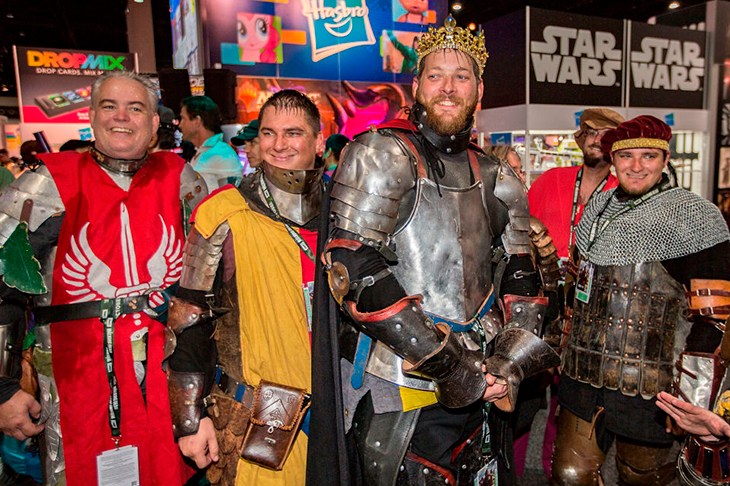
There are always some words that become fashionable (at least for a while) and then fade again long before those of us who are not dedicated followers of fashion have even heard of them. I suspect ‘larping’ is one such word. For a certain segment of the population ‘larping’ is currently a popular put-down that is splattered all over social media like bird droppings. What does it mean? What is it criticising? According to the hyper-hip Urban Dictionary ‘larping’ means ‘When someone is pretending to be something they’re not.’ This, they say, can involve lying on social media or lying in real life. The Urban Dictionary says ‘often’ (I would have thought always) used in a derogatory sense. The word comes from the world of game-playing, and is an acronym for Live Action Role Play. However, when you accuse someone of ‘larping’ you are not accusing them of a bit of swords-and-sorcery role-playing, but of pretending to be something in real life they are not. If you take a selfie standing beside a Lamborghini in a car salesroom and use it to pretend you have bought a Lambo, then you are ‘larping’. Pretending to know a famous person, pretending to be rich, pretending to know about a topic, pretending to have a certain lifestyle, and so on – all are examples of ‘larping.’ You have to feel sorry for the younger generation – they just don’t seem to be happy living in the real world!
Are we living in the Age of Entitlement? Recently there was a news report about workers who claimed they were ‘entitled’ to work from home if they wished. At the Royal Commission into Antisemitism one aggressive pro-Palestinian campaigner seemed to believe she was ‘entitled’ to call for harm to Jews. There are some members of the younger generation who seemed to have an ‘entitlement’ view of employment – they are ‘entitled’ not only to a job, but to the job they want (they should be supported by welfare until they find a job they like); and they are ‘entitled’ to rapid promotion (older generations should just get out their way). Perhaps it’s just my jaundiced eye, but we seem to be surrounded by an unhelpful culture of ‘entitlement’. I blame the UN’s ‘Universal Declaration of Human Rights’ which failed to include any accompanying ‘Universal Declaration of Human Responsibilities’. The result is generations who have separated ‘rights’ from ‘responsibilities’. Hence, the age we live in – the Age of Entitlement.
Got something to add? Join the discussion and comment below.
Contact Kel at ozwords.com.au
You might disagree with half of it, but you’ll enjoy reading all of it. Try your first month for free, then just $2 a week for the remainder of your first year.