It’s strange and sad what the world throws at us. We are assailed by musicals – a production of Reg Livermore’s Ned Kelly, a show full of jukebox glamour about Neil Diamond and then the death of Dolly Parton – which was treated like the death of an assassinated president. The day Dolly Parton died it was as if some great light went out in America and the rest of the world. Donald Trump saw her as the embodiment of America and no doubt it helped that she did not define herself against the Maga camp. She does seem to have been a woman of extraordinary warmth who turned the poverty of her background into a strength and an opportunity to help people who suffered from misfortune. At some level she was the embodiment of the log cabin logic and it helped that she was such a great singer and songwriter as well as generous-hearted soul. There are kids in Australia’s New England who got the great boost of receiving her books at regular intervals and then there’s the tremendous embracing warmth of her singing. Miley Cyrus was her goddaughter but she was a mother figure to the whole sphere of popular music and she was a great incandescent light as one of the very greatest country singers who ever lived. When the ABC’s Sarah Ferguson introduced her Dolly Parton segment she quoted the words of a song, as prose, and that did the trick, it demonstrated the moral grandeur of what the world had lost.
There’s the prospect of the revival of My Fair Lady with Nathaniel Parker – best known as Elizabeth George’s Inspector Lynley – in the role of Higgins. And on top of this – and touching on all theatre with the power of its verbal music – there is a production by the Melbourne Shakespeare Company of what is dubbed Cleopatra and Antony which runs for ninety minutes (at 45Downstairs).
There isn’t really much point in cutting this extraordinary play though there is a Living Shakespeare recording with Vivien Leigh and Peter Finch who were real-life lovers. You can argue that Antony and Cleopatra is Shakespeare’s greatest history play – though that title belongs to the two parts of Henry IV, with their juxtaposition of Hotspur preoccupied with ‘this word honour’ and Justice Shallow who has heard the chimes at midnight. Antony and Cleopatra is certainly Shakespeare’s greatest evocation of love, treated both with languorous laziness and sensual abandon and with a tremendous tragic intensity, ‘And there is nothing left remarkable / Beneath the visiting moon.’
And then there is the scene where Cleopatra holds the asp to her breast as if it were a child, ‘Dost thou not see my baby at my breast / That sucks the nurse asleep?’ When Auden did his Viking anthology of Renaissance verse he simply publishes the text of Antony and Cleopatra. It’s interesting – and cheering – to hear that Akina Edmonds handles the verse well. A few years ago Helen Morse on a pub night organised by Richard Piper convinced the audience that writing of genius had met with interpretation of genius.
Christopher Plummer said Australia’s Zoe Caldwell was the greatest Cleopatra he had ever seen. I remember the sheer vivacity with which she indicated how she played it. Maggie Smith was dismissive of her own Cleopatra while saying, ‘I’m glad I had a go.’ Harold Bloom thought Helen Mirren was the greatest Cleopatra he had ever seen. Glenda Jackson did it directed by Peter Brook with Alan Howard as Antony.
It is ludicrously parochial that the play is not regularly staged here. The 2017 National Theatre Live production had Sophie Okonedo as the woman who talks of her salad days (‘When I was green in judgment, cold in blood’) to the Antony of Ralph Fiennes. There is a Janet Suzman recording on YouTube. Vanessa Redgrave is probably the most highly regarded Cleopatra of her generation. Helen McCrory wanted to play Cleopatra and it is not hard to imagine her triumphing in the role. But it’s a mystery as to why Cate Blanchett did not play it in her Sydney Theatre Company days.
What looms on the popular musical front is the revival of My Fair Lady. When Emma Thompson planned to remake this greatest of all musicals she had actors like George Clooney vying for the role.
The casting of Nathaniel Parker is a bit like the casting of the early productions of this Shavian musical which T.S. Eliot thought was superior to Shaw’s original play Pygmalion. In particular Michael Denison who played Higgins in 1962 was famous for playing Algy in the Asquith/Dame Edith Evans production of The Importance of Being Earnest but everyone watched him regularly on TV as Boyd QC. He was a superb Higgins.
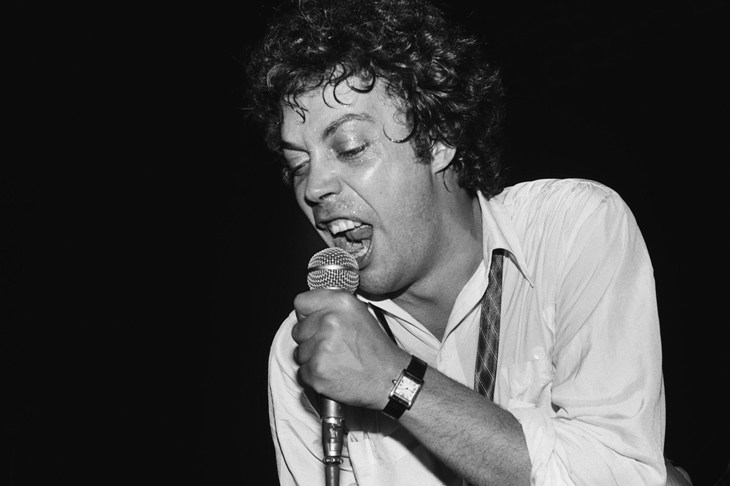
We should also acknowledge the achievements of Tim Curry whose death went by much more quietly. Tim Curry was an actor-singer for a long time and it’s striking how much his career kicked on from when he created and embodied the role of Frank-N-Furter in The Rocky Horror Show and carried it on when it became The Rocky Horror Picture Show under the direction of Australia’s Jim Sharman who was one of the great progressivist theatre directors of his day. When it went to America, Curry was the only original cast member allowed in. Tim Curry did Hair first but he was Mozart to Ian McKellen’s Salieri in the Broadway Amadeus and he also played Tristan Tzara in Stoppard’s Travesties and fell foul of that formidable actor John Wood who later apologised. But Tim Curry did everything and he knew the mystery of how poor theatre could burn bright. He did Clue directed by Jonathan Lynn. He was the kind of boy who was called ‘Butterfly’ at school. He played King Arthur in Spamalot and throughout his career showed a virtuoso command of variety and panache. He did all manner of things with the RSC but is consistently self-deprecating in his lean and elegant book of memoir Vagabond. He looks like the sexiest kind of rock star on the cover and and it’s remarkable to think that the company had to fight American Equity to retain Curry when they opened Rocky Horror in America.
May the earth lie light on him.
Got something to add? Join the discussion and comment below.
You might disagree with half of it, but you’ll enjoy reading all of it. Try your first month for free, then just $2 a week for the remainder of your first year.