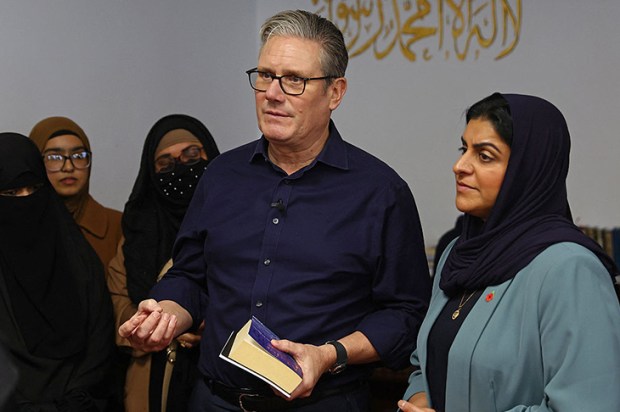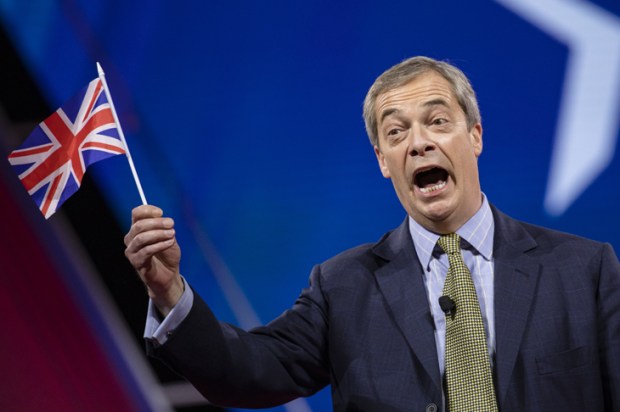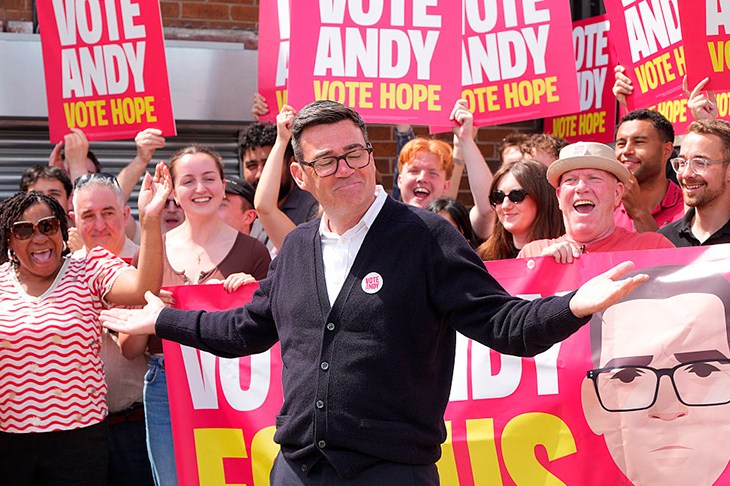
Most Spectator Australia readers won’t have heard of Sir Simon Woolley, the Right Honourable the Lord Woolley of Woodford, a baron in the House of Lords. Yet this grandly titled clown deserves to be remembered as a symbol of the Tories losing their way. After police revealed that the fraudster Jason Arday apparently died by his own hand, Woolley whipped up a rally in Trafalgar Square with wild, absurd claims that his death had been an ‘assassination’ and a ‘lynching’.
A black rights activist, it was Theresa May’s Conservative government that in 2019 awarded him both a knighthood and a life peerage. These paved the way for further glittering prizes – he soon became the first black person to be elected principal of an Oxbridge college, Cambridge’s Homerton.
The Conservatives as much as Labour have been responsible for the left’s triumphant march through Britain’s institutions over the past three decades. And it was the Tories’ drift to the left, starting with David Cameron, that resulted in Britain’s grim current hard-left government. Their passive acceptance of rampant wokery, virtually open-door immigration and Greta Thunbergesque zeal for net zero lost them the support of their base. Tory voters went on strike at the 2024 elections, allowing Labour to win with the support of just 20 per cent of the electorate.
Voter anger with the Conservatives, followed by a Labour regime which has hammered everyone except illegals, prisoners and the millions on benefits, left the door wide open for a genuine party of the right, an opportunity that Nigel Farage’s Reform UK has skilfully seized.
Under Kemi Badenoch’s leadership, many Conservatives have acknowledged serious mistakes were made during their time in government and have tried to correct course, adopting recognisably Tory positions on a range of issues, notably immigration and net zero. Yet the still numerous ‘One Nation’ (no relation) Conservatives reject criticism of their record and bristle at such changes. Reform shares the widespread suspicion that the Tories can’t be trusted not to return to their Labour-lite ways. Badenoch meanwhile refuses talk of an alliance with Farage, often citing his aim of destroying the Tories.
For much of the period since the 2024 election, the tensions on Britain’s right didn’t seem to matter much. Reform was comfortably ahead in the polls until as recently as the May local elections, when it caused a Labour bloodbath, taking almost two-thirds of the 2,557 English council seats Labour was defending. Reform seemed destined to replace the Tories as Britain’s dominant right-wing party.
Since then, Reform has hit some bumps in the road. Burnham easily won the 18 June Makerfield by-election as did Labour in the subsequent Manchester mayoral by-election, in both cases in what seemed Farage-friendly territory. In another by-election, Aberdeen South, Reform also lost to the Tories – a surprising result given that the big local issue was net zero’s destruction of the North Sea oil and gas industries and Farage, unlike the Conservatives, had been consistently hostile to net zero.
Meanwhile, Rupert Lowe’s Restore, a rival on Farage’s right, has emerged as a serious headache for Reform after winning 7 per cent of votes at the Makerfield by-election. To make matters worse, Reform’s senior figures have developed a habit of airing their differences in public. Recent opinion polls put Reform around the mid-20s, neck-and-neck with Labour. That compares with most of the period under Starmer, when Reform’s support reached the low-30s, usually about ten points ahead of Labour.
But the 13 August Clacton by-election was good news for Farage. He increased his vote by 1,000 compared to the 2024 election, and the turnout of 44 per cent was respectable given that his victory was a foregone conclusion. Farage has been mocked for the fact that 26 per cent of the vote went to a joke candidate, Count Binface. In reality, Binface – John Harvey, a leftist BBC comedy script writer – was the establishment favourite, attracting votes from all the other parties (who boycotted the by-election).
Farage triggered it as a local referendum on accusations that he broke parliamentary rules by accepting a £5-million gift before he entered national politics. The 63 per cent who voted for him clearly see that as a non-issue. It’s nevertheless possible parliament may sanction Farage, leading to another by-election. Clacton’s voters would almost certainly vote for him again.
As for Britain’s new TikTok Prime Minister, a Burnham bounce is evident in his personal ratings – according to Yougov, he scores 46-per-cent positive, to 33-per-cent negative, a big improvement on Keir Starmer who at the end of his term was 22 to 67. The endless stunts to show Burnham as friendly and blokey seem to have paid off.
Yet the bounce hasn’t translated into Labour overtaking Reform in the preferred party polling. And that’s probably unlikely. During the Makerfield campaign, Burnham worked on creating the impression that he’s a moderate. Since moving into the top job, when not spouting impenetrable gibberish such as his crackpot ‘Number 10 North’ plan, he’s tacked left. That’s included plans to restore sky-high foreign aid – meaning either higher taxes or yet more catastrophic debt – and keeping the Green-left happy by going cold on earlier hints that he’d approve new North Sea oil and gas projects.
Most importantly, Burnham appears to have no interest in stopping the boats – consistently one of the two top issues (with cost of living) for voters. Instead, he bizarrely insists that all parts of the country need to ‘play their part’ in accommodating illegal immigrants, while his Home Secretary feels the need to explain to them that rape is illegal. His tin ear on the presence of hundreds of thousands of male illegal immigrants, whose identity often isn’t known, who aren’t detained, and many of whom commit appalling crimes, should restore Reform’s opinion poll lead.
Under Britain’s first-past-the-post system, 30 to 31 per cent support for Reform should translate into a Commons majority. But the split on the right puts that at risk – and the bad blood between Farage, Badenoch and Lowe doesn’t suggest much prospect of reconciliation. So, depressingly, as in Australia, unless wise heads prevail, Labour could cling on, even though their supporters are heavily outnumbered by voters on the right.
Got something to add? Join the discussion and comment below.
@markhiggie2
You might disagree with half of it, but you’ll enjoy reading all of it. Try your first month for free, then just $2 a week for the remainder of your first year.