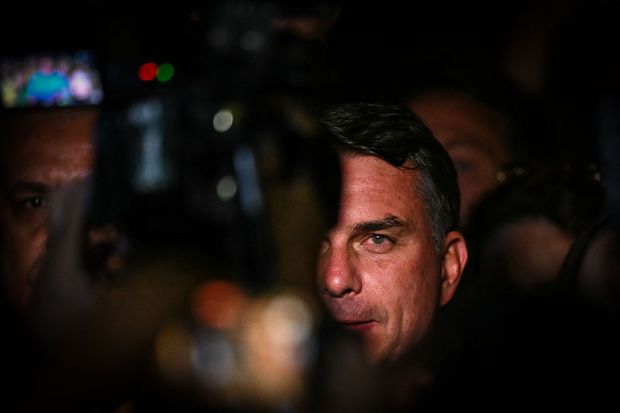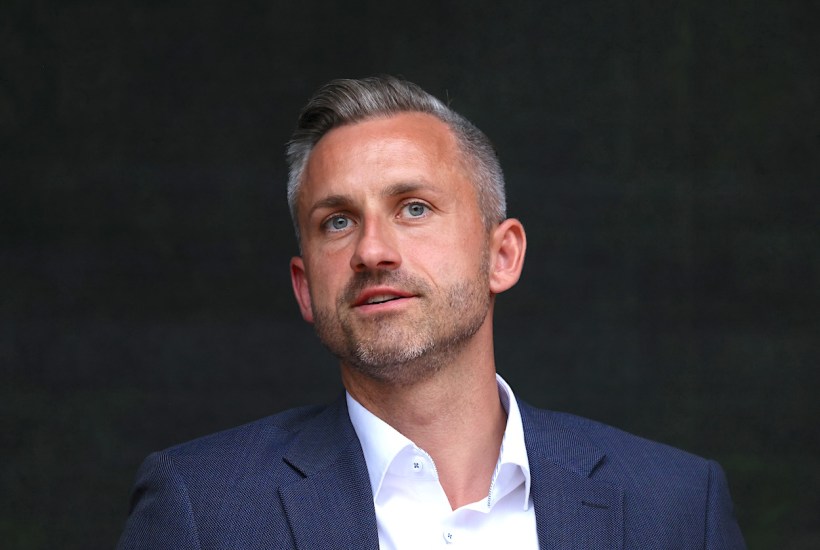
Ulrich Siegmund is ‘the most dangerous man in Germany.’ So says Der Spiegel in a headline under a mug-shot style photo of him on its cover.
Siegmund, 35, leads the extreme-right Alternative for Germany (AfD) in eastern Saxony-Anhalt state. Polls show him heading for victory in elections on 6 September, with his party on 41-43 per cent, compared with 22-24 per cent for Chancellor Friedrich Merz’s Christian Democrats (CDU).
If Siegmund wins, it will be the first time a far-right premier rules one of Germany’s Länder since the Federal Republic’s 1949 founding.
The AfD’s promises include kicking out rejected asylum seekers; forcing migrants to do menial work for benefits; replacing LGBTQ flags with German flags; axing state ministries and a public TV/radio levy; more social spending; tax cuts; and punishing those who imposed Covid-era restrictions. It vows to end German ‘self-hatred’ with less focus on Nazis and more on heroes like Iron Chancellor Otto von Bismarck.
Dressed in a white polo shirt with his trademark gelled hair and trimmed beard, a beaming Siegmund arrived at an 13 August rally in Loburg, a town surrounded by farms 90 minutes west of Berlin.
‘Everyone feeling good?!’ he called out, striding towards the crowd. Seeing a mother and daughter, he made a beeline for them and asked if they wanted a selfie with him. An assistant, whose only job is to ensure good selfies, took photos with the woman’s phone.
Siegmund does two or three of these rallies every day in Saxony-Anhalt, whose 2.1 million people have the lowest GDP per capita of all 16 German federal states.
There are few speeches at his campaign events. Instead, people queue up to ask a question, raise a concern and have their photo taken. Siegmund’s eyes never leave the person who’s telling him their fears and woes. He jousts with hecklers and smiles when he tells reporters he hated their last AfD story. Their politics may be diametrically opposed, but the politician he resembles is Bill Clinton who famously responded to a heckler by saying ‘I feel your pain’.
This is the most dangerous man in Germany, warns left-leaning Der Spiegel. In 1962, a critical article on the German armed forces got its editors thrown in jail but ultimately led to the defence minister’s resignation, transforming the magazine into the nation’s most powerful news organ.
‘The most dangerous man in Germany’ story has had a different response. Far from complaining or taking legal action against Der Spiegel, Siegmund says he’s delighted. The AfD bought copies in bulk and posted videos of the grinning candidate autographing the cover.Commentators made such fun of the story that the magazine’s editor felt compelled to pen a justification.
Der Spiegel scored an own-goal, partly because the legacy media is despised by AfD voters but more fundamentally because the story didn’t deliver on what the cover promised. Even worse, it failed to marshal the domestic security and geopolitical threats an AfD government might pose.
The AfD is ‘confirmed right-wing extremist’ by Saxony-Anhalt’s Verfassungsschutz, the domestic intelligence agency. A former AfD leader said ‘Hitler and the Nazis are just a piece of bird shit in over 1,000 years of successful German history’.The AfD is pro-Russia, pro-China, largely anti-US (after a brief flirt with MAGA), anti-Nato, anti-EU and supports leaving the euro. Nevertheless, it remains a legal party in Germany, which has laws allowing parties deemed a threat to democracy to be banned.
The trouble is, pinning all this on Siegmund isn’t easy; he’s not really part of the AfD’s radical wing. Siegmund is a former member of Merz’s CDU who joined the AfD in 2014 – one year after its founding – when it was an anti-euro movement led by professors and economists. It radicalised later. The best Der Spiegel does is to say that four people who are close to Siegmund – only two of whom it names – were involved in a neo-Nazi movement, the Heimattreue Deutsche Jugend (Patriotic German Youth), which was banned back in 2009.
On Siegmund himself, the article is oddly full of compliments. It notes that other parties are jealous of his political talents and slick TikTok videos; that as the founder of a company which sold scents to hotels and gyms, he has easy rapport with business; and that voters see him as ‘eloquent and friendly.’
The real issue with the Der Spiegel article, however, is that for Siegmund to get power, the AfD needs to win big. Merz’s CDU and most other parties have vowed never to enter a coalition with the AfD. Depending on how many small parties clear Germany’s 5 per cent threshold to win seats, even 42-43 per cent may be enough for an absolute majority.
The AfD hopes a Siegmund-led Saxony-Anahlt will catapult the far-right into power across Europe’s biggest economy. Yet it could also be the beginning of the end as the AfD confronts squaring its lavish election promises with sky-high voter expectations.
If he wins, Siegmund will be mugged by two brutal realities. First, there’s no money to do what the AfD has pledged, and second, German state premiers have limited powers.
Start with the money. There’s an annual €2.2 billion (£1.9 bn) funding gap in the AfD’s plans, says Halle’s Institute for Economic Research (IWH), which analysed the party’s Saxony-Anhalt programme. That’s a lot of money, given the state’s current annual budget of about €15.6 billion euros is already in the red, requiring €877 million in new debt annually for the coming years. The IWH only finds €250 million of cuts in the AfD’s plans. If Siegmund wins, the reckoning will be brutal.
The other challenge is lack of power to enact his 156-page manifesto. Import cheap Russian gas and restore the Nord Stream pipeline? Sorry, that’s decided in Berlin or the EU. Kick out migrants? Nope. This is the remit of Berlin or Brussels, although the AfD can make life for migrants in Saxony-Anhalt miserable and deport some individuals.
The AfD is loath to admit it, but migration is a double-edged sword. Disastrous demographics give Saxony-Anhalt the oldest average population of all German states. Some 30 per cent of those working in mobile nursing services for the elderly in the state are foreigners, as well as many hospital employees and over 25 per cent of construction workers. Good luck finding Germans to do these jobs.
If the AfD wins, the impact in Berlin may be greater than in Saxony-Anhalt. Chancellor Merz and his Social Democratic (SPD) coalition partner are deeply unpopular. There have been rumours for months of possible inner-party coups against both Merz and the leaders of the SPD as government approval plunges.
If Siegmund’s AfD does as well or better than polls predict, this will raise the threat of palace revolts. Another dangerous scenario for Merz are reports that up to six CDU members in Saxony-Anhalt’s Landtag may defect to the AfD to help it clinch a majority.
An AfD government in Saxony-Anhalt would be more than just an awkward squad for Merz. It could ask its state prosecutors to search federal ministries in Berlin if it suspects that, say, migration law is being broken. The hurdles for this are high but it has been done in the past.
Here’s another worry: Ministers are bracing for acute security threats to Germany and Europe posed by an AfD government. Defence Minister Boris Pistorius vows to block sending top-secret information to AfD politicians because of their proximity to the Kremlin. A council of Germany’s 16 regional interior ministers is considering ending its practice of requiring unanimous votes in order prevent the AfD from blocking decisions. Police and intelligence cooperation may be curtailed.
AfD leaders dismiss these concerns and insist that all the things the party is being accused of, starting with alleged racism, are untrue.
‘Look, I am married to an African from Nigeria,’ said Jan Scharfenort, an AfD member of Saxony-Anhalt’s Landtag,speaking at the Loburg rally.
Yet some voters, who are unconvinced by the AfD, so hate the other parties they have no idea who to vote for.
Karin Thurmann, in a letter to the Volksstimme newspaper, despairs: ‘Not taking part in the election means throwing away my vote – with fatal consequences. But I don’t know what to do.’