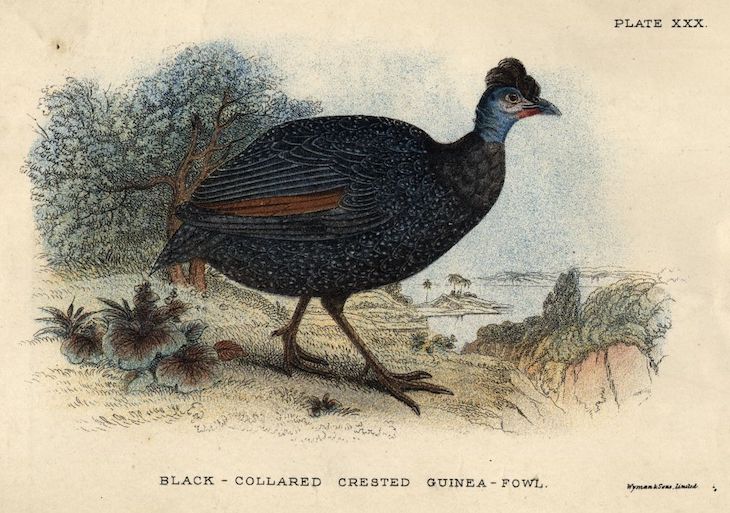
The most intimidating moment of my three-and-a-half years as Poland’s ambassador to Britain did not take place in Downing Street, Buckingham Palace or the Foreign Office. It happened over lunch at White’s, one of London’s oldest private members’ clubs, and concerned the correct way to dismantle a bird.
At that moment, I understood something about the British class system
My host, a young British aristocrat, had recommended the guinea fowl – or perhaps it was some other unfortunate creature. What I remember more clearly is that it arrived consisting principally of bones, accompanied by implements that looked less like cutlery than a surgical kit. He dealt with it effortlessly. I stared at my plate and tried to work out where the operation should begin.
By then, in my diplomatic career, I had dealt with American senators, British ministers and heads of government, while much of my academic life had been spent studying Britain. None of this was of the slightest use. At that moment, I understood something about the British class system. Its most effective codes are the ones nobody explains.
That thought has returned to me this summer. Britain has just acquired its seventh prime minister in a decade. Andy Burnham has scarcely settled into Downing Street, while Reform, Labour and the Conservatives compete in a fragmented political landscape. Another diagnosis of national crisis seems to arrive every week. Yet Britain has always seemed to me more stable than Britons themselves believe it to be. The surface changes quickly; underneath, much remains.
Britain is still profoundly hierarchical, but it has developed a talent for disguising hierarchy as informality. I noticed this after moving from Washington to London. In Washington, power looks like power: impressive offices, aides and advisers. London was different.
As ambassador, I developed the slightly eccentric ambition of meeting all the former British prime ministers then alive. With the exception of Gordon Brown, I succeeded. I met John Major and Tony Blair; Theresa May and David Cameron came to the Polish embassy, and Liz Truss visited after leaving Downing Street. I doubt an ambassador from a middle-sized European country could so easily invite former American presidents for coffee.
The same informality extended to Westminster, where MPs often occupy tiny rooms. I used to visit Robert Halfon in a room once occupied by Winston Churchill. There was still an armchair associated with Churchill there, functioning not as a museum exhibit but as parliamentary furniture. History is everywhere, but nobody necessarily puts a rope around it.
The same phenomenon exists socially. I was once invited to a modest dinner in Chelsea by a member of a family involved in British public life for centuries. Their history could furnish several seasons of The Crown. Yet nothing matched. Nothing glittered. There was no attempt to impress.
And that was the point. New elites often display status. Old elites assume it. The nouveau riche needs the marble entrance hall, enormous car and conspicuous watch because the objects do some of the social work. A family prominent since the sixteenth century can afford mismatched forks.
This does not make Britain classless. Quite the opposite. The hierarchy is simply encoded rather than advertised. Britain’s social hierarchy and its political institutions have something important in common: neither needs constantly to proclaim its authority in order to preserve it.
There is a political version too. A politician temporarily inhabits an institution rather than owning it. Westminster gives one the sensation that hundreds of MPs have occupied your place before you and hundreds will do so afterwards. Ministers arrive convinced that history has been waiting for them; permanent secretaries remind them that history has usually seen something similar before.
The caricature in Yes Minister did not come from nowhere. Institutional continuity can become inertia, and understatement can conceal complacency. Yet British institutions have an impressive capacity to absorb mistakes. Political careers collapse, governments change and newspapers announce national catastrophe. Then somebody produces a folder, a civil servant explains the precedent and the machine continues.
Poland has a different historical experience. Our institutions have repeatedly been destroyed, occupied, abolished or reconstructed. We therefore tend to put greater faith in individuals: the strong minister, the charismatic leader, the person who promises to take matters into his own hands.
Britain puts more faith in the chair. The occupant changes. The chair remains. Which brings me back to Churchill’s armchair. Churchill had become history; the chair remained useful. Perhaps that is a small secret of British continuity. The past is neither discarded nor permanently embalmed. It is simply incorporated into the furniture.
And perhaps the British class system works in much the same way. It rarely needs to announce itself. You discover it in an accent, a school, an invitation, a casual reference to somebody’s grandfather – or when everyone else at the table knows exactly which instrument to use on a many-boned bird. I still do not know how I was supposed to eat it. But I suspect my host never had to learn. He simply knew.