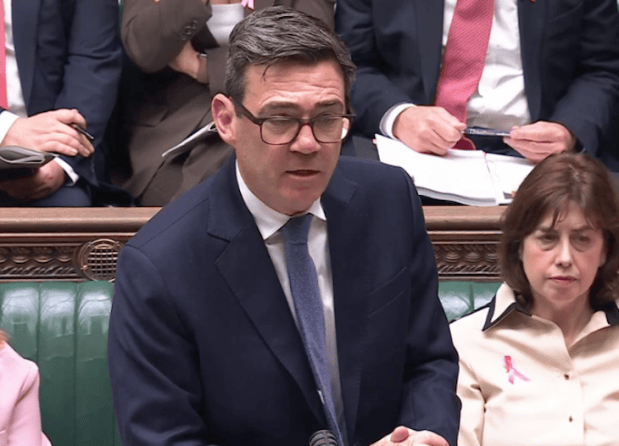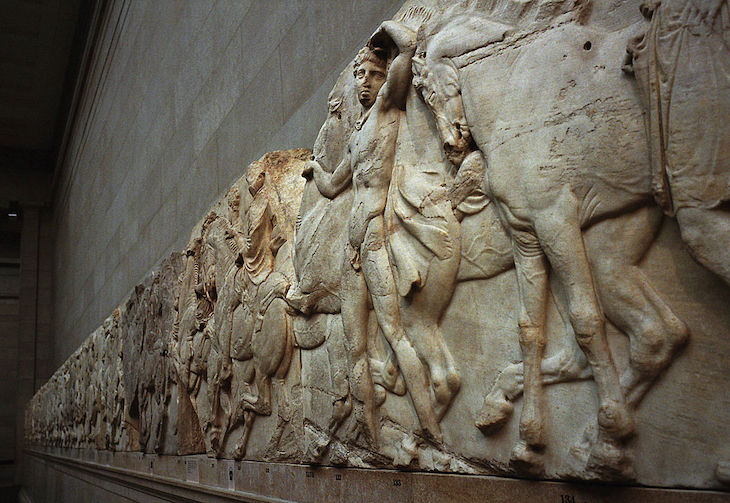
In 2023, the Mayor of Greater Manchester posted a comment on Twitter about the Parthenon Marbles held at the British Museum: ‘Send them back, no strings. And let’s use culture to change how Britain is seen around the world.’
The prospect of returning the Marbles may not be as close as people imagine
Now that the tweet’s author has become Prime Minister, campaigners are very excited that the Marbles may soon be on their way to Greece. An intrepid Greek journalist has pinpointed the continual support offered by Andy Burnham for Early Day Motions to return the Marbles since first entering Parliament in 2001.
But just as none of these motions ever passed, the prospect of returning the Marbles may not be quite as close as people imagine, even with an admittedly supportive Prime Minister. Nonetheless, there are sensible steps that the UK Government can take to facilitate restitution in the most demanding cases, while supporting a negotiated settlement over the Marbles – rather than an outright return.
The first step would be to allow national museums to restitute objects in their collections where pressing moral grounds exist. At present, the governing laws of English national museums prevent trustees from removing collection objects, with occasional exceptions for duplicates, objects deemed ‘unfit’, art lost during the Nazi era in Europe and human remains.
But what about jewels stolen from a family home many years ago? Or sacred objects removed through violence during a military incursion? The current structure places trustees in an untenable position, legally prohibited from acting in a way that would be morally appropriate. V&A Director Sir Tristram Hunt has frequently criticised the status quo, saying that trustees of national museums are being subjected to an ‘outdated and infantilising’ legal structure.
The Government last year excluded national museums from the operation of the Charities Act 2022, legislation that would have provided a release valve to the above problem. The Act was intended to allow all trustees of charities in England and Wales to make property-related decisions when under a moral obligation to do so. A clear framework already exists that helps define the ‘moral obligation’, supported by guidance from the Charity Commission of England and Wales, Arts Council England and the Uehiro Institute for Practical Ethics at Oxford University. All that is needed now is for the Government to remove the current exclusion for national museums by way of a Statutory Instrument.
The second step would be to support greater provenance research across the entire museum sector, so that appropriate research into the origin of collection objects can be undertaken. At present, only the V&A has such a role. At a time of stretched financial resources, this may seem like a low priority for the country. However, the cost of research is minuscule compared with the cost of buying art at current market prices, yet adds incalculable value to existing public collections. A strong proposal has been put forward by Anne Webber CBE of the Commission for Looted Art in Europe for the Government to hire a roving provenance specialist who could support research around the country where needed. The more we know about the history of collections, the better.
As for the Marbles, it is unlikely that the trustees of the British Museum will agree to send them back ‘no strings’. As an arm’s length body, the board is free from direct interference by Ministers – even Prime Ministers – and this is a good thing. The Marbles dispute is so fraught that it would be impossible to cloak an outright return as a ‘moral obligation’ even under the Charities Act. Instead a negotiated peace will have to be sought.
Sir Keir Starmer had said his government would not interfere if such an agreement were reached between the British Museum and the Greek government, but then stood back while negotiations faltered. Government instead needs to play a facilitative role: never putting a finger on the scale, but ensuring that negotiations progress in an appropriate way. Without this, it is hard to see how the world’s longest-standing cultural dispute will ever be resolved.