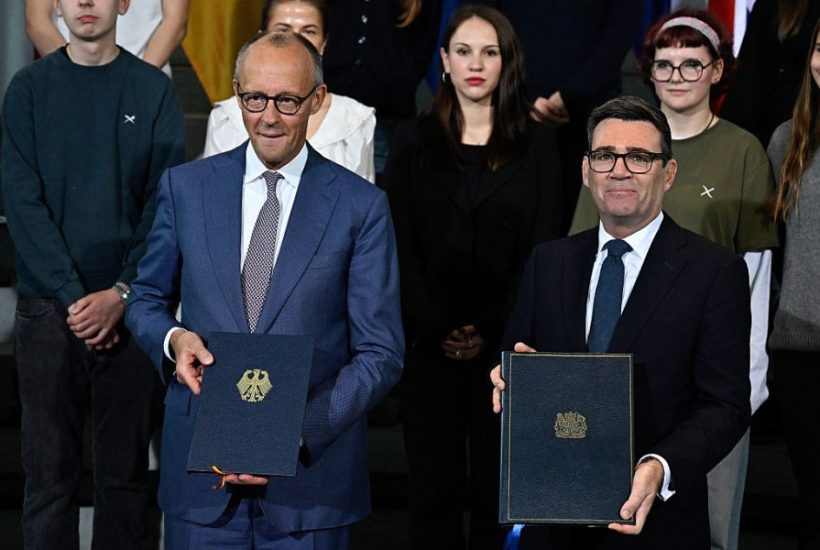
Andy Burnham has been in Berlin today – his first bilateral diplomatic visit since entering Downing Street nearly three months ago. The Prime Minister met his German counterpart, Friedrich Merz, face-to-face for the first time to ratify the bilateral Kensington Treaty – signed by the Chancellor and Burnham’s predecessor Keir Starmer last year.
Greeted by Merz with full military honours in the German capital, Burnham’s first appointment was at a local high school, before the two met to formally ratify the treaty. There has been a significant expectation for the two leaders to get along today: forming two of the three members of the E3 diplomatic coalition alongside France, Burnham will have to work closely with Merz on a number of sensitive issues over the coming months, including Ukraine, the Middle East, Russia, handling Donald Trump, as well as European security more broadly. With presidential elections likely to return an EU-hostile leader in France next year, there will be even more pressure on Burnham and Merz to deliver a united response to any challenges that arise.
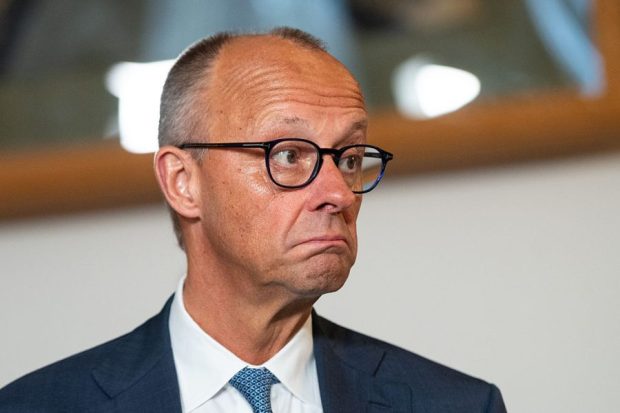
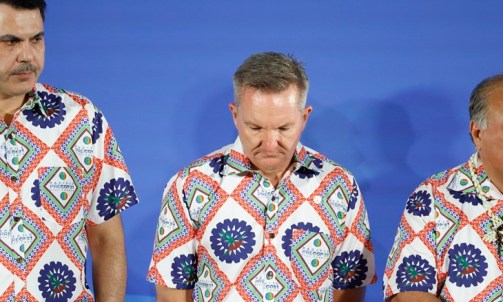
Burnham looked distinctly stiff and less at ease than he has in recent diplomatic appearances
Unusually for these sorts of visits between close allies, then, there was no press conference after Merz and Burnham’s meeting today. This was supposedly at No. 10’s insistence, after the Prime Minister wanted to avoid any difficult questions. It was notable watching him during the short 7-minute joint statement to the press that the pair did give that Burnham looked distinctly stiff and less at ease than he has in recent diplomatic appearances.
The Kensington Treaty is a bilateral agreement focussed on cooperation in a number of areas, including security, the economy and freedom of movement, between the UK and Germany. Calling the day ‘historic’, Merz kicked off the pair’s statement to the press. Flanked by a group of high school students, the Chancellor chose to highlight the better access to both countries the treaty will give to school and university students.
After these very short remarks, he handed the floor to Burnham. Referencing ‘challenging times’, the Prime Minister lauded Germany as one of Britian’s ‘closest partners’. The Kensington Treaty would, he said, ‘improve our security here in Europe and grow our economies, improve the living standards of our citizens’.
Rattling through several security-related announcements, Burnham confirmed that the UK and Germany would be collaborating further on countering hybrid attacks. This feels particularly pertinent coming just weeks after both the Prime Minister announced the creation of a government unit to tackle Russian disinformation and Germany publicly attributed a failed attack on Leipzig airport in August to Russia. ‘It makes sense to face these threats together,’ Burnham added. The Prime Minister also confirmed that work would start to accommodate a role for Germany in GCAP, developing the next generation of fighter jet alongside Japan and Italy – as well as making a vague reference to collaboration in space.
Following Burnham’s speech at Labour conference last week where he said that Brexit had ‘done more harm than good’ and that he would like to lay out ‘options’ on the future of the UK’s relationship with the bloc, there was much intrigue as to what development, if any, there might be on this in Berlin today. It is, incidentally, my understanding that the German government was somewhat surprised to hear Burnham talk so frankly about Brexit and his apparent interest in exploring a return to the EU.
Speaking today, Burnham reiterated his intention to bring Britain ‘closer to Europe, particularly in the interests of economic growth and collaboration on irregular migration’. These are both points Downing Street clearly believes will be key to selling any thaw in EU relations to voters back home in Britain. On economic growth, at least, the Prime Minister would certainly already have some ammunition: Germany is the UK’s second largest trading partner, contributing roughly £155 billion to our economy each year.
Among the issues Downing Street is reportedly keen to secure favour with Brussels on is clinching an exemption to the ‘Made in Europe’ protection measures being drawn up by the EU to shield producers in the bloc from the behaviour of competitors in the US and China. Germany is said to be in favour of helping the UK secure this exemption but reportedly wants Burnham to raise tariffs on Chinese electric vehicles to match EU policy and show reciprocity. This is believed to have been on the agenda in closed-doors discussions between the Prime Minister and Merz today.
Burnham wouldn’t have put his personal stamp on today’s visit without also highlighting the first meeting of the ‘regional growth dialogue’ enabled by the treaty. Interestingly, while the Prime Minister is understood to be very keen on learning more about how Germany’s federal system, established following 1945, works, Berlin is also said to be open to picking up tips from the Prime Minister’s own devolution drive here in the UK.
With that, the pair’s statement was brought to a swift close. Turning to the school children behind him, Burnham attempted some awkward chitchat as the press packed down. Nevertheless, one microphone did still manage to catch him asking, ‘How is Harry Kane getting on?’ – prompting grimaces from the gathered teenagers about the England captain and Bayern Munich player. Joking to Merz, Burnahm added, ‘Harry Kane, the real ambassador to the UK.’
Perhaps Burnham was able to strike better rapport with the German chancellor than their cordial appearance in front of the press today suggested. But for a prime minister known to have little interest in foreign diplomacy, today’s visit to Berlin did little to dispel the notion that he has yet to warm to this element of his duties.