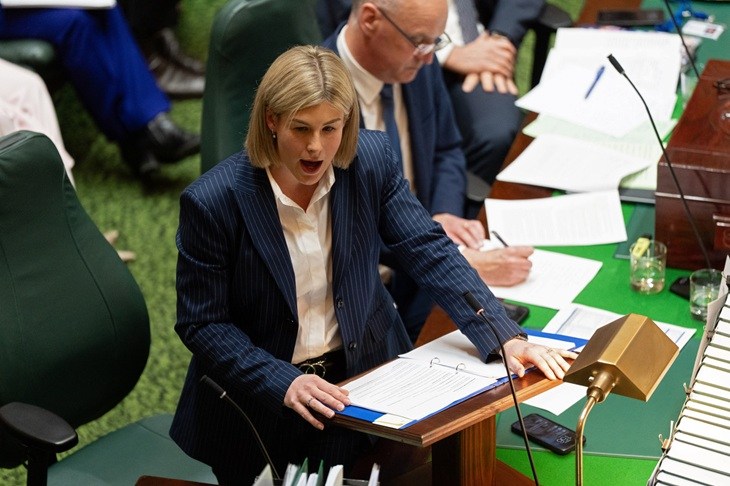
That’s about it, for me and the Liberal party. For a while there, I had almost come back to its warm embrace, at least so far as the Victorian party and the coming state election were concerned. My approaching return to the fold was no doubt due to the unlamented departure of the ghastly Daniel Andrews, the appalling Labor government, and, on the Liberal side, the arrival of a seemingly fresh and vigorous new leader in Jess Wilson. And those early stirrings in my allegiance were no doubt fortified by the prospect – or at least the hope – of the party returning to support the noble cause of free enterprise, the principle on which the Liberal party was founded.
Alas, it was not to be, for the new-look Liberal party has failed at its first test and abandoned any notion of supporting that most basic of principles. The issue that held out so much promise was a proposed new law to add to the list of so-called human rights, namely the right of employees to work from home for two days a week, on their normal pay and conditions, at the expense of the employer, and not by agreement between employer and employee but by the force of law. This newly discovered human right was to be imposed no matter what the contract of employment said and whether the employer agreed with it or not. If employers stepped out of line, they would be hauled off to the industrial and human rights tribunals to be punished. The bill to enshrine this right easily passed the lower house of the parliament and for the last few weeks it has been meandering around the upper house where it recently came on for debate.
And why was this proposed law a test of the Liberal party’s commitment to free enterprise? Because free enterprise tells us that employers and employees should determine the terms and conditions of employment by agreement between themselves and not because they have been dictated by the almighty state that tells them what is good for them. Free enterprise also tells us that responsible governments do not impose impossible burdens on the productive sector of society, especially when times are tough. And free enterprise tells us that one of the great virtues of living in a free society is that our rights as human beings are inalienable and are not conferred at the whim of a government that is looking for votes on the eve of an election.
And it should be noted that this proposal was a particularly heavy-handed example of intrusion by government into business, one that would substantially increase the cost of doing business, threaten productivity growth and increase trade union power. It applied automatically to all employment, except for obvious exceptions like truck drivers and air traffic controllers. It also applied to apprentices, casuals and part-time workers. If employees changed their mind, they could work from somewhere other than the home they had specified. They could also change the days on which they worked from home. Employers had to pay for all the costs of enabling this largesse to be enjoyed and they also had to pay for what were coyly described as ‘essential equipment’ and computer security at the employee’s home.
And the whole scheme raised some very big questions. Won’t employees and trade unions inevitably make new claims for additional payments to employees who have missed out on the benefits of this newly discovered human right? And what happens if all employees in a firm want to have the same days off and at the same time? The government’s only answer was that employers could go off to the industrial tribunal, at their own expense, and see how they got on there.
In summary, employees would have the right to work where and when they chose and to change their choices, while employers would pay for the privilege of letting them do so.
So, the issue of whether the Liberal party was truly a party of free enterprise was squarely on the table and it could have declared that the proposed law was so far outside the proper role of government and imposed so many costs and restrictions on business that it had to be opposed, no matter what the outcome of the vote. For once, an issue really had become a matter of principle.
It was therefore obvious by the time the new law came into the parliament that it was a flagrant denial of the principles of free enterprise and particularly the right of freedom of contract between employers and employees. It was also obvious that it imposed on employers so many costs that many of them were asking if it was worthwhile staying in business at all, if this law were passed. Others must have been asking how they were expected to run a business that would be subject to the recurring issues of employees not only demanding to work from home but changing when and where they wanted this to happen. All of the industry organisations have opposed it on the grounds that it would be yet another blow to the cost of doing business in Victoria and businesses would move interstate. For my part, I wrote to two members of the opposition to urge them to oppose the bill. Their replies were pretty much what you would expect; one noted my concerns; the other was a no reply. The Liberal party simply gave up and decided to vote for the legislation.
But now, at the last minute, the government has decided to defer the vote, so they can talk with the business community and address its concerns.
So that really is something. The Liberal party committed itself to vote for a piece of socialism and the Labor party has deferred it in the interests of free enterprise! So much for the new-look Liberal party I had hoped for!
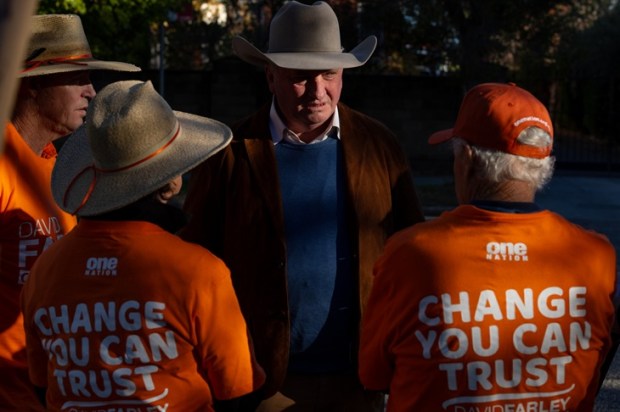
I have had my reservations about One Nation, but is it any wonder it is looking good?
Got something to add? Join the discussion and comment below.
You might disagree with half of it, but you’ll enjoy reading all of it. Try your first month for free, then just $2 a week for the remainder of your first year.