To err is human, but to persist in error – actively undermining the constitutional order – is the hallmark of political folly.
When NSW premier Nick Greiner’s Coalition government enacted the Independent Commission Against Corruption Act in 1988, it was done under the banner of clean government. Yet, in doing so, the Liberal party committed a cardinal sin against our common law heritage. It created a Frankenstein monstrosity, a standing commission empowered to set its own agenda, conduct public inquisitions and destroy reputations long before any criminal charge ever reached a jury.
In a classic case of tragic political irony, the monstrosity devoured its own architects and is now devouring their successors. From Greiner to Barry O’Farrell and Gladys Berejiklian, the Liberal party has repeatedly fallen on the sword it forged. Yet, instead of restoring constitutional principle, successive governments tinkered around the edges of an institution that should never have existed.
What MP John Ruddick wittily called the ‘Independent Commission Against Catholicism’ was born of a profound misunderstanding of trial by jury and the established criminal law, as well as advances in modern criminal procedure.
The 1980s had actually marked the emergence of a widespread reform: the establishment of independent Directors of Public Prosecutions, moving the power to charge citizens from the police into the hands of normally detached, objective legal officers. ICAC bypassed this reform entirely, combining the role of investigator, prosecutor, and public judge into a single statutory agency. By making ‘findings of corrupt conduct’, ICAC effectively circumvented the independent filter of the DPP with a ‘trial by media’ and the inescapable ‘walk of shame’, inflicting irrevocable punishment before an independent prosecutor could receive and review the brief of evidence.
Meanwhile, as noted in this column at the time, there has been no greater monument to ICAC’s institutional overreach than the rejection by the High Court in 2015 of its illegitimate pursuit of distinguished Crown Prosecutor Margaret Cunneen SC.
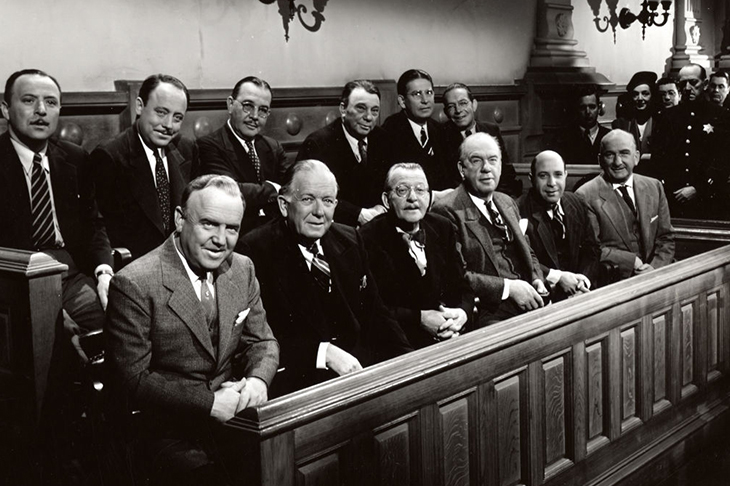
As this column noted, the best weapon against corruption was there all along, one of the most effective common law institutions ever known: the grand jury. Wisely preserved under the US Constitution, it operates in strict, mandatory secrecy. Investigators cannot leak details, hold televised inquisitions, or stage ‘perp (perpetrator) walks’. If no indictment is issued, the investigation remains secret with reputations remaining intact.
While grand juries existed briefly in South Australia (1837–1852) and Western Australia (1829–1855), in Victoria, they lasted from 1851 to 2009.
They were no doubt abolished because the last thing Labor wanted was for a citizen to be able to apply to a judge to have a grand jury of ordinary citizens empanelled to hear evidence in secret and decide whether anybody should be prosecuted over, for example, corruption and criminal activity in Victoria’s notorious building industry.
Victorian Premier Ben Carroll could demonstrate he has really turned over a new leaf just by restoring grand juries.
The inability of politicians to deal with crime without abandoning long-established principles is far ranging.
This is a trend where the making of a charge is turned into a public spectacle, thus seriously undermining the presumption of innocence. We saw this recently with media crews obviously tipped off for the theatrical airport arrest by Federal Police of Ben Roberts-Smith VC, thus inflicting permanent, irreversible reputational punishment before a trial could even begin.
An even worse demonstration of this was police and court toleration of daily screaming, hostile mobs harassing the accused, Cardinal Pell, on the steps of the Melbourne County Court. This surely had an impact on the jury; their verdict was found so defective by a rare unanimous High Court that they quashed Pell’s convictions (Pell v. The Queen (2020)).
Simultaneously to the Liberals’ creation and unwise retention of ICAC, some state parliaments (led by NSW) have been quietly stripping most Australians charged with a criminal offence of their right to our most ancient constitutional safeguard: trial by jury. That fundamental protection, forged at Magna Carta and refined over centuries, was meant to be the unshakeable shield of every free citizen. Apart from petty offences, no individual could ever be deprived of their liberty except by the unanimous verdict of twelve peers.
Yet, by taking what was originally the minor, narrow exception of petty offences, politicians on both sides have surreptitiously reduced Australians’ ancient right to trial by jury.
While the American Supreme Court ruled that any exception to trial by jury should only be for lesser offences where the maximum penalty is six months, in NSW (and some other states) the politicians have stripped citizens of their ancient right to a trial by jury in relation to offences which can be punished by up to two years, with a cumulative limit of an unacceptable and indeed outrageous five years.
This is more appropriate to a penal colony, not an old democracy under the rule of law.
It can have irrational results. Thus, when the more serious charges against him were withdrawn, Alan Jones was stripped of his right to a trial by jury – a procedural outcome that carries no criticism whatsoever of the Local Court Judge presiding over his trial.
Alan Jones’ prosecution began inappropriately as a total ‘Hollywood production’, with a ridiculously large police presence led by the Child Abuse Squad.
The media were tipped off to wait outside his home for hours to capture the spectacle of his arrest. To this was added a police press conference, the content of which, like his arrest, was in no way consistent with his right to the presumption of his innocence.
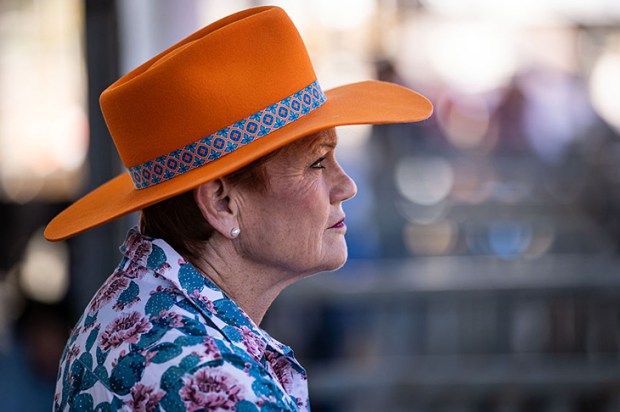
Meanwhile in the US, the Supreme Court is actively reining in the administrative state, insisting that the vast and growing field of quasi-criminal penalties must remain strictly bound by the Constitution, particularly the right to trial by jury. We in Australia should demand the same constitutional rigour against our own quasi-criminal regimes – not least the creeping administrative censorship of political speech under section 18C of the Racial Discrimination Act, 1975. In a current case, Senator Pauline Hanson has indicated she will appeal to the High Court (see Louise Clegg in this issue).
These are examples of an increasing tendency of our ossified two-party system to undermine and damage those institutions which have spread around the English-speaking world – ones which Winston Churchill declared are the true foundation of our liberty and which, with democracy and patriotism, constitute the basic values of this land.
Got something to add? Join the discussion and comment below.
You might disagree with half of it, but you’ll enjoy reading all of it. Try your first month for free, then just $2 a week for the remainder of your first year.