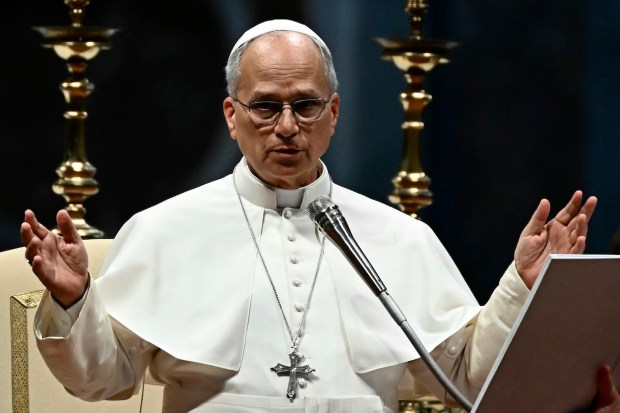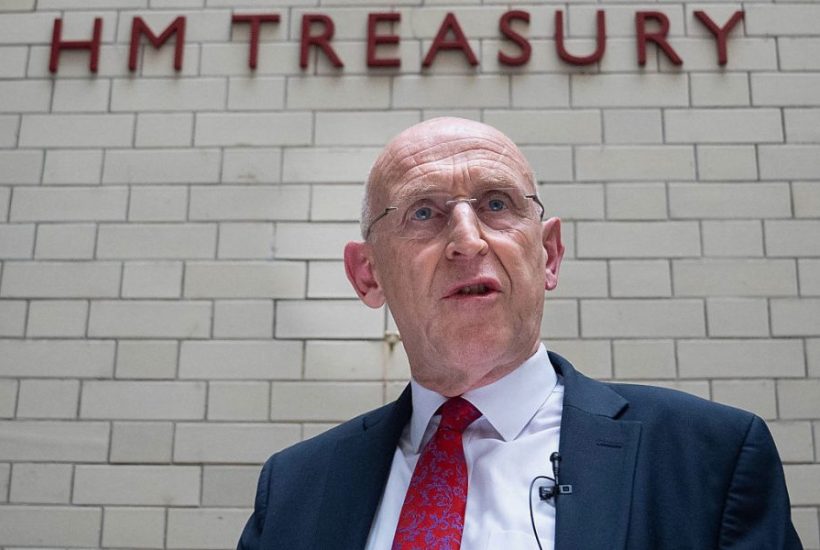
The appointment of John Healey as Chancellor sends a signal about defence funding. Healey resigned from Keir Starmer’s government over the former prime minister’s refusal to fund the £28 billion Defence Investment Plan, so it seems unlikely that he has accepted the position of Chancellor without a firm guarantee from Andy Burnham that defence spending will rise.
But what other fiscal instincts does Healey have? He has a strong grounding in economic policy, having served as a minister in the Treasury for five years under Tony Blair. He is generally seen as a non-factional, uncontroversial figure within the Parliamentary Labour party. His Hansard contributions from his period in the Treasury reflect the orthodoxies of the time. Interestingly, given the now-abandoned suggestion that Burnham might review the triple lock, Healey once argued against linking the state pension to earnings (then a Tory proposal) in the same parliamentary sitting in which our editor Michael Gove made his maiden speech.
With that said, Healey has occasionally shown signs of ideological flair. He called the two-child benefit cap cruel. He criticised the coalition for lowering the 50 per cent top rate of income tax and for cutting disability benefits. Healey was (unlike Rachel Reeves or Shabana Mahmood) happy to serve in Jeremy Corbyn’s shadow cabinet, in housing, although he did support Owen Smith’s failed coup attempt following the Brexit referendum. Healey was subsequently promoted to shadow secretary of state for housing.
Healey is known in Labour circles to be a clubbable figure
It’s worth remembering just how radical Corbyn’s housing policies were. His 2017 manifesto promised inflation-linked caps on rent rises and suspending right to buy. In 2019, Labour added an ‘English Sovereign Land Trust’ to its electoral offer and also promised to link ‘affordable rents’ to local incomes, build 150,000 council and social homes a year, ‘stop social cleansing’ by making regeneration schemes get local consent, introduce state-funded renters’ unions, abolish immigration status checks for landlords, introduce a national levy on second homes and, finally, pledged to repeal the Vagrancy Act and amend anti-social behaviour legislation to ‘stop the law being used against people because they are homeless’.
Parts of what Corbyn wanted in 2019 were subsequently implemented (including by the Tories, who legislated to scrap the Vagrancy Act). Thanks to the Renters Rights Act, tenants can also challenge landlords in tribunals if they feel a rent hike has been excessive, which means, in practice, it is harder to raise rents faster than inflation, although this is not the formal policy. Nonetheless, Healey was ready to sign himself up to delivering policies which would have wrecked the private rental market and endanger the public by making it harder to police homeless people.
Burnham has sent Angela Rayner back to housing and has committed to solving homelessness by building hundreds of thousands of council homes and getting people off the social housing list. This will require huge sums of money. In 2024, for example, it was estimated that £205 billion would be needed to build homes for every household on the social housing waiting list in England alone. Based on Healey’s previous actions, we may find that Rayner gets a sympathetic hearing from the Treasury.
In 2015, Healey made a brief tilt at the deputy leadership of Labour. Setting out his position in the Guardian, in between the usual filler about ‘world-beating firms’ and ‘multimedia industries’, he said there should be a ‘generational shift of power to local areas so we create and spread wealth across our divided country’. He is, therefore, firmly behind Burnham’s wish to create growth in every postcode.
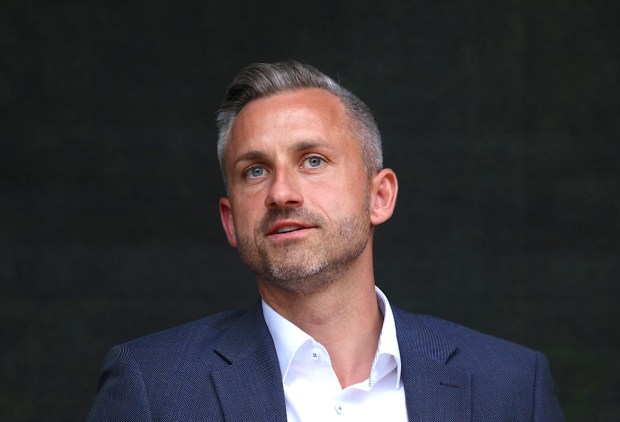
Healey is known in Labour circles to be a clubbable figure. In this respect, he is similar to his neighbour in No.10, who is also personally amiable. The problem with this all is that affability and cheeriness are not the traits which the Chancellor of the Exchequer usually has, because a big part of the job is saying ‘no’.
We know what Healey and Burnham would like to spend our money on. They want to vastly increase defence expenditure, they want more council houses, they want economic rebalancing to be funded by government redistribution. They want to cut taxes on energy bills and business rates for pubs. The problem is that just scrapping the unfunded digital ID scheme is not going to pay for this largesse, and that facts cannot be papered over with ‘optimism’. Cuts will have to be made or taxes will have to rise, and at that point all of the smiling will come to a stop.